This Sunday, November 23rd, Matthew Ross and our film buff friends from The Lost Laugh are presenting the Kennington Bioscope Silent Laughter show at London’s Cinema Museum. The press release elaborates:
We’ve got a full programme featuring some brilliant silent comedies that you won’t see on the big screen anywhere else, including some being shown for the first time in almost a century! As regular attendees will know, we’re all about telling the forgotten stories of silent comedy: the overlooked performers, the forgotten gems and the long-lost.
So, among the highlights this year are a rediscovered adaptation of the P.G. Wodehouse novel The Small Bachelor (1927), an unlikely pairing of W.C. Fields and Louise Brooks, and a celebration of some of the brilliant funny women often neglected in the male-centred narratives of the silent comedy genre: Wanda Wiley, Mabel Normand, Colleen Moore and Marion Byron.
We’ll also be featuring some familiar favourites, too: Chaplin, Laurel & Hardy and Charley Chase all feature in the programme.
The gang at Way Too Damn Lazy To Write A Blog respectfully tip a battered top hat worn by Charlie Chaplin in Making A Living to our fellow film buffs across the pond attending Silent Laughter Day at the Cinema Museum. Tickets are available here.
One of the key things, in addition to our pets, that got this household through many months of lockdown in 2020-2021 was watching The Silent Comedy Watch Party, presented with wit and panache by intrepid film historians, authors and curators Ben Model and Steve Massa on Sundays.
On this Sunday, St. Patrick's Day, the series will return to YouTube for its 4th anniversary extravaganza and episode #100 - HOORAY!
One of the many things I love about the series is that, unlike 99% of silent era comedy programs, The Silent Comedy Watch Party does not limit the focus strictly to The Big 3, Charlie Chaplin, Buster Keaton and Harold Lloyd.
While we at Way Too Damn Lazy To Write A Blog love those guys, unquestionably the other silent movie laughmakers, lesser known but often hilarious, richly deserve kudos, bravos and huzzahs for their contributions to film humor.
It's noteworthy that acrobatic Al St. John, the ever-persnickety Johnny Arthur and wacky redhead of silents Alice Howell - all very funny performers - are featured in Silent Comedy Watch Party episode #100.
The following graphic for Silent Comedy Watch Party episode 50 shows just a few of the amazing comics featured in the series.
The dyed-in-the-wool silent comedy aficionados at Way Too Damn Lazy To Write A Blog extend big time thanks to The Silent Comedy Watch Party for repeatedly delivering big laughs during 2020, a difficult time (even for those fortunate enough to not lose family members and friends to coronavirus) and continuing to do so with good-natured enthusiasm in only slightly less bat guano crazy 2024.
94 years ago today, Steamboat Willie, the first Walt Disney Productions sound cartoon and the second starring vehicle for Mickey Mouse, premiered at Universal's Colony Theater in New York City. Walt elaborates, in an appearance on his television show.
Steamboat Willie wasn't the first cartoon with sound - Max Fleischer's studio had already made a bunch of Screen Songs a.k.a. Sound Car-tunes.
Fleischer Studios also produced a documentary about the introduction of sound to movies.
What's new and different about Steamboat Willie is the way sound was synchronized and how the music by Carl W. Stalling and sound effects were as much the star of the show as Mickey. Contemporaneous efforts from other studios just slapped a music track on a silent cartoon. Walt Disney, Ub Iwerks and Carl Stalling asked the questions "what can we do with sound?" and "what can we do that nobody else is doing?"
Who could be attributed with the animation style of Steamboat Willie and its predecessor Plane Crazy? Ub Iwerks!
Charles Mintz had hired away much of the staff from Disney and (at least briefly) took possession of flagship character Oswald The Lucky Rabbit, leaving the extremely talented Ub Iwerks as Walt Disney Productions' top animator.
Steamboat Willie was followed by the first Silly Symphony, The Skeleton Dance, which extends and further develops the creative use of music (Carl W. Stalling!) and sound effects.
Ub and Stalling would leave the Disney Studio in 1930 and then produce the first sound cartoon in color, Flip the Frog in Fiddlesticks.
And the also terrific book by David A. Bossert, J.B. Kaufman (Foreword) and David Gerstein (Archival Support) devoted to the Disney Oswalds. David Gerstein's
In addition, it is highly likely that a search for articles about Walt Disney, the early sound era and Ub Iwerks by such terrific authors and historians as John Canemaker and Jim Korkis will turn up something interesting on these topics.
It is now spring 2022, knock on wood, and, slowly but surely (and puh-lease, don't call me Shirley) classic film screenings are returning. Lo and behold, NOIR CITY 19 and the 2022 TCM Classic Film Festival wrapped and San Francisco's 25th Silent Film Festival will return to the hallowed "movie palace" aisles of the Castro Theatre next weekend.
The comedy-crazed silent movie buffs at Way Too Damn Lazy To Write A Blog are thrilled that, among the many great movies presented over the seven nights, comedy great Max Linder is on the bill.
The 25th anniversary San Francisco Silent Film Festival will include KING OF THE CIRCUS, a Max Linder film this avid silent comedy and Max fan has never seen! While Linder may have not been the first comedian to star in a movie - that would very likely be André Deed (1879-1940) - the dapper Parisian boulevardier was certainly among the first silver screen comedians to headline a popular continuing series, in his case for Pathé Frères, beginning in 1905.
Max Linder certainly ranked highly among the key influences on his friend and colleague Charlie Chaplin.
Chaplin described Max as "my teacher."
The official SFSFF press release elaborates:
The French were there at the dawn of cinema when the Lumière Brothers train pulled into the station at La Ciotat. French films are integral to the history of the movies and it is with great pleasure—or should we say plaisir—that we are presenting two extraordinary French films in exquisite restorations, DANS LA NUIT and THE DIVINE VOYAGE, and a third restoration of an Austrian feature, KING OF THE CIRCUS, starring the French comic genius Max Linder.
DANS LA NUIT was legendary actor Charles Vanel's directorial debut—and his only feature. This beautiful film had the bad timing to be released in 1930, when sound was in demand. Despite its excellent reviews, the film faltered at the box office and was doomed to obscurity.
But it had many acclaimed supporters — director Bertrand Tavernier called it "cinematographic poetry" — and we are thrilled to host the world premiere of Institut Lumière's gorgeous new 4K restoration. Film Noir Foundation's Eddie Muller will introduce the film and musician Stephen Horne will accompany.
Our friends at Lobster Films in Paris have been busy during the pandemic lockdown and SFSFF is the beneficiary with two beautiful new restorations! Julian Duvivier's THE DIVINE VOYAGE, set on the Breton coast, contains some of the most stunning sequences on film. Guenter Buchwald and Frank Bockius will accompany.
KING OF THE CIRCUS is Max Linder's last film and it displays the comedic genius that made him one of the silent era's kings of comedy. Philip Carli will accompany. Serge Bromberg of Lobster Films will introduce both titles.
For more Max: the pioneering movie comedian's daughter, Maud, an infant at the time of his death in 1925, wrote, produced and narrated a documentary, The Man In The Silk Hat about the life, times and films of the father she never knew. Here it is, in four parts:
Exhaling a profound sigh of relief today, watching Mr. Blandings Builds His Dream House (while cursing Blogger for not having a functional Preview), thoughts turn to another amazing actor who, as Cary Grant did, got big laughs on the big screen, the great comedian W.C. Fields (January 29, 1880 — December 25, 1946), arguably the funniest of all the comics who enlivened the silver screen.
Way Too Damn Lazy To Write A Blog last posted about W.C. Fields on the centenary of the comic/writer/actor/juggler extraordinaire's first silver screen appearance in Pool Sharks (1915). Since the Statute of Limitations on this topic has expired (along with approximately 97.8% of this blogger's writing mojo), today shall be devoted to W.C. Fields.
What do we love about Fields? Well, in addition to the fact that Fields, using such memorable pseudonyms as Mahatma Kane Jeeves, Charles Bogle and Otis Criblecoblis, contributed screenplays, gags and storylines to many of his movies, it's his independent attitude towards life. When Fields mutters in the reel world, he's saying what is on our minds. In the real world, one can only be so cantankerous, insubordinate, defiant and contemptuous of authority; say ANYTHING along those lines of Fields' mutterings, even under your breath, especially around those in positions of authority, and the results will always be bad, not good!
The Fields seen in the 1930's Paramount features is not an anarchist (a la The Marx Brothers and Clark & McCullough) but a harried and stressed-out everyman.
It's A Gift is the film that best expresses the stressed everyman characterization. As funny as then iconoclastic Fields from the later Universal features is, these three Paramounts are this comedy aficionado's favorites, due to the booze-loving and spoiled brat-hating persona's inspired work within the characterization and the storylines.
Harold Bissonette, Fields' small-town grocer in It's A Gift, surrounded by louts, blowhards, busybodies and a shrewish spouse, tries his very best to get through his daily tasks, as indignities upon indignities are heaped upon him. He's the predecessor of Rodney Dangerfield's guy who got "no respect," but quietly defiant and irreverently well aware of the rampant idiocy in his midst. The idealized small-town America of the day, and its citizenry, does not get the Frank Capra treatment but is skewered deliciously, to a significant degree due to hilarious performances by the supporting players, especially Charles Selton as the blind but unrelentingly obnoxious Mr. Muckle.
Through it all, Fields' skilled acting distinguishes him as one of the funniest and most brilliant comedians and character actors ever to appear in motion pictures.
The followup, The Man On The Flying Trapeze, includes much of the It's A Gift cast and gets considerable comic mileage out of similar themes.
Among our all-time favorite comedy films here at Way Too Damn Lazy To Write A Blog are the Fields & Alison Skipworth "road hogs" segment from the 1932 anthology feature If I Had A Million and the Paramount gems Million Dollar Legs and International House.
Million Dollar Legs is part of a noteworthy trio of extremely wacky, irreverent and satiric 1930's comedies, along with Wheeler & Woolsey in Diplomaniacs and the Marx Brothers' Duck Soup.
While these first films Fields appeared in for Paramount Pictures were not vehicles for his specific personality and characterization - he was just one among many talented comedians in the casts of both Million Dollar Legs and International House - they are supremely zany, immensely entertaining and loaded with pre-Code flavor.
Six Of A Kind (1934) would re-unite Fields with fellow cast members from International House Burns & Allen.
Definitely NOT among all-time favorite films but fascinating to watch nonetheless is the 1933 version of Alice In Wonderland, a bizarre curio featuring just about everyone on the Paramount lot, including Fields.
It's an odd but interesting slice of 1933 cinema, and no doubt preceded by pot smoking when screened in the 1960's. It scores points for being a lot weirder than the subsequent but less interesting Walt Disney cartoon version of Alice In Wonderland and, in its commitment to a fantasy world, closer to stop-motion animator Lou Bunin's terrific take on Lewis Carroll.
Castle Films, which distributed 1-reel clips from many of the Fields features for the home movie market, deserves credit, along with the TV stations that frequently showed It's A Gift, The Bank Dick and Never Give A Sucker An Even Break, for spreading the word about the classic comedy of W.C. Fields to a new generation. Numerous movie buffs and film collectors were introduced to Fields by Castle Films reels on 8mm and 16mm.
A Castle Films reel featuring Fields' astounding juggling act (from The Old Fashioned Way) was quite popular among young film collectors who were that new generation in the 1960's and 1970's; this blogger ran his 8mm print of The Great McGonigle over and over and over again.
Sound movies on glorious 8mm film were a big deal to young baby boomer film buffs. Castle Films did very well with their excerpts from W.C. Fields and Abbott & Costello features, as well as from such Universal monster movie masterpieces as The Bride Of Frankenstein, Dracula, The Bride Of Frankenstein, The Wolf Man, The Mummy, Creature from the Black Lagoon, and The Invisible Man.
Adding to Fields' resurgence of popularity (along with comedies starring The Marx Brothers and Mae West) as baby boomers discovered how incredibly funny he was, along with the films getting shown on television and in said screenings, were how often Fields' 2-reelers from 1932-1933 were featured at rep cinema houses and college screenings.
16mm prints of the Fields comedy short subjects (The Pharmacist, The Barber Shop, The Fatal Glass Of Beer and The Dentist) produced by Mack Sennett were frequently seen in the golden age of repertory cinema.
In addition, author Leonard Maltin's writings spotlighting Fields - The Great Movie Shorts, The Great Movie Comedians and more - did much to keep the memory of film humor's kings and queens alive.
A seasoned headliner in vaudeville by age 21, Fields toured the world as a successful juggler-comedian decades before the motion picture starring roles he is remembered for today. He rocked the Folies Bergère in Paris, the Ziegfeld Follies in 1915 and starred on Broadway in the musical comedy Poppy (1923) and The Comic Supplement (1924). This led to a few appearances in silent features such as D.W. Griffith's Sally Of The Sawdust and That Royle Girl.
He played a character role as an inebriated British sergeant in the Marion Davies vehicle and big budget Revolutionary War drama Janice Meredith, but, unfortunately, Fields does not have much to do. Since Davies, much to the chagrin of William Randolph Hearst, was a gifted comedienne rather than a historical drama grande dame, the possibilities of Davies and Fields doing comedy are not explored. Can't imagine Hearst tolerating a - shudder - comedian sharing scenes with Marion, who, little did the publishing magnate know, was one of the funniest ladies in motion pictures.
Fields starred in a few more silent features, several in collaboration with director-writer Gregory LaCava, for Paramount Pictures, before returning to the stage as the star of Earl Carroll's Vanities in 1928-1929. These late silents included The Potters, So’s Your Old Man, It’s The Old Army Game, Fools For Luck, Two Flaming Youths and Tillie's Punctured Romance, the latter three co-starring Mack Sennett Studio headliner ("Walrus" in the Keystone Comedies) and memorable Chaplin supporting player Chester Conklin. The Potters and the three Fields-Conklin comedies remain lost films. The Fields-Conklin features did poorly at the box office that, at least for awhile, the cantankerous comic gave up on a movie career. He accepted a lucrative offer starring in the 1928 edition of Earl Carroll’s Vanities at a salary of $5,000 per week.
Thankfully, there is a W.C. Fields channel on YouTube, where the Paramount features Mrs. Wiggs Of The Cabin Patch, The Old Fashioned Way, The Man On The Flying Trapeze and Poppy are, at the moment, available on YouTube (in 10 minute clips) in their entirety. There are also several DVD box sets.
While the baseball fans at Way Too Damn Lazy To Write A Blog remain quite sad to note the passing at 86 of Baseball Hall of Fame legend Henry "Hammerin' Hank" Aaron, an unstoppable champion on and off the diamond (and, along with Willie Mays the Greatest Of All Time)
these classic comedy routines offer, like Mr. William Claude Dukenfield's favorite single malt scotch, an exceptional tonic when smiles and laughs are much needed.
Since there are no film presentations to attend, and as this coronavirus pandemic has no end in sight here in the United States, no "nights at the movies" shall transpire for the foreseeable future, it is terrific that some organizations have been recasting their film festivals as online Zoom presentations. One such organization is the Niles Essanay Silent Film Museum.
We are happy they are doing this and not just because otherwise, the gang at Way Too Damn Lazy To Write A Blog would pretty much have nothing to write about and, hence, no posts in the offing.
Since Mr. Blogmeister's writing mojo was last seen stumbling aimlessly in the south end of Uruguay, staggering towards Argentina, where Gomez Addams learned to tango, here's the Niles Essanay Silent Film Museum press release regarding the salutes to the early cinema of Vitagraph and Biograph Studios.
"This weekend, direct from the Edison Theater in beautiful downtown Niles, home of the Niles Essanay Silent Film Museum, there will be a new Zoom presentation, NEW YORK SILENT FILM STUDIOS, PART 2.
The film and documentary links in this tribute to the early movie studios will be available for 24 hours (12:01 am to 11:59 pm) for each day listed - but ONLY that time period."
Saturday's program salutes Vitagraph Studios, also known as the Vitagraph Company of America, founded by J. Stuart Blackton and Albert E. Smith in 1897 in Brooklyn, New York. Vitagraph would be among the very few production companies in the United States that made movies before the turn of the 20th century. While not as advanced as the Lumiere brothers, Alice Guy-Blaché and Georges Méliès, already making movies in Paris, Vitagraph wasted no time in becoming the advance guard of American filmmaking, soon followed by Edwin S. Porter and the Miles Brothers.
The studio's early stars included the first of the rotund "big fella" movie comedians, John Bunny, English character actress Flora Finch, leading man Maurice Costello, Wally Van, Lillian Walker, Mr. and Mrs. Sidney Drew and, in a wide variety of roles, stage comedienne and accomplished mimic Florence Turner.
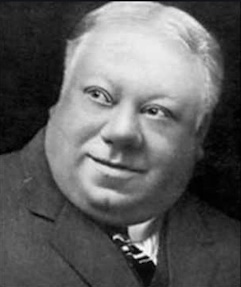
The tribute to Vitagraph Studios begins with a documentary on the first U.S. silver screen actor to headline his own comedy series, John Bunny, born on September 21, 1863. While not the first American comic to appear in a movie - that would be Ben Turpin - the corpulent, irascible, brilliant and very funny John Bunny was the first bonafide U.S. comedy star of the silver screen.
There will also be Mrs. Lirriper's Lodgers (1912), adapted from a Charles Dickens story, and Diplomatic Henry (1915), one of the Vitagraph films starring our favorite purveyors of sophisticated farce at Way Too Damn Lazy To Write A Blog, Mr. and Mrs. Sidney Drew, a team responsible for numerous outstanding comedy films in the teens. The Drews remained unsurpassed in the "witty and urbane" department until the teaming of William Powell and Myrna Loy two decades later.
Sunday's Salute to the Biograph Studio features a selection of historic D.W. Griffith films, courtesy of The Biograph Project. These short subjects produced in 1908-1910 by Biograph a.k.a. the American Mutoscope and Biograph Company will include Griffith's directorial debut, The Adventures Of Dollie, as well as pioneering films featuring Florence Lawrence a.k.a. The Biograph Girl and moviemaking powerhouses-to-be Mary Pickford and Mack Sennett. The Biograph Project and the Film Preservation Society have been doing incredible work restoring the Biographs and formerly lost films of Douglas Fairbanks, Sr.
OUR PRESENTERS:
Sam Gill is a Film Historian and Board Member of the Niles Essanay Silent Film Museum. Formerly an Archivist with the Academy of Motion Picture Arts and Sciences. Co-Author with Kalton C. Lahue of Clown Princes and Court Jesters. (Editor’s Note: and all around nice guy).
Tracey Goessel is the President and founder of Los Angeles-based Film Preservation Society, which, among other things, is working to restore every one-reel Biograph film directed by D.W. Griffith between 1908 and 1913. She is also the author of The First King of Hollywood: The Life of Douglas Fairbanks, an extremely entertaining read about the innovative and iconic silent movie swashbuckler.
The museum's newsletter writer and, in the halcyon pre-coronavirus days, Saturday night show host Michael Bonham elaborates:
Welcome to our monthly online offering featuring part 2 of pioneering east coast film studios, happening this coming weekend September 19-20. As with our previous shows, the link for the John Bunny documentary will appear with the start of Saturday (12:01 am) and the special film programs and ZOOM codes will become active at the start times of the sessions.
To access the programs, CLICK HERE to go to our home page. Once you're there click on the Upcoming Schedule tab on the top of the page or on the "Vitagraph & Biograph Studios" icon on the left.
We hope you have enjoyed all our online shows so far and we plan to continue them until we can once again open our theater to all our friends. We would like to extend many thanks to Larry Telles, Bill Levesque, and Zack Sutherland for handling the technical end of these shows. Also, a big thank you to Rena Kiehn for putting all the puzzle pieces together and helping make it all happen.
Our theater is undergoing a major renovation at this time and if you would like to help with the cost, please CLICK HERE to make a donation. We appreciate any amount you can give.
Watch for us again next month!
Saturday, September 19th - SALUTE TO VITAGRAPH STUDIO
See John Bunny in his own documentary, streaming free!
John Bunny's international stardom, beginning in 1910, preceded Roscoe Arbuckle and Charlie Chaplin. Frequently referred to as a "Dickensian" comedian, he fit right into the studio's emphasis on sophisticated comedy and films based on literary sources; John Bunny starred in Vitagraph's 1913 version of The Pickwick Papers.
John Bunny appeared in
172 films and was frequently teamed with Flora Finch, stately British actress of stage and screen, in a series termed Bunnyfinches or Bunnygraphs. In films that frequently cast the duo as a combative husband-and-wife, there was palpable tension between the two of them - think William Frawley & Vivian Vance on I Love Lucy or John Belushi & Jane Curtin in Saturday Night Live - and this added a great deal to the comedy. Here's the trailer to John Bunny – Film's First King Of Comedy.
To answer those who find the John Bunny films most entertaining and what to know where the heck can one more of them, will note that in addition to the John Bunny DVD, several John Bunny Vitagraph short subjects in excellent pictorial quality have been uploaded to YouTube by the marvelous archivists of Eye Film Institute. "Bunnyfinches" can also be found in the Silent Comedy Watch Party programs, taking place on Sundays on YouTube.
4:00 pm PT / 7:00 ET (one time only screening) Short Subjects by Vitagraph Studios, courtesy of USC Hugh M. Hefner Moving Image Archive. Musical accompaniment by the Edison Theater's own Greg Pane. This includes a film starring future Metro Pictures headliner Clara Kimball Young and a hilarious short subject starring Mr. and Mrs. Sidney Drew, the king and queen of sophisticated comedy on the silver screen during the World War I era.
Mrs. Lirriper's Lodgers (1912)Diplomatic Henry (1915)
Saturday, 5:00 pm PT / 8:00 pm ET - Zoom Link TBA
Zoom presentation with film maker Tony Susnick and film historians Steve Massa and Sam Gill. See the remains of the original Vitagraph Studio in Brooklyn, New York. The studio continued to be in use into the sound era; 1930's Vitaphone short subjects were shot there.
Sunday, September 20th - SALUTE TO BIOGRAPH STUDIO
Experience the early cinema of the American Mutoscope and Biograph Company! Learn how paper prints can be converted to projectable film!
4:00 pm PT / 7:00 ET
5:00 pm PT / 8:00 ET
Zoom presentation by Tracey Goessel, founding member of The Biograph Project. Zoom Link TBA.
.Special thanks go to Dino Everett at USC, Tony Susnick and Tracey Goessel for their generosity and insight on programming the tributes to the Vitagraph and Biograph Studios.
We at Way Too Damn Lazy To Write A Blog respectfully tip our battered yet prized Max Linder top hat - after all, Mack Sennett's Biograph film The Curtain Pole was clearly inspired by the Paris boulevardier's distinctive comedy stylings - and salute the outstanding work of the Niles Essanay Silent Film Museum, Eye Film Institute and all the terrific historians and experts noted in this post.