Today we celebrate the 20th anniversary of this blog - thrilled and delighted to still be here and eking out a post weekly - with the following contribution to the 2026 Silent Movie Day Blogathon, hosted by The Everyday Cinephile and Silentology. The spotlight's on favorite comedians who brought the laughs and no doubt would be most amused to know they are still doing so 100+ years after their heydey. We'll start with the toast of Great Britain, the most adept acrobatic comedian not named Buster Keaton or Al St. John, Lupino Lane.
Before becoming the king of London's musical theatre in Me & My Girl and swinging The Lambeth Walk, Mr. Lane tumbled, climbed and somersaulted his way through numerous classic comedy shorts in the teens and 1920's.
Silent comedy expert Steve Massa adds: Lupino Lane was an international stage star, and, along with Douglas Fairbanks and Buster Keaton, one of the great acrobats and comic action heroes of the movies. Born in London in 1892, he was part of the Lupino family—a famous theatrical clan that started its reign in the 1600s. Stanley and Barry Lupino, very popular in England, were cousins and Stanley’s daughter Ida Lupino became a big movie star in America.
Lane began his career as a child in pantomime, under the tutelage of his father Harry, and became known as “Little Nipper,” or just Nip for short. He had a thorough training in tumbling, juggling, mime and even shooting through “star traps” (trap doors in the stage floor that were connected to catapults that would allow a performer to suddenly pop into a scene).
Only Me is an especially stellar Lupino Lane comedy short.
He plays a slew of parts, a la Buster Keaton's The Playhouse.
Lupino Lane is the equivalent of a whirling dervish in many of his 1920's starring vehicles. The stunts in Sword Points must be seen to be believed.
Directors of the diminutive whirlwind's action-packed adventures included Roscoe Arbuckle and Jack "Preston Black" White.
He and his talented brother - and frequent co-star - Wallace Lupino make like Doug Fairbanks, poke fun at "the glory that was Rome" and tear up antiquity in Roaming Romeo (1928).
While Lane is outstanding and charming in such talkies as The Love Parade, the sheer physical comedy that fills the 2-reelers he starred in for Educational Pictures (a.k.a. The Spice Of The Program) is something to behold.
The nimble Lupino Lane brings us to another nimble comic who starred in movies both in the United States and Europe, Marcel Perez (1884-1929).
For those who haven't seen Marcel Perez, also known as Ferdinand Perez and Marcel Fabre, he was a pioneering, irreverent and dancer-like comedian who gleefully thumbed his nose at the pomposity and conventions of the early 20th century.
Between 1900 and 1923, he starred in 200+ films under a slew of different character names (Robinet, Bungles, Tweedy, Tweedledum, Twede-Dan), both in Europe and America. He also directed other comedians, notably "A Ton Of Fun," after his starring career ended. Talented leading ladies Nilde Barrachi and Dorothy Earle shine in supporting roles.
There's a sleight of hand recalling the graceful deftness of Max Linder while also a more cartoony sleight of hand that brings to mind both the earliest European screen clowns and a key contemporary, the popular American silent movie comedian who quite literally was the son of a professional magician, Larry Semon, known as Ridolini to those who saw his films on European television.
The Extraordinary Adventures Of Saturnino Farandola is a particularly amazing Marcel Perez opus.
The silent movie-crazed (and movie crazy) gang at Way Too Damn Lazy To Write A Blog shall be posting mass quantities of our personal favorite classic comedy short subjects and cartoons for the occasion!
Very talented scribes, terrific silent film experts and ridiculously knowledgeable cinephiles will be celebrating National Silent Movie Day 2026 with cool writings. A few of the posters have been on our blogroll for quite a few years now - and with good reason - and the gang here is thrilled that Silentology, Silver Screenings, Crítica Retrô and nitrate glow in particular are still at it, consistently creating great content.
We'll close today's post by whetting the appetite for silents with some excellent 1920's cartoons, beginning with pre-Mickey Mouse Disneys. These were produced back in the days when the likes of Hugh Harman, Rudy Ising and Friz Freleng were, rather amazingly, working for Walt.
And. . . can't finish without following those with some Otto Messmer cartoons!
Needing laughs big time today, along with guffaws, chortles, chuckles, giggles and howls, so slapstick scenarios involving funny fat guys falling down sound FANTASTIC! Thankfully, film historians, authors and silent movie experts have posted a bunch of pratfall-packed Ton Of Fun 2-reelers from the late 1920's on YouTube.
These slapstick flicks star the rousing and rotund trio of Kewpie Ross, Frank Alexander and Hilliard Carr, a.k.a. Ton Of Fun, and were produced by former Vitagraph star Joe Rock (from the comedy team of Earl Montgomery and Joe Rock) for Standard Film Corporation/F.B.O.
Do the cheerful yet corpulent stars of the Ton Of Fun comedies remind this always too-enthusiastic slapstick fan of any funmakers from more recent memory? YES - this guy!
While Mr. Farley loathed and detested being typecast as a “fat comic”, he was an inspired slapstick performer who, like fellow comedians Roscoe Arbuckle and John Candy, left us way too soon.
We're thrilled and delighted that the exploits of A Ton Of Fun still survive 100 years after they were first produced.
Film historian Dave Glass has posted a bunch of the trio's absurdist adventures on his silent movie-filled YouTube channel.
Our only unfulfilled slapstick wish here is that the very funny plus-sized comedienne Babe London, hilarious in the role of Oliver Hardy's fiancée in Our Wife (1931), did not co-star with Carr, Alexander and Morgan in Ton Of Fun adventures.
As remains the case with the "slapstick ballets" by Comique Productions co-starring Roscoe Arbuckle, Buster Keaton and Al St. John, these comedies deliver numerous sight gag-filled belly laughs.
Along with the slapstick series he and Earl Montgomery co-starred in for Brooklyn's Vitagraph Studios, Joe Rock is best known for the twelve Stan Laurel solo comedies he produced in the mid-1920's. He would go on to produce documentaries in the sound era.
These Stan Laurel solo comedies featured talent both behind and in front of the camera who would subsequently be key contributors to the Hal Roach Studio's Laurel & Hardy series.
Hopefully, these vintage comedies shall be enough to tide us over until National Silent Movie Day this fall.
We're not kidding - June 8 indeed is National Name Your Poison Day.
Charlie Chaplin kicks off Name Your Poison Day with this boozy bit from PAY DAY.
Here, a bon vivant version of Charlie celebrates with fellow inebriate Roscoe Arbuckle in the 1914 Keystone comedy THE ROUNDERS.
Charlie plays both a bamboozled bon vivant and a rowdy ruffian in a filmed version of the Fred Karno troupe "Mumming Birds" sketch that brought him to prominence.
Following Keystone and Essanay, Charlie fights a losing battle with the DTs in one of his Mutual masterpieces, One A.M.
In another Mutual masterpiece, THE CURE, Charlie attempts to get un-inebriated, 20 years before 12 step programs and over 60 years before the Betty Ford Center.
This scene from MODERN TIMES gets one wondering if by happenstance The Little Tramp knew Errol Flynn!
That noxious powder will, before it takes a person out entirely, inevitably prompt one to sing a song like this for no apparent reason.
We continue reeling in no uncertain terms from bad news from last week. Our friend Dorothy Bradley, President Emeritus of the Niles Essanay Silent Film Museum, always friendly and always on hand at Niles' Edison Theater, passed at 80.
Missed writing a post last weekend due to grief over Dorothy's passing. This is an incalculable loss to the historian and film preservation communities, Niles, CA - and to an increasingly doltish nation struggling to remember anything for more than 5 minutes.
The gang here are still - and with much difficulty - processing the passing of Silent Locations author John Bengston, the guy who knew where EVERYTHING was filmed, earlier this year.
While the gang at Way Too Damn Lazy To Write A Blog have not yet visited the British Institute or the George Eastman House, we had the tremendous good fortune to see the reels roll at Niles on numerous occasions.
The museum website adds: We are sad to announce the passing of Dorothy Bradley, Museum President Emeritus on Tuesday, May 26th, 2026.
Dorothy was born, raised and lived in the San Francisco Bay Area for her entire life. She graduated from UC Davis with a degree in chemistry, and worked in that field until retirement. Dorothy moved to the historic district of Niles, located in Fremont, in 1996.
Wanting to learn more about the community, she became a member of the Niles Main Street Association, where some members were interested in focusing on the film history of the district. The Niles Essanay Preservation Committee was formed, and the first Broncho Billy Silent Film Festival took place in 1998.
Dorothy's dedication to history, the sciences and the arts cannot be overstated. We will miss her dearly. She had turned 80 this past December. A memorial will be planned in the near future. Those wishing to send condolences can do so to the museum via email, or via our Facebook page.
For the silent movie lovin' gang here, it is a fond and premature farewell to Dorothy.
We wish her a peaceful journey and send all at NESFM our condolences.
The Edison Theater was a home away from home for the guy who writes Way Too Damn Lazy To Write A Blog, whose Infiniti G20 sedan can be seen here in 2012 parked in front of the Niles Essanay Silent Film Museum and ready for big screen fun.
Was it more than we could stand to say goodbye to the wonderful Dorothy Bradley and also bid adieu to an all-time favorite from the world of music, Sonny Rollins, on the same day? Yes! So today, the Way Too Damn Lazy To Write A Blog movie and music mavens raise a respectful toast to Dorothy Bradley, followed by a second one for Sonny - and a third in which we hoist one for Broncho Billy!
Since vintage silent films and maestro Sonny Rollins' melodic, mellifluous and marvelous sounds have been reliable go-tos for the gang here, it's time to enjoy tunes from Rollins' 1957 classic Way Out West album, followed by splendid G.M. Anderson films photographed in Niles Canyon back before World War I (and screened frequently at the museum as part of the Broncho Billy Film Festival).
As the gang here in the Hudson Valley wishes we could take a Star Trek teleportation device - used or new - directly to the San Francisco Bay Area to enjoy the annual Charlie Chaplin Days event presented by the Niles Essanay Silent Film Museum this weekend, we doff our Max Linder top hat to a lesser known but marvelous silent movie comedian, the great Poodles Hanneford (1891-1967).
We'll start with the following presentation by the Chapman Museum (pride of Glens Falls, NY) on the bareback ridin' movie comedian.
Edwin "Poodles" Hanneford, king of the circus bareback riders, entertained audiences for 4+ decades; his last onscreen appearance was in Charles Walters' 1962 film Billy Rose's Jumbo. Grizzled baby boomers may recognize Poodles as one of the circus performers from the 1935 Shirley Temple - Joel McCrea flick Our Little Girl.
The bio posted by the Chapman Museum adds: Originally from Ireland, Poodles was described by Life Magazine as “the world’s greatest equestrian clown.” He began working for Ringling Brothers in 1917, and appeared in films and on many popular U.S. television shows. He lived on Ridge Road and Kattskill Bay.
Wikipedia adds, "Praised by Buster Keaton as "the only trained acrobat I ever saw who could take a fall and make it look funny," Poodles is considered among the greatest trick riders in history. He was the first to perform a somersault from one running horse to another. He held a Guinness Book of World Records record for performing a running jump onto a horse and stepping off 26 times in a row."
Notably, in the following excerpt from Ain't It The Truth (1928), Poodles is wearing a Buster Keaton style porkpie hat.
Poodles did somersaults, handsprings and other acrobatics thought to be impossible (on or off of a horse) and even worked with slapstick king Roscoe Arbuckle when the big fella was directing 2-reelers as "William Goodrich." Here's Poodles with frequent Buster Keaton co-star "Big Joe" Roberts.
His astonishing skills as a bareback rider are the core of several classic comedy shorts Hanneford starred in, such as Circus Daze.
In the opinion of the silent comedy fans here, the very best 2-reelers produced by the Weiss Brothers/Artclass Productions are those starring Poodles Hanneford. With apologies to the frequently hilarious Ben Turpin and Snub Pollard, as well as the Hairbreadth Harry melodrama spoofs, the Poodles Hanneford comedies are the reason we recommend VCI Entertainment's Weiss-O-Rama 2-DVD set.
And, yes, it's true - Poodles Hanneford, acrobat, rider and comedian supreme, met Charlie Chaplin back in 1917. Happily, the beat goes on in 2026 with Tommy Chapay Hanneford, the latest generation of the Royal Hanneford Circus tradition.
In closing, and with another Max Linder top hat tip to physical comic and bareback rider supreme Poodles Hanneford, by all means, San Francisco Bay Area residents, do head over to the Niles Essanay Silent Film Museum and the Edison Theatre at 37417 Niles Boulevard in Fremont this weekend for the 2026 version of Charlie Chaplin Days.
Classic movie aficionados lucky enough to both be within a close distance of San Francisco and have some dough-re-me on hand to spend will get quite the treat when the San Francisco Silent Film Festival hits the Castro Theatre from May 6-10.
Returning to the big screen from 100+ years ago ready to rock the house - silent movies at their operatic best, accompanied quite literally by a symphony orchestra. San Francisco's 29th Silent Film Festival will return to the hallowed "movie palace" aisles of the Castro Theatre after presenting at the Orinda Theatre in 2025.
This Wednesday evening the San Francisco Silent Film Festival returns in high style with Erich von Stroheim's wonderfully indulgent epic QUEEN KELLY (1929), starring Gloria Swanson at her unapologetically over-the-top best, with musical accompaniment by composer Eli Denson conducting the San Francisco Conservatory of Music Orchestra.
Among the international lineup of cool classic movies at the 29th San Francisco Silent Film Festival: King Vidor's innovative THE CROWD
The last film of F.W. Murnau, his collaboration with documentary filmmaker Robert Flaherty, TABU: A STORY OF THE SOUTH SEAS
Also on the 29th SFSFF bill: William Wyler's western BLAZING DAYS, Abram Room's time capsule tale of life in 1927 Russia BED AND SOFA, the 1926 "Lubitsch touch" charmer and Roaring Twenties piece SO THIS IS PARIS
And. . . William de Mille's MISS LULU BETT, the British sci-fi flick HIGH TREASON, Carl Dreyer's 1922 film LOVE ONE ANOTHER and two "city symphony" pieces from Nice and Paris, Á PROPOS DE NICE (co-directed by Jean Vigo and Boris Kaufman) and RIEN QUE LES HEURES, directed by Alberto Cavalcanti.
Matinee idol star power will be provided by the aforementioned Gloria Swanson, director/actor Harry Piel, a pre-Josef Von Sternberg Marlene Dietrich, megawatt It Girl Clara Bow in HULA, an early appearance by the great Myrna Loy and THE CAVEMAN, a witty farce featuring the tragic albeit wonderful comic character actress Marie Prevost.
Our pals Stan Laurel & Oliver Hardy will headline the Saturday morning show.
Animation, this blog's favorite cinematic genre, will be represented by the Japanese Paper Film Project. The Bucknell University-based initiative worked with Japanese museums, film archives, and individual collectors to digitize and preserve more than 200 films, in this program early animated works made on paper, not celluloid.
Chicago film preservationist Kyle Westphal adds, “the project has successfully recovered the world of lost paper print movies made expressly to be exhibited on home projectors manufactured by Osaka’s Katei Toki and Tokyo’s REFCY and Tsukiboshi firms from 1932 to 1938. With the Japanese animation industry facing hard times, these firms bypassed theaters and took their wares directly to consumers."
The free AMAZING TALES FROM THE ARCHIVES program will be back to highlight film preservationists and the great work of film archives around the world. Presenting: Kyle Westphal of the Chicago Film Society, the
Danish Film Institute’s Thomas Christensen, Filmmuseum Düsseldorf's Andreas Thein and Carlo Chatrian of the Museo Nazionale del Cinema in Turin.
Spectacular silent movies in big screen glory are never (in 1926 or 2026) actually silent, so the San Francisco Silent Film Festival presentations feature a wide array of terrific accompanists, including the Mont Alto Motion Picture Orchestra, Duo Yumeno, Stephen Horne, Mas Koga, Guenter Buchwald, Frank Bockius and Wayne Barker.
The official San Francisco Silent Film Festival press release adds:
Germany’s Weimar period was one of the most vibrant and influential moments in cinema history. Stretching from the end of WWI until the Nazi takeover, Weimar films were at the forefront of stylistic and technical innovations and created narratives that underpin film genres like horror, film noir, and sci-fi to this day.
Our friends at WeimarCinema.org write, “[Weimar] is also shorthand for all things modern, not only in its promotion of gender equality and sexual emancipation, but also in its spirit of experimentation in the arts.
Weimar is still associated with urban modernity and the ever-present dangers of a backlash. Whatever the final verdict, Weimar's tumultuous 14-year period is one of the richest and most consequential in modern history."
We are excited to present four very different, very rare, Weimar titles at this year’s festival, all in beautiful new restorations, all with live musical accompaniment!
Deutsches Filminstitut’s restoration of SENSATION IM WINTERGARTEN demonstrates Max Green’s gorgeous camerawork featuring Berlin’s fabulous Wintergarten (it didn’t survive WWII) and other Berlin locations. This rousing melodrama about a world-famous trapeze artist stars Austrian actor Paul Richter who played Siegfried in Fritz Lang’s Die Nibelungen.
Proof that film restoration can be as exciting, with as much down-to-the-wire pacing as modern film production, Filmmuseum Düsseldorf just found additional material to add to their superb restoration of HIS GREATEST BLUFF and archivist Andreas Thein is working round the clock to prepare the film for its closeup at the festival.
We’re pleased to introduce San Francisco audiences to a major star of the Weimar period who is virtually unknown today, actor/director Harry Piel. Piel’s action films were huge box office draws—this one involves priceless jewels, slick-haired crooks, and Piel in dual roles as twin brothers! And a star turn by Marlene Dietrich in one of her earliest screen appearances.
Danish director Carl Th. Dreyer, known for his silent-era masterpieces The Passion of Joan of Arc and Vampyr among others, travelled to Germany to make LOVE ONE ANOTHER in 1922. Based on a best-selling Danish novel, the film is set during the Russian revolution of 1905, a time of massive anti-Jewish violence. We are grateful to the Danish Film Institute for restoring this rarity and returning Dreyer’s moving depiction of anti-Semitism’s sinister harms to the world.
BOOKKEEPER KREMKE is the story of vainglorious payroll clerk (Hermann Vallentin) who loses his job to automation in a Germany plagued by inflation and unemployment. Ukrainian-born Anna Sten has her German film debut as his daughter Lene. This was director Marie Harder’s only narrative film, and it is a vivid portrait of its time. Harder, who was a Social Democrat went to Mexico after the Nazis banned the party and died in a plane crash near Popocatépetl in 1936. Thanks to the Deutsche Kinemathek for this dazzling restoration.
Imogen Sara Smith writes in our program book, “Watching films from the late Weimar era is both poignant and suspenseful, like watching people skate on thin ice in the last rays of sun before an approaching storm front.” There are parallels to our own time.
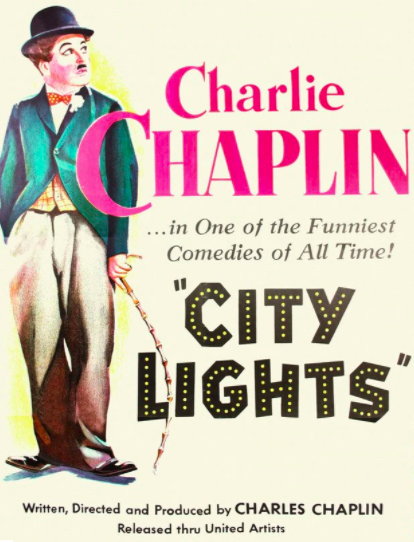
That guy responsible for the first 20th century British Invasion and the international popularity of both going out to the movies and buying home movies (on 8mm, 9.5mm, 16mm, 28mm, etc.), Charles Spencer Chaplin, was born on April 16, 1889. Let's celebrate his 137th birthday belatedly by binge-watching a slew of Charlot clips and films, shall we!
The Chaplin Mutuals are still incredibly funny after all these decades.
And Chaplin's subsequent First National short subjects have their moments as well.
Even Chaplin's earliest films for Mack Sennett's Keystone, produced in 1913-1914, can be quite hilarious.
Some Chaplin Keystones co-star the great silent movie comedienne Mabel Normand.
One favorite Chaplin Keystone is The Rounders, in which Charlie's teamed with the rotund yet graceful and inspired slapstick funmaker (as well as the filmmaking mentor of Buster Keaton) Roscoe Arbuckle.
Now MUST watch Photoplay Productions' (Kevin Brownlow and David Gill) outstanding Unknown Chaplin documentary yet again.
The athletic and winsome Wanda Wiley was among several groundbreaking women in the rough and tumble world of slapstick comedy.
She headlined a series of fast-paced action comedies for Universal Pictures.
Starting her movie career doing stunt work in westerns, Wanda, the excellent "daredevil comedienne", stuntwoman and comic actress headlined her own series for Century Comedies and J.R. Bray Productions.
A rare blend of silver screen comedienne and action hero, Wanda made 50 films between 1924 and 1927.
One of the funniest extant Wanda comedies, A Thrilling Romance, was featured on episode 16 of The Silent Comedy Watch Party.
How Wanda did not attract the attention of Universal head Carl Laemmle after these 50 films and continue her career, we'll never know.
For a stretch in the teens and early 1920's, Fay Tincher, born on April 17, 1884, was one of the top comediennes in motion pictures.
She had a 15 year movie career that spanned stints with The American Eclair Company, Komic Komedies, Triangle, Christie, and Universal.
Fay's funny and outrageous performances as the over-the-top Ethel The Stenographer in the Bill The Office Boy series for Komic Komedies made Fay a major movie star in 1914.
Fay, a reluctant comedienne of stage and screen whose background was in musical theater, went on to co-star in a series of 5-reel dramas and comedies with DeWolf Hopper at Fine Arts Film Company.
After leaving Fine Arts, she formed The Fay Tincher Comedy Company.
Fay, with ambitions to work behind the camera, produced and starred in a series for World Film Corporation.
Unfortunately, none of the three Fay Tincher Comedy Company films (Main 1-2-3, Some Job and Oh, Susie, Behave) survive. All that exists from the 1918 productions are stills.
Since film comedy in the silent era was frequently regarded as undignified and unladylike, not acceptable as a stepping stone to prestigious dramatic roles in feature films (or, for that matter, producing and directing), Fay hated getting cast as a comedy headliner and was very disappointed to see her World Film Corporation series end after three films. She headlined Christie Comedies beginning in 1919.
ROWDY ANN (1919) remains her best known film.
Most of her starring vehicles do not survive, so this diehard film buff is thankful for the few that do.
A super talented actress and comedienne, Fay retired from movies in 1930 after playing Min Gump in Universal's The Gumps series. She left show business, dropped out of the public eye and successfully evaded all interviews for the last 50+ years of her life.
And then there's that most swashbuckling of movie headliners, Harold Lloyd, whose films are still unequaled in their blend of comedy and thrills with the action hero ethos exemplified by Douglas Fairbanks, Sr.
Lloyd, the always indefatigable go-getter, regarded as one of silent comedy's Big Three, along with Chaplin and Keaton, was born on April 20, 1893.
Starting with Lonesome Luke and "glasses character" 2-reelers produced by Hal Roach's Rolin Co. in 1915-1917, Harold starred in numerous classic comedies.
In closing, here's Harold Lloyd's World Of Comedy - enjoy!
The diehard classic movie aficionados at Way Too Damn Lazy To Write A Blog salute silent comedy royalty big time! Laughs are our friend!