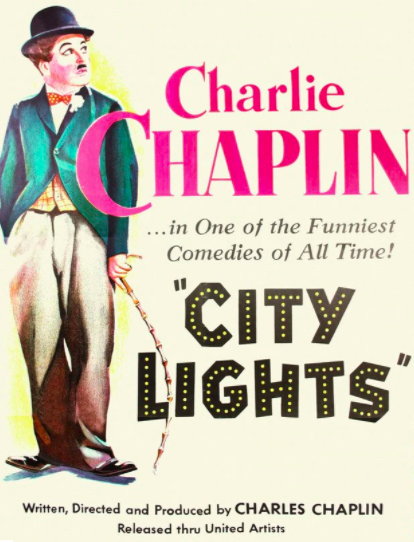
That guy responsible for the first 20th century British Invasion and the international popularity of both going out to the movies and buying home movies (on 8mm, 9.5mm, 16mm, 28mm, etc.), Charles Spencer Chaplin, was born on April 16, 1889. Let's celebrate his 137th birthday belatedly by binge-watching a slew of Charlot clips and films, shall we!
The Chaplin Mutuals are still incredibly funny after all these decades.
And Chaplin's subsequent First National short subjects have their moments as well.
Even Chaplin's earliest films for Mack Sennett's Keystone, produced in 1913-1914, can be quite hilarious.
Some Chaplin Keystones co-star the great silent movie comedienne Mabel Normand.
One favorite Chaplin Keystone is The Rounders, in which Charlie's teamed with the rotund yet graceful and inspired slapstick funmaker (as well as the filmmaking mentor of Buster Keaton) Roscoe Arbuckle.
Now MUST watch Photoplay Productions' (Kevin Brownlow and David Gill) outstanding Unknown Chaplin documentary yet again.
The athletic and winsome Wanda Wiley was among several groundbreaking women in the rough and tumble world of slapstick comedy.
She headlined a series of fast-paced action comedies for Universal Pictures.
Starting her movie career doing stunt work in westerns, Wanda, the excellent "daredevil comedienne", stuntwoman and comic actress headlined her own series for Century Comedies and J.R. Bray Productions.
A rare blend of silver screen comedienne and action hero, Wanda made 50 films between 1924 and 1927.
One of the funniest extant Wanda comedies, A Thrilling Romance, was featured on episode 16 of The Silent Comedy Watch Party.
How Wanda did not attract the attention of Universal head Carl Laemmle after these 50 films and continue her career, we'll never know.
For a stretch in the teens and early 1920's, Fay Tincher, born on April 17, 1884, was one of the top comediennes in motion pictures.
She had a 15 year movie career that spanned stints with The American Eclair Company, Komic Komedies, Triangle, Christie, and Universal.
Fay's funny and outrageous performances as the over-the-top Ethel The Stenographer in the Bill The Office Boy series for Komic Komedies made Fay a major movie star in 1914.
Fay, a reluctant comedienne of stage and screen whose background was in musical theater, went on to co-star in a series of 5-reel dramas and comedies with DeWolf Hopper at Fine Arts Film Company.
After leaving Fine Arts, she formed The Fay Tincher Comedy Company.
Fay, with ambitions to work behind the camera, produced and starred in a series for World Film Corporation.
Unfortunately, none of the three Fay Tincher Comedy Company films (Main 1-2-3, Some Job and Oh, Susie, Behave) survive. All that exists from the 1918 productions are stills.
Since film comedy in the silent era was frequently regarded as undignified and unladylike, not acceptable as a stepping stone to prestigious dramatic roles in feature films (or, for that matter, producing and directing), Fay hated getting cast as a comedy headliner and was very disappointed to see her World Film Corporation series end after three films. She headlined Christie Comedies beginning in 1919.
ROWDY ANN (1919) remains her best known film.
Most of her starring vehicles do not survive, so this diehard film buff is thankful for the few that do.
A super talented actress and comedienne, Fay retired from movies in 1930 after playing Min Gump in Universal's The Gumps series. She left show business, dropped out of the public eye and successfully evaded all interviews for the last 50+ years of her life.
And then there's that most swashbuckling of movie headliners, Harold Lloyd, whose films are still unequaled in their blend of comedy and thrills with the action hero ethos exemplified by Douglas Fairbanks, Sr.
Lloyd, the always indefatigable go-getter, regarded as one of silent comedy's Big Three, along with Chaplin and Keaton, was born on April 20, 1893.
Starting with Lonesome Luke and "glasses character" 2-reelers produced by Hal Roach's Rolin Co. in 1915-1917, Harold starred in numerous classic comedies.
In closing, here's Harold Lloyd's World Of Comedy - enjoy!
The diehard classic movie aficionados at Way Too Damn Lazy To Write A Blog salute silent comedy royalty big time! Laughs are our friend!
This Sunday, November 23rd, Matthew Ross and our film buff friends from The Lost Laugh are presenting the Kennington Bioscope Silent Laughter show at London’s Cinema Museum. The press release elaborates:
We’ve got a full programme featuring some brilliant silent comedies that you won’t see on the big screen anywhere else, including some being shown for the first time in almost a century! As regular attendees will know, we’re all about telling the forgotten stories of silent comedy: the overlooked performers, the forgotten gems and the long-lost.
So, among the highlights this year are a rediscovered adaptation of the P.G. Wodehouse novel The Small Bachelor (1927), an unlikely pairing of W.C. Fields and Louise Brooks, and a celebration of some of the brilliant funny women often neglected in the male-centred narratives of the silent comedy genre: Wanda Wiley, Mabel Normand, Colleen Moore and Marion Byron.
We’ll also be featuring some familiar favourites, too: Chaplin, Laurel & Hardy and Charley Chase all feature in the programme.
The gang at Way Too Damn Lazy To Write A Blog respectfully tip a battered top hat worn by Charlie Chaplin in Making A Living to our fellow film buffs across the pond attending Silent Laughter Day at the Cinema Museum. Tickets are available here.
Born on this day in 1902: the "daredevil comedienne", stuntwoman and comic actress Wanda Wiley, star of very funny films for Century Comedies and J.R. Bray Productions. Starting her movie career doing stunt work in westerns, Wanda, a cross between the winsome comedienne and an action hero, made 50 films between 1924 and 1927.
A longer version of this Century Comedy, the wonderfully frantic A SPEEDY MARRIAGE, was featured in episode 78 of The Silent Comedy Watch Party. It's the last film and begins an hour and six minutes into the show. Thanks, Ben Model and Steve Massa!
Way too many silent movie comediennes were entirely ignored for decades and decades, primarily because they did not star in comedies produced by Hal Roach Studios and Mack Sennett or feature films.
The Century Comedies star and stuntlady is in the jaunty heroic mold of Douglas Fairbanks, Sr. and Harold Lloyd, who she shares the 4/20 birthday with.
From San Antonio, Wanda Wiley's sensibility is that of gal next door who happens to be a daredevil, not dissimilar from Madcap Mabel Normand in A Dash Through The Clowds (1912) - and yes, she races cars in FLYING WHEELS!
She is not the traditional comedienne turned leading lady (Billie Rhodes, Bebe Daniels), the glamour girl who sometimes does pratfalls (Marion Davies, Carole Lombard), a feisty "don't you mess with me" firebrand (Fay Tincher) or the "baggy pants comedienne" persona seen from Gale Henry, Louise Fazenda and Alice Howell to Lucille Ball and Carol Burnett. Possibly Wanda's characterization was modeled on the ever-plucky Constance "Dutch" Talmadge, tied with Mabel Normand as silent cinema's top comedienne in feature films. She does share charisma, spunk and athleticism with Talmadge and Fay Tincher.
As seen in her extant films, WandaVision 1925 is a very cool place!
One of the funniest extant Wanda comedies remains the action-packed A Thrilling Romance. Here is a slightly truncated version.
A more complete version of A Thrilling Romance was featured, in between Jimmie Parrott and Buster Keaton, on episode 16 of The Silent Comedy Watch Party. It's the second film and begins at 39:23.
In 1926, Wanda appears to have been demoted from star of her own series to secondary player in a new series. Why? Who knows? This was not unheard of at Universal, where top comedienne Alice Howell transitioned from headliner to supporting player.
Perhaps the powers that were at Universal feared Wanda would ask for a raise and a promotion. The subsequent What Happened To Jane? series Wanda co-starred in shifts the focus to the male leads.
The much less talented and interesting (a.k.a. dull as dishwater) male leads make Wanda a second banana in the What Happened To Jane? series.
Yes, that's right, Universal and Stern Brothers productions discontinued Wanda Wiley's starring vehicles but, hoping to compete with Hal Roach's Our Gang, launched the successful Buster Brown comedies and then, aspiring to counter Sennett's The Smith Family series, followed it with the Newlyweds & Their Baby series, featuring Sunny Jim McKeen as Snookums. This series of short subjects (and Sunny Jim, the kid with the Ed Grimley hairdo) can be excruciating, and come across more as funny-weird than funny-humorous.
How Wanda Wiley, the personalty plus girl, did not attract the attention of Universal head Carl Laemmle and continue her career into talkies, we'll never know. This brings to mind the question of how many of the LOTS and LOTS of silent film comediennes starred for Universal and who produced these fast-paced, sight gag-filled 2-reelers.
The answer to the former includes Wanda Wiley, Alice Howell, Fay Tincher, Baby Peggy Montgomery, Edna Marion and many more. The answer to the latter would be Julius Stern and Abe Stern, the brother-in-laws of Carl Laemmle and producers of over 900 films, mostly comedies.
The outstanding cinema detective, author and film historian Thomas Reeder has focused two books on the comedy that emerged from Universal in the teens and 1920's - and the second one, Time is Money! The Century, Rainbow, and Stern Brothers Comedies of Julius and Abe Stern, covers their lives and movie career in detail. It would appear from the surviving footage that Wanda Wiley's best films were from the first year of her Universal series produced by the Stern brothers in 1924-1925.
Alas, and unfortunately, Hal Roach, Mack Sennett and Jack White (at Educational Pictures) did not step in at the point in 1927-1928 and hire Wanda to headline a series. Too bad - maybe the unexpected impact of The Jazz Singer was a factor. In a move that got me thinking of Paramount Pictures and the Fleischer brothers, Universal cut ties with the Stern Brothers in 1929.
Wanda made a few more movies, very briefly returned to vaudeville, then married well and gave up showbiz in 1933. There is a mention in Anthony Balducci's superlative book Lloyd Hamilton: Poor Boy Comedian of Silent Cinema of a severe accident on set in which Wanda was thrown from a horse. The response of famed superhero Captain Obvious would be that perhaps this was the reason Wanda did not continue in motion pictures. As athletic, fearless, intrepid and super-fit as Wanda was, getting thrown from a horse could emphatically influence one to seek a less dangerous line of work.
Additional battered top hat tips go to the April 20, 2023 post about Wanda from Travalanche and to Steve Massa, for writing his Slapstick Divas book about the many super-talented comediennes of silent pictures.
Bravos, kudos and huzzahs to Mr. Reeder, Mr. Massa, Mr. Ross (and The Lost Laugh) and, for much of the footage in today's post, the Library Of Congress. We at Way Too Damn Lazy To Write A Blog applaud the excellent research that has brought the spotlight back to Wanda Wiley, the superb daredevil comedienne. Now we'll watch a slew of super-talented comediennes and character actresses who are still with us in April 2024 get big laughs in the Palm Royale series.
We're about to watch today's much-awaited edition of the Silent Comedy Watch Party - and, not surprisingly, thinking about the great comediennes of silent pictures
One of the funniest extant Wanda comedies, A Thrilling Romance, was featured on episode 16 of The Silent Comedy Watch Party.
How Wanda did not attract the attention of Universal head Carl Laemmle and continue her career into talkies, we'll never know. Her 1925 Century Comedy The Queen Of Aces is a hoot!
This brings to mind the question of how many of the LOTS and LOTS of silent film comediennes starred for Universal and who produced these fast-paced, sight gag-filled 2-reelers.
The answer to the former includes the aforementioned Wanda Wiley, Alice Howell, Fay Tincher, Baby Peggy Montgomery and Edna Marion. The answer to the latter is the Stern Brothers, who produced over 900 comedy short subjects. The intrepid cinema detective, author and film historian Thomas Reeder has focused two books on the comedy that emerged from Universal in the teens and 1920's - and the second one, Time is Money! The Century, Rainbow, and Stern Brothers Comedies of Julius and Abe Stern, covers their lives and movie career in detail.
Preceding Baby Peggy and Wanda Wiley as Century Comedies headliner was Alice Howell, whose work with Sennett, Lehrman, Reelcraft and Universal demonstrates her formidable comedy mojo. The excellent writers Tony Slide and Lea Stans have covered Alice Howell at length.
We're big fans of Fay Tincher at Way Too Damn Lazy To Write A Blog.
Fay, a super-talented actress of stage and screen, passed at age 99 in Brooklyn, NY in 1983. It appears she successfully eluded any efforts to be interviewed about her career making movies and kept a low profile after her retirement from show business at the age of 46.
Fay had a 15 year movie career that spanned stints with The American Eclair Company, Komic Komedies, Triangle, Christie, and Universal.
After beginning in movies as a big time vamp in D.W. Griffith's feature The Battle Of The Sexes, Fay's screen popularity took off in 1914 with her scene-stealing antics as Ethel, the outrageous stenographer in Komic Komedies' Bill The Office Boy series.
Alas, Fay wanted more than anything to produce, direct and write and have creative control over her own films, preferably dramas. Although she did have her own production company in 1918 and made several Fay Tincher comedies for World Pictures, for the most part, that scenario was not to be, with the shift from the wild and wooly days of early motion pictures to the studio system already well underway when she began working for Al Christie in 1919.
A few entries from Fay's Christie Comedies series survive, and, as much as she wanted to be a dramatic actress, these films - very likely much to her chagrin - are hilarious. One film that has made it to DVD and is especially memorable stars the indefatigable Fay as as the badass "Christie cowgirl," the personification of a "pistol packin' mama."
Fay was on record as finding the Christie Comedies too slapstick-oriented for her taste. This may be due to various injuries suffered doing stunts as rugged, take-no-prisoners Rowdy Ann in the western comedies series, as well as an impression on Fay's part that she would get to star in 5-reel featurettes at Christie Comedies and pursue storylines more along the lines of the genteel and sophisticated farces exemplified by Mr. And Mrs. Sidney Drew.
For the remainder of the silent era, Fay starred in various Universal comedies, most notably as Min Gump in "The Gumps" series. Her last silver screen appearance (and only talkie) was a supporting part in a Universal Syd Saylor 2-reeler released theatrically in March 1930.
In addition to the Topeka-born actress' talents in front of and behind the camera, she was an athlete and accomplished craftswoman/seamstress, devoted to needlework and creating artwork using vitreous enamel.