Since there are no film presentations to attend, and as this coronavirus pandemic has no end in sight here in the United States, no "nights at the movies" shall transpire for the foreseeable future, it is terrific that some organizations have been recasting their film festivals as online Zoom presentations. One such organization is the Niles Essanay Silent Film Museum.
We are happy they are doing this and not just because otherwise, the gang at Way Too Damn Lazy To Write A Blog would pretty much have nothing to write about and, hence, no posts in the offing.
Since Mr. Blogmeister's writing mojo was last seen stumbling aimlessly in the south end of Uruguay, staggering towards Argentina, where Gomez Addams learned to tango, here's the Niles Essanay Silent Film Museum press release regarding the salutes to the early cinema of Vitagraph and Biograph Studios.
"This weekend, direct from the Edison Theater in beautiful downtown Niles, home of the Niles Essanay Silent Film Museum, there will be a new Zoom presentation, NEW YORK SILENT FILM STUDIOS, PART 2.
The film and documentary links in this tribute to the early movie studios will be available for 24 hours (12:01 am to 11:59 pm) for each day listed - but ONLY that time period."
Saturday's program salutes Vitagraph Studios, also known as the Vitagraph Company of America, founded by J. Stuart Blackton and Albert E. Smith in 1897 in Brooklyn, New York. Vitagraph would be among the very few production companies in the United States that made movies before the turn of the 20th century. While not as advanced as the Lumiere brothers, Alice Guy-Blaché and Georges Méliès, already making movies in Paris, Vitagraph wasted no time in becoming the advance guard of American filmmaking, soon followed by Edwin S. Porter and the Miles Brothers.
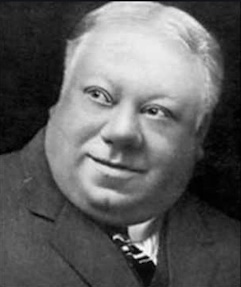
The studio's early stars included the first of the rotund "big fella" movie comedians, John Bunny, English character actress Flora Finch, leading man Maurice Costello, Wally Van, Lillian Walker, Mr. and Mrs. Sidney Drew and, in a wide variety of roles, stage comedienne and accomplished mimic Florence Turner.
The tribute to Vitagraph Studios begins with a documentary on the first U.S. silver screen actor to headline his own comedy series, John Bunny, born on September 21, 1863. While not the first American comic to appear in a movie - that would be Ben Turpin - the corpulent, irascible, brilliant and very funny John Bunny was the first bonafide U.S. comedy star of the silver screen.
There will also be Mrs. Lirriper's Lodgers (1912), adapted from a Charles Dickens story, and Diplomatic Henry (1915), one of the Vitagraph films starring our favorite purveyors of sophisticated farce at Way Too Damn Lazy To Write A Blog, Mr. and Mrs. Sidney Drew, a team responsible for numerous outstanding comedy films in the teens. The Drews remained unsurpassed in the "witty and urbane" department until the teaming of William Powell and Myrna Loy two decades later.
Sunday's Salute to the Biograph Studio features a selection of historic D.W. Griffith films, courtesy of The Biograph Project. These short subjects produced in 1908-1910 by Biograph a.k.a. the American Mutoscope and Biograph Company will include Griffith's directorial debut, The Adventures Of Dollie, as well as pioneering films featuring Florence Lawrence a.k.a. The Biograph Girl and moviemaking powerhouses-to-be Mary Pickford and Mack Sennett. The Biograph Project and the Film Preservation Society have been doing incredible work restoring the Biographs and formerly lost films of Douglas Fairbanks, Sr.
OUR PRESENTERS:
Sam Gill is a Film Historian and Board Member of the Niles Essanay Silent Film Museum. Formerly an Archivist with the Academy of Motion Picture Arts and Sciences. Co-Author with Kalton C. Lahue of Clown Princes and Court Jesters. (Editor’s Note: and all around nice guy).
Tracey Goessel is the President and founder of Los Angeles-based Film Preservation Society, which, among other things, is working to restore every one-reel Biograph film directed by D.W. Griffith between 1908 and 1913. She is also the author of The First King of Hollywood: The Life of Douglas Fairbanks, an extremely entertaining read about the innovative and iconic silent movie swashbuckler.
The museum's newsletter writer and, in the halcyon pre-coronavirus days, Saturday night show host Michael Bonham elaborates:
Welcome to our monthly online offering featuring part 2 of pioneering east coast film studios, happening this coming weekend September 19-20. As with our previous shows, the link for the John Bunny documentary will appear with the start of Saturday (12:01 am) and the special film programs and ZOOM codes will become active at the start times of the sessions.
To access the programs, CLICK HERE to go to our home page. Once you're there click on the Upcoming Schedule tab on the top of the page or on the "Vitagraph & Biograph Studios" icon on the left.
We hope you have enjoyed all our online shows so far and we plan to continue them until we can once again open our theater to all our friends. We would like to extend many thanks to Larry Telles, Bill Levesque, and Zack Sutherland for handling the technical end of these shows. Also, a big thank you to Rena Kiehn for putting all the puzzle pieces together and helping make it all happen.
Our theater is undergoing a major renovation at this time and if you would like to help with the cost, please CLICK HERE to make a donation. We appreciate any amount you can give.
Watch for us again next month!
Saturday, September 19th - SALUTE TO VITAGRAPH STUDIO
See John Bunny in his own documentary, streaming free!
John Bunny's international stardom, beginning in 1910, preceded Roscoe Arbuckle and Charlie Chaplin. Frequently referred to as a "Dickensian" comedian, he fit right into the studio's emphasis on sophisticated comedy and films based on literary sources; John Bunny starred in Vitagraph's 1913 version of The Pickwick Papers.
John Bunny appeared in
172 films and was frequently teamed with Flora Finch, stately British actress of stage and screen, in a series termed Bunnyfinches or Bunnygraphs. In films that frequently cast the duo as a combative husband-and-wife, there was palpable tension between the two of them - think William Frawley & Vivian Vance on I Love Lucy or John Belushi & Jane Curtin in Saturday Night Live - and this added a great deal to the comedy. Here's the trailer to John Bunny – Film's First King Of Comedy.
To answer those who find the John Bunny films most entertaining and what to know where the heck can one more of them, will note that in addition to the John Bunny DVD, several John Bunny Vitagraph short subjects in excellent pictorial quality have been uploaded to YouTube by the marvelous archivists of Eye Film Institute. "Bunnyfinches" can also be found in the Silent Comedy Watch Party programs, taking place on Sundays on YouTube.
4:00 pm PT / 7:00 ET (one time only screening) Short Subjects by Vitagraph Studios, courtesy of USC Hugh M. Hefner Moving Image Archive. Musical accompaniment by the Edison Theater's own Greg Pane. This includes a film starring future Metro Pictures headliner Clara Kimball Young and a hilarious short subject starring Mr. and Mrs. Sidney Drew, the king and queen of sophisticated comedy on the silver screen during the World War I era.
Mrs. Lirriper's Lodgers (1912)Diplomatic Henry (1915)
Saturday, 5:00 pm PT / 8:00 pm ET - Zoom Link TBA
Zoom presentation with film maker Tony Susnick and film historians Steve Massa and Sam Gill. See the remains of the original Vitagraph Studio in Brooklyn, New York. The studio continued to be in use into the sound era; 1930's Vitaphone short subjects were shot there.
Sunday, September 20th - SALUTE TO BIOGRAPH STUDIO
Experience the early cinema of the American Mutoscope and Biograph Company! Learn how paper prints can be converted to projectable film!
4:00 pm PT / 7:00 ET
5:00 pm PT / 8:00 ET
Zoom presentation by Tracey Goessel, founding member of The Biograph Project. Zoom Link TBA.
.Special thanks go to Dino Everett at USC, Tony Susnick and Tracey Goessel for their generosity and insight on programming the tributes to the Vitagraph and Biograph Studios.
We at Way Too Damn Lazy To Write A Blog respectfully tip our battered yet prized Max Linder top hat - after all, Mack Sennett's Biograph film The Curtain Pole was clearly inspired by the Paris boulevardier's distinctive comedy stylings - and salute the outstanding work of the Niles Essanay Silent Film Museum, Eye Film Institute and all the terrific historians and experts noted in this post.
"Sidney Drew could open the heaven of laughter to a burdened soul." Grace Kingsley, Los Angeles Times
"They anticipate Edward Everett Horton in their delicacy and nuance." Joe Adamson
"Humorous action does not mean gross horseplay. It does not mean the characters are to dash madly into scenes, trip over matches and fall out of the scene again. In our own comedies, Mr. and Mrs. Drew and myself work to appeal to the mind as well as the eye, but to appeal to the mind through the eye." Sidney Drew, 1917 interview in Moving Picture World
"I believe she’d like to paint the furniture and make the costumes if she could.” Sidney, on his wife and collaborator, Lucille McVey Drew
"Too much credit cannot be given to [McVey], who thought out the ideas, wrote the scenarios, and did nearly all of the directing." Grace Kingsley
Our contribution to the Barrymore Trilogy Blogathon pays tribute to one of the greatest duos in comedy films - dashing, romantic, funny and also related to the Barrymores. They are among the few screen comedy teams that preceded Laurel & Hardy (no, this would not be the Mittenthal Film Company's "Heinie & Louie", Kalem's "Ham & Bud", Vim's "Pokes & Jabbs" or Universal's much more genteel team of Eddie Lyons & Lee Moran): the prolific and hilarious Mr. And Mrs. Sidney Drew, unsurpassed in the "witty and urbane" department until the teaming of William Powell and Myrna Loy two decades later.
The early days of American movies presented quite a different landscape than one might surmise: comedy wasn't dominated by knockabout - far from it. Although the perception remains that early cinema comedy is so rough-and-tumble as to make Moe, Larry & Shemp look like Noël Coward by comparison, most popular among the U.S. produced comedy series in 1910-1912 were the Vitagraph Pictures marital farces starring John Bunny and Flora Finch, known as Bunny-Finches.
The Vitagraph series, soon to be covered in detail by Tony Susnick's documentary on John Bunny, relied on situational humor and were the first popular comedy series in American movies, even preceding Essanay's Alkali Ike.
The Bunny-Finches represented an early gold standard in silver screen comedies, arguably only surpassed at the time by Parisian man-about-town Max Linder. The craggy and corpulent comedian played a cigar-smoking, card-playing Dickensian sort who was perpetually trying to put one over on his wife, for the most part unsuccessfully.
One of Drew's first appearances at Vitagraph was in a Bunny-Finch also featuring renowned Broadway star Josie Sadler (soon to be spun off into her own series) titled The Fuedists.
The death of John Bunny of Bright's Disease in 1915 corresponded with the rise of two styles of film humor: wild, anarchic slapstick (Mack Sennett at Keystone, Marshall "Mickey" Neilan at Kalem and especially Henry "Suicide" Lehrman at L-Ko) and a new breed of sophisticated domestic comedies, led by Sidney Drew.
Sidney Drew, uncle to John, Lionel and Ethel Barrymore (their mom's brother), toured the Broadway stage as a successful light comedian for 20+ years, teamed with his first wife, Gladys Rankin. The duo wrote and performed in plays together, billed as Mr and Mrs. Sidney Drew, starting in 1887.
They began their transition to movies in 1911 at Kalem. Gladys Rankin wrote scenarios for the series under the name of George Cameron, but did not appear as Mrs. Sidney Drew onscreen at Kalem and Vitagraph - Rose Tapley, Anita Stewart and briefly Clara Kimball Young did (in the following short, Jerry's Mother-In-Law) - when they began making films there in 1913.
By the time the first Mrs. Sidney Drew passed away at 40 on January 9, 1914, Vitagraph had specialized in farce and domestic comedies for quite some time.
Sidney Drew began collaborating with a scriptwriter at the studio, Lucille McVey, who had been performing under the name Jane Morrow.
Lucille McVey would eventually become the second Mrs. Drew and co-star with Sidney in over 150 films: first for Vitagraph, then as an independent producer releasing their Drew Comedies through Metro Pictures in 1916 and later the V.B.K. Film Corp. with distribution through Paramount Pictures. Though she did not receive screen credit at the time, Lucille McVey is now recognized as the co-director, producer and scenarist on the series and has her own page on the Women Film Pioneers Project website.
Sidney Drew did make the transition to five-reel featurettes and actually got his first one, A Florida Enchantment, starring Edith Storey. Film historians David Kalat and Bruce Calvert have reviewed A Florida Enchantment at length; this writer has, unfortunately, not seen it, but gets the general impression that film buffs who don their 1914 glasses and situate them properly will find a howlingly funny and truly gender-bending role reversal farce. Out in movie theaters four months before the December 1914 release of Mack Sennett's Tillie's Punctured Romance, it could also could be considered the first comedy feature film produced in America. The Drews followed this in 1915 at Vitagraph with a more dramatic feature, Playing Dead, as well as the 5-reel film they wrote and produced in 1918, Pay Day, in which they play screenwriters.
The Drews' smashing successes in filmmaking and comedy notwithstanding, the ending of this story, unfortunately, would not be a happy one; as the Van Dyke Parks lyric goes, "movies is magic, real life is tragic." Sidney's son, S. Rankin Drew, an actor and director in his own right, was killed in World War I. Sidney was crushed by this emotionally and spiritually. He passed away on April 9, 1919 at 55 years of age.
So the second Mrs. Sidney Drew joins the list of wonderful silent film comediennes - Madcap Mabel Normand, Alice Howell, Fay Tincher and Nilde Barrachi (the frequent co-star of "international mirth maker" Marcel Perez) - who did not appear in any talkies.
While the Drews did not continue their series into the 1920's, the influence of the Mr. And Mrs. Sidney Drew comedies lasted long after the premature passings of the two stars. Carrying on in their footsteps would be former dancer (and future assistant director to Charlie Chaplin) Carter DeHaven and his wife, Flora, starring in domestic comedies and farces. One of this series' directors was Charles Parrott a.k.a. Charley Chase. Another was former Denver fireman Robert McGowan. Both would be up to their eyelids in the next wave of great comedy at the Hal Roach Studio in the 1920's and 1930's.
While Leo McCarey never mentioned the Drews or the DeHavens specifically as an influence, his key collaborator at Roach was nothing other than Mr. Chase, and their specialty a more sophisticated approach to silent "sight gag" comedy. Thus, it is possible to draw a line from the Drews to Chase's situational and often farce-based "comedy of embarrassment" and then to McCarey's later work directing such features as Ruggles Of Red Gap and The Awful Truth - and also note a very likely influence upon Leo's fellow innovator in screwball comedy, Gregory LaCava.
In closing, there will be at least an attempt to answer the question, "where can we SEE any films starring Mr. And Mrs. Sidney Drew?" Here are two of their Vitagraph comedies, still clever, creative and funny after 100 years.
The next question, of course, is "where can we see MORE witty and charming films starring The Drews?" Well, due to the "nitrate won't wait" phenomenon, the answer would be not too many. . . the Mr. and Mrs Sidney Drew series, like a substantial percentage of silent movies that Charlie Chaplin did not star in, have a rather low survival rate.
The 1915 Vitagraph short By Might Of His Right is available for viewing on the National Film Preservation Foundation website. By Might Of His Right was preserved under the direction of George Eastman House from a tinted 35mm nitrate print found in 2010 at the New Zealand Film Archive.
Fox Trot Finesse is on the 5 DVD Slapstick Encyclopedia set. While one can find used copies of this on Amazon and from other online sellers, new copies tend to be on the pricey side.
The 1915 Mr. and Mrs. Sidney Drew comedy Wanted: A Nurse will be on the Accidentally Preserved volume 3 DVD of silent film rarities, to be released by Undercrank Productions on September 29, 2015.
POSTSCRIPT: After this posted on the night of August 14 (PST), I learned that A Florida Enchantment is actually up on YouTube in its entirety. Don't know who the print source was. While it's great to see it, the poster does not appear to be a film buff and the upload is accompanied by so little actual information that one wonders if the poster knew anything at all about the careers of Mr. And Mrs. Sidney Drew or silent movies in general.