Large Association of Movie Blogs
Showing posts with label Jackie Gleason. Show all posts

Saturday, February 26, 2022

These Showbiz Greats Were Born on February 26


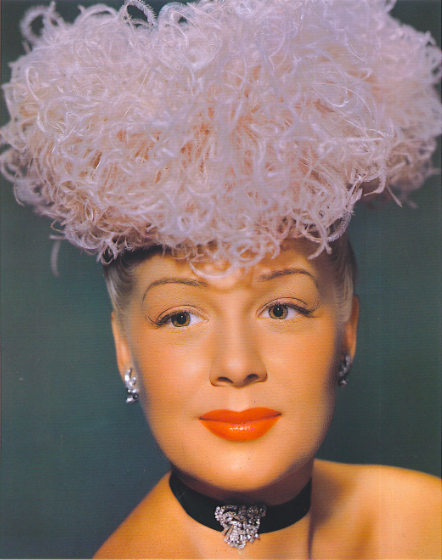
On February 26, just before the Ides of March, turns out to be the natal anniversary of a bevy of showbiz greats! We'll kick this off with the one, the only Betty Hutton, actress, comedienne and vocalist.


Betty Hutton, star of stage, movies (The Miracle Of Morgan's Creek, Annie Get Your Gun) and television, was born on February 26, 2021.


Then there's Jackie Gleason, born on this day in 1916.


We love this historic clip of The Great One in 1950 with another comedy great, Bert Wheeler. Apologies for the very subpar video quality, but that's all this blogger has seen of this meeting of two wonderful comics from different generations.


Have we at Way Too Damn Lazy To Write A Blog watched all 39 filmed episodes of The Honeymooners and all the versions from the live shows Jackie starred on multiple times? Yes.


It is fascinating to see the earliest incarnations of The Honeymooners, from Gleason's days on Cavalcade Of Stars. This one features Pert Kelton as Alice.


Favorite Gleason performance of all-time? With Paul Newman as a Minnesota Fats-style poet laureate of pool in Robert Rossen's The Hustler.


And then there's, speaking of comic geniuses, the blazing comic genius of Tex Avery, the King of Cartoons, born on February 26, 1908.


Tex is the guy who is most responsible for transforming Warner Bros. animation's "scwewy wabbit," Bugs Bunny from geek to sleek.


Fortunately for us seeking laughs in this difficult time, there are TWO Blu-rays of Avery's incomparable MGM cartoons (and, surprise, a third on the way).


Tex Avery directed theatrical cartoons for two decades, and even his very last theatricals produced by Walter Lantz on a lower budget than the MGMs remain razor-sharp masterpieces of comedy timing. Nobody nails visual humor "theme and variations" in an animated cartoon, with the goal of eliciting belly laughs, quite like Tex Avery.


Ace character actor and co-star of The Odd Couple TV series Tony Randall was born on February 26, 1920.


Here's one of Tony's many appearances on Late Night With David Letterman.


Tony appeared in so many movies and TV shows it is difficult to know where to start.


It has been literally decades since I last saw The 7 Faces Of Dr. Lao, which I originally viewed on the big screen at the matinee during its theatrical release back in 1964. Whether it is okay by 2022 standards, I don't know - would have to watch the film again - but do see it as a fitting companion piece to Buster Keaton's The Playhouse and Lupino Lane's Only Me; in all three cases, countless parts are played by the same actor. Funny, as The Medusa, Tony oddly resembles 1980's pop star Boy George.


Our favorite Tony Randall flick, hands-down, is Frank Tashlin's satiric gem Will Success Spoil Rick Hunter?


Most amazing is Tony's masterful appearance, with Jayne Mansfield also playing a non-prototypical role, on The Alfred Hitchcock Hour, which reflects Tony Randall's versatility as an actor. Watch this all the way through!


Another character actor born on February 26 whose lengthy career in show business included appearances in numerous movies, before national fame in roles on series television was William Frawley.


Vaudevillian Bill Frawley was the guy who played the curmudgeonly curmudgeon to end all curmudgeonly curmudgeons, Fred Mertz, in I Love Lucy, as well as Bub O'Casey on My Three Sons.


For more info, check out character actor, cartoon voice artist and comedy film historian Eddie Deezen's terrific article on William Frawley, as well as Archive Of American Television interviews.


Last but not least, we will mention albeit not necessarily go to town on the extraordinary life and career of British stage, screen and radio actress Madeleine Carroll, star of The 39 Steps, Secret Agent, The Prisoner Of Zenda and My Favorite Blonde (among many films), born on February 26, 1906.


The life story of Madeleine Carroll is quite an epic one, and covered in detail by John Pascoe's book Madeleine Carroll: Actress and Humanitarian, from The 39 Steps to the Red Cross. She was a movie star for a few years and a humanitarian exemplifying compassionate public service for a few decades. No doubt at least two or three avid film buffs among the dozens writing classic movie blogs have indeed gone to town on the numerous onscreen and offscreen heroics of Madeleine Carroll.


Sunday, February 28, 2016

The End Of February Is A Comedy Geek Birthday Bonanza


Well, it's time for the weekend blog post and Your Correspondent is looking underneath tables, beds and car seats - and possibly where former NBA player Lamar Odom disappeared to - trying to find where the #*%!&^ that writing mojo went to. That said, today's topic du jour is the fact that a slew of artists, actors, comics and musical comedy performers - every one responsible for TONS of laughs - were born in the last few days of February.


First and foremost, there was Tex Avery, a.k.a. The King Of Cartoons, born February 26, 1908 in Taylor, Texas.


Among other things, Tex Avery was. . .
  • Rescuer of various members of the Warner Bros. cartoon staff during a ski trip mishap
  • Blind in one eye, due to a prank gone terribly wrong at the Walter Lantz studio.
  • A descendant of Judge Roy Bean
  • The guy who brought the animated cartoon business out of post-Production Code of 1934 (and Disney envy) doldrums by joining the Warner Brothers cartoon studio in 1935 and subsequently creating Daffy Duck and Bugs Bunny.


The "Termite Terrace" boys in the summer of 1935: (from left) Virgil Ross, Sid Sutherland, Tex Avery, Chuck Jones, and Bob Clampett


Tex moved on to the MGM cartoon studio in 1942 and created more indelible characters there: Droopy, The Wolf and Red Hot Riding Hood (as well as the somewhat less indelible but weirdly funny anti-character Screwy Squirrel).


In the field of live-action comedy, only Buster Keaton, Stan Laurel, Charley Chase, Frank Tashlin and Ernie Kovacs could go toe-to-toe with Tex Avery. His timing, visual gags and concepts are still original and unequalled.


Jim Backus


Celebrated, among other things, as the voice of Mr. Magoo, the irascible old coot created for UPA cartoons (some directed by the inimitable and quite brilliant John Hubley, many directed by ex-WB animator Pete Burness), Jim Backus.


Born on February 25, 1913, Jim Backus was a remarkable character actor who excelled on stage, screen, television, radio and recordings. He could play everything from the mealy-mouthed father of James Dean's character in Rebel Without A Cause to the garrulous Thurston Howell III in Gilligan's Island to Tyler Fitzgerald, a pilot so stone drunk as to make Foster Brooks, Jack Norton, Arthur Housman AND W.C. Fields swear off old-fashioneds FOREVER, in It's A Mad Mad Mad Mad World.


The early Magoo cartoons in particular are a scream. The premise is not so much that the ever-cranky Quincy Magoo is nearsighted, but that he is so bullheaded that he refuses to see. Funny, that describes just about all of us fallible humans at least some of the time.


Once the Magoo character became less bilious and his rough edges got smoothed over, this cartoon buff did not find him nearly as funny, but the Mr. Magoo's Christmas Carol TV special remains an all-time favorite bit of holiday entertainment.


Backus also recorded some very funny novelty records.


Tony Randall


Born on February 26, 1920, Tony Randall could handle everything from dramatic to light comedy roles beautifully. This blogger and many of his contemporaries first saw Tony in George Pal's fantasy classic The 7 Faces Of Dr. Lao, a film in which he excelled in multiple and diverse roles.


Investigating his career reveals that Tony frequently did amazing work in television - one episode of the The Alfred Hitchcock Hour cast him as a suave and charming adman who also happens to be a raging alcoholic on his way to becoming a psychopath - as well as in movies, especially the lead part in Frank Tashlin's satiric masterpiece Will Success Spoil Rock Hunter?


As the kinder, gentler version of Felix Unger in TV's version of The Odd Couple, Tony could also be fall-down hilarious. Randall and Klugman repeatedly get big laughs just by the way they speak, move and delineate those characters.


Jackie Gleason


Last Friday was the 100th anniversary of Jackie Gleason's birth. Many of us grew up on Honeymooners reruns and the "from Miami Beach" 1960's Jackie Gleason Show featuring Frank Fontaine and The June Taylor Dancers. Among his signature characters: Ralph Kramden, Fenwick Babbitt, Charlie the Loudmouth, Rum Dum, Joe The Bartender and The Poor Soul, Jackie's homage to two comedy greats from silent movies, Lloyd Hamilton and Harry Langdon.


Have yet to cease marveling and laughing out loud at the comic chemistry between Gleason and Art Carney in The Honeymooners.


My personal favorite character by The Great One, hands down, is bon vivant Reggie Van Gleason III.


Betty Hutton


"A full-fledged actress with every talent the noun implies. She plays in musicals because the public, which can do practically nothing well, is willing to concede its entertainers only one talent." Preston Sturges


Born on February 26, 1921, Betty Hutton was a show-stopping musical performer and among a group of brassy comediennes - Martha Raye, Cass Daley, Mabel Todd, Joan Davis, Judy Canova - who hit showbiz like a tidal wave at the end of the 1930's. Here's Betty, already showing star power as a comic big band singer for the Vincent Lopez Orchestra in this 1939 Vitaphone Melody Master band short.


Betty and the rubber-faced (and rather Jim Carrey-like) Cass Daley both lended their shy, retiring, low-key and demure musical comedy personas to the 1942 film The Fleet's In.


Betty is best known for her successful star turn in the MGM version of Annie Get Your Gun, a vehicle originally slated for Judy Garland, who had to bow out of the project for health reasons. One conjectures Betty could have handled all kinds of character roles and dramatic parts quite well, but having excelled to such a degree in musical comedy, that was where she would be typecast.


In many of her films, Betty Hutton's skills as a physical comedienne combine with a rather remarkable ability to put over enjoyably zany songs that suit her megawatt personality to a T.


When Betty sang with great humor, as she does in this production number from The Perils Of Pauline, and tackled comedy roles with gusto, it's a good bet that Lucille Ball was watching and taking detailed notes!


William Demarest


One of Betty Hutton's key co-stars was the great character actor William Demarest, born on February 27, 1892.


One of the things that makes the Preston Sturges comedy The Miracle Of Morgan's Creek such a great film is what happens when Bill Demarest plays scenes with Betty and the ever-bemused Eddie Bracken.


Demarest's curmudgeonly yet versatile persona would make him an in-demand character actor for decades, well into the television age. Many of us born in the 1950's and early 1960's remember him as the pancake-making "Uncle Charley" in My Three Sons but later discovered his classic movie work (as we would also find Evil Fred MacMurray in Double Indemnity and The Apartment).


William Frawley


And speaking of curmudgeons, here's the guy whose claim to fame was playing a fella who would make the early cranky Mr. Magoo look like a sweetheart, the inimitable Fred Mertz from I Love Lucy, William Frawley, born on February 26, 1887.


The veteran character actor who preceded Bill Demarest in My Three Sons after his stint on I Love Lucy, William Frawley had a lengthy and wide-ranging career in show business (he even appeared in some silent movies), very aptly described in the following excellent article by character actor, comedy historian, cartoon voice artist and writer Eddie Deezen.


Last but not least, there's the great Zero Mostel, the gifted, versatile character actor, comedian and star of stage and screen Zero Mostel who was born February 28, 1915.


To all of the above, for the fun, entertainment and joy you created, we at Way Too Damn Lazy To Write A Blog can't thank you enough.

Sunday, February 21, 2016

More Workout Options For Exercise Haters


Still admittedly in the "rather cook than exercise" department, perhaps it is possible to get off the collective duff - and we don't mean Duff Beer - by watching Roscoe Arbuckle and Buster Keaton in The Cook, who both cook and dance with exceptional panache.


Another dancin' man: John Candy as Uncle Buck. We'll let that Three Stooges sound effect at 0:48 - rather jarring presented in a non-cartoony setting - slide because Mr. Candy is SO funny and that song, Laugh Laugh by the Beau Brummels is as catchy as it was in 1964.


To bring something remotely resembling enthusiasm to a Let's Dance decree and increase those "steps per day", emulate how gracefully Laurel & Hardy do the soft shoe here.


Better yet, do that Ed Norton and Ralph Kramden mambo from The Honeymooners.


One could get inspired by Zero Mostel, who thrilled audiences coast-to-coast by dancing up a storm starring in Fiddler On The Roof.


Zero was pretty darn wonderful doing a bit of terpsichore with Tommy Tune on The Dean Martin Show.


And then there's running, a very tough sell for anyone to whom sprinters wearing designer activewear bring to mind not good health but the tinhorn dictator authority wielded by overzealous high school gym teachers. At least in this clip from the 1928 Mack Sennett Studio comedy Run, Girl, Run we can enjoy Carole Lombard, who offscreen was a perennial Olympic gold medalist in good-natured bonhomie and the fine arts of friendship, hilariously ribald stories and outrageous one-liners.


Let's go bowling. . .


Then again, scratch that - let's not go bowling. Unlike Fred Flintstone, this blogger lacks classical ballet training.


Now Fred Flintstone was also a heckuva golfer and one today largely does not have to worry about losing a club or a ball inside the stomach of a critter on the endangered species list.


A certain key influence upon Fred Flintstone also gave golf a whirl. . .


Mr. Magoo thought he was the next best thing to Ben Hogan, Arnie Palmer and Jack Nicklaus.


And then there's Ridolini.


Unquestionably, Ridolini demonstrated fervor for the game on and off the links, but the only thing and Tiger Woods had in common was quite another game altogether: compulsive womanizing. There's more on that in the new bio of Ridolini.


In getting that ol' heart rate up, perhaps handball might be a good choice, too. Then again, maybe not.


Here's a panorama of sheer sporting ineptitude that would not make much of an infomercial (in that "do my workout program and you'll lose 26 pounds in 5 minutes" genre). The following compilation comprises some of the best films to ever emerge from the Mouse Factory - all of which we at this blog would love seeing on an official remastered Blu-ray release. Here are seven classic cartoons that demonstrate the comedy mojo of Disney's "Goof Unit", led by director Jack Kinney, in all its glory.


We close this disgustingly healthy post with The Goof's comeback, produced four decades later, Sport Goofy in Soccermania, directed by Darrell Van Citters.


Thursday, March 08, 2012

This Blog's Favorite Checkered Cap Schlemiel: Lloyd Hamilton

"One of the funniest men in silent pictures." Buster Keaton

I admit to a certain fascination with comedians from the silent and early talkie eras. With the exception of Harold Lloyd, they were not ambitious regular guys who made good. They were sticky wickets and hellraisers who could not be constricted or contained. The truly inspired ones, Buster Keaton in particular, have that indefinable visionary quality that Captain Beefheart termed "sun zoom spark"; almost a century later, their films and inventive ideas are still outside the box, way outside the box.


Arguably, the most brazen combination of comic genius, originality and offscreen rock star recklessness - other than Keaton and Charley Chase - belonged to the guy known as "the comedian's comedian", Lloyd Vernon Hamilton (1891-1935), a.k.a. "Ham". Nearly 80 years after his death in January 1935, Mr. Hamilton's original onscreen persona - cranky, quirky, dangerous - manages to command our short 21st century attention spans and funny bones.


Known for his incessantly put-upon sad sack characterization, Mr. Hamilton ranks high on my short list of all-time favorite screen comics. Yet, if not for such groundbreaking books as Leonard Maltin's The Great Movie Comedians and Walter Kerr's The Silent Clowns (which reviews Ham's classic 1926 short Move Along in detail), he may well have entirely slipped through the cracks and not even merited a momentary mention in the film history books.

Hamilton first rose to fame by starring as part of a knockabout team with diminutive Bud Duncan in the Kalem Studio's 1914-1917 Ham & Bud series. The m.o. of these rude n' crude one-reelers - and a "louder faster shorter" trend in screen comedy that corresponded with the WW1 years - is "incredibly bad taste".


Even well into Lloyd Hamilton's later solo career, but especially with the Ham & Bud series, the viewer's never quite sure if he is merely aiming for sheer surreal shock value or presenting a "sick sick sick" National Lampoon-ish parody of execrable taste.


Some Ham & Bud comedies are unrelentingly horrendous, absolutely designed to offend, while others serve up the team's totally indefensible, beyond all redemption behavior with a certain "wink wink nudge nudge" quality that equals what film historian Richard M. Roberts described as "crass with panache".


So here are Ham & Bud, directed by Marshall "Mickey" Neilan. Simply horrid or a surreal guilty pleasure? You be the judge.


After the Kalem series ended, Lloyd moved on to work in the infamous Henry "Suicide" Lehrman's fast and furious Fox Sunshine comedies and subsequently develop a new screen characterization for a starring series in 1920.


On the surface, his character resembled an overgrown boy but was actually more than a bit of a rake and a scoundrel, as well as a "poor sap" schlemiel who always carried himself as a shabby-genteel dandy. Hamilton developed his character, who got even less respect than Rodney Dangerfield, with the assistance of directors Lehrman, Jack White and Norman Taurog.


Ham's dark sensibility and refreshingly post-modern cynical viewpoint would have, without a doubt, struck a responsive chord with historians and cineastes decades later - if his films actually existed!


A principal reason for Ham's relative obscurity, by comparison to his contemporaries is straightforward: the very low survivability rate of his work, due to a 1937 vault fire that singlehandedly wiped out the 35mm nitrate negatives of his 1920's Fox and Educational series. Only Universal Pictures comedienne Alice Howell fared worse in terms of the utter scarcity of surviving screen comedy work.


A few of Hamilton's starring vehicles have surfaced. Ham's character is perpetually broke and down on his luck, but fundamentally sympathetic. While not heroic in the same sense as Harold Lloyd fighting off bad guys, or Buster Keaton tackling the elements and the insurmountable, this "good guy just trying to get by" framework provides a solid foundation for the comedy.

Here's Ham, the checkered cap schlub of schlubs, in Jonah Jones, which also features the excellent comedienne and character actress Babe London. He carries the "everything happens to me" concept to brilliant and funny extremes, quite different from any other comedian before or since. The splendid musical score is by film historian-accompanist Ben Model.


Offscreen, Hamilton was as dogged by bad decisions, bad fortune, bad whisky and downright bad ju-ju as his checkered cap "Poor Soul" character was born under a bad sign onscreen.

The worst career decision, and very likely the one which got Ham permanently excluded from subsequent histories of film comedy, was to star in His Darker Self, A.K.A. Black Or White, originally crafted by D.W. Griffith as a blackface vehicle for Al Jolson. Griffith pondered replacing Jolson with Eddie Cantor, but settled on Lloyd Hamilton. The storyline and concept were not overhauled top-to-bottom to fit Hamilton's very specific characterization and the new star (as was the case with both of his First National features) had zero creative control over the project. Griffith abandoned the project shortly after Hamilton was signed. The word fiasco would be quite the understatement.

Hamilton's second feature, A Self Made Failure, is a lost film. The ubiquitous William Beaudine directed and co-stars included Patsy Ruth Miller, child actor Ben Alexander (yes, that's right - the same guy from the 1950's version of Dragnet) and Sennett studio "canine comedienne" Cameo The Dog.


Hamilton's comment on the film, "it was three reels too many." The film is gone, but the finished script does exist and indicates a fundamental misunderstanding of Ham's characterization and its nuances - he's dumb rather than sly and crafty.


One can only conjecture without a finished film available for viewing, but it appears, from what's left of the continuity and numerous surviving stills, that this was an effort to do comedy + pathos much along the lines of Chaplin's The Kid. This does not sound like the right call, given Hamilton's outwardly prissy yet cranky and rakish characterization.


Of course, a principal reason for Ham remaining highly regarded, but seldom ranked by latter-day film historians above the second tier, was that he, like fellow performer-gagman-director (and drinking buddy) Charley Chase, did not make the transition from starring in shorts to headlining a series of successful feature comedies. Hamilton's starring short subjects, however, were frequently brilliant and right up there with Chaplin and Keaton in sheer inventiveness.


After the two unsuccessful feature films, Hamilton returned to Educational Pictures. While the fact that he didn't ascend to stardom in feature length comedies alongside Chaplin, Keaton and Lloyd couldn't have had a tempering effect on Hamilton's hard-partying lifestyle, he continued starring in and writing comedy shorts that were consistently original, funny and imaginative into the early sound era.


Arguably, the most important element that separates Ham from Chaplin, Keaton, Lloyd and Langdon is that he does periodically tweak with his characterization. He plays an overgrown mama's boy in some films, while in others portrays an "always on the lam" fellow who's a bit of a scoundrel and not above overt dishonesty. The mama's boy character headlines the following short subject from the silent comedy DVD set Accidentally Preserved Volume 2.


This writer feels strongly that the more rakish and conniving Hamilton's character is, the funnier he is.


On the other hand, the bittersweet 1926 comedy short, Move Along, not only both epitomizes Hamilton's wonderfully caustic vision, but also makes his "one step ahead of the gendarmes" persona actually a pretty nice guy - albeit not above a tiny bit of skullduggery for the right reasons.


Such beautifully conceived short subjects as Move Along refute the inaccurate and seldom challenged conventional wisdom that "only feature films count".


Generally, silent movie comedians who only headlined several features that tanked (Larry Semon), whose films either range from hard-to-find to lost (Mabel Normand, Roscoe Arbuckle, Raymond Griffith) or were not produced in the U.S. (Max Linder) get the "sorry, bud - you're not The Big Three and no icon to boot" treatment all these decades later.


Although the following clips from his guest shot on The Show Of Shows and an appearance in a Hollywood On Parade short demonstrate that Lloyd adapted quite well to sound, personal problems and poor health overwhelmed him as the 1930's progressed.


The sole screen comedian working with an anti-hero characterization even remotely similar to Hamilton, W.C. Fields, did successfully switch from shorts to features, after a decade of trying, and make a film, "It's A Gift", that, with tweaks, could absolutely be a Lloyd Hamilton starring vehicle. Conversely, when W.C. quit making the Mack Sennett Star Comedy series, the last film on the contract, Two Many Highballs, was completed with a haggard-looking Ham as the star - and would later be remade by scenarist Clyde Bruckman as the 1935 Fields classic Man On The Flying Trapeze. It's a good film and decent swan song, but needed to be rewritten to fit Lloyd's characterization.

After much tragedy in his life and a protracted, losing battle with alcoholism, Hamilton died young and thus totally missed out on both the 1940's re-casting of longtime comedy veterans by Preston Sturges at Paramount and the re-discovery of silent movies in the 1950's and 1960's via television and the silent comedy compilation features by Robert Youngson (The Golden Age Of Comedy, When Comedy Was King, 30 Years Of Fun, Days Of Thrills And Laughter, Laurel & Hardy's Laughing 20's).

As fate would have it, more "Ham & Bud" one-reelers survive than Hamilton solo vehicles. Both "Ham & Bud" extravaganzas and later Hamilton solo vehicles are available on DVD via sets from Manchester silent comedy restoration specialists Looser Than Loose and Grapevine Video. I found the few "Lloyd Hamilton Talking Comedies" I've viewed on these DVD sets quite funny, but they are generally, like his silents, also rare and difficult to see.


History aficionados, classic comedy and silent movie fans note: Anthony Balducci, author of The Funny Parts: A History Of Film Comedy Routines And Gags, penned a compelling and well-researched biography of Lloyd Hamilton, which is available via Amazon.


A few years after Lloyd Hamilton's death, Jackie Gleason created a silent comedy tribute character, The Poor Soul, who wears the same outfit as Ham, right down to the checkered cap. While The Poor Soul's snakebit "everything happens to me" m.o. is dead-on Hamilton, the characterization owes as much or more to baby faced wide-eyed innocents Harry Langdon and Stan Laurel - and even more to Gleason's distinctive timing. It appears that Jackie clearly made a point of paying tribute to the "checkered cap" persona without appropriating Ham's very specific mannerisms and sourpuss persona.


Although Ham got his star on the Hollywood Walk Of Fame, there still, frankly, isn't tons of information on him besides Anthony Balducci's book, but he does get mentioned on the Silent Comedians and Silent Comedy Mafia discussion boards, as well as occasionally on Nitrateville.


R.I.P. Silent Comedy's Poor Soul - you were one of a kind.