Large Association of Movie Blogs
Showing posts with label Charley Bowers. Show all posts

Saturday, March 21, 2026

Today is World Puppetry Day!


Today, March 21, is World Puppetry Day. While this blog has not posted specifically about puppetry before, we've covered stop-motion animated films many times. The January 27, 2024 post Stop-Motion Saturday was devoted to a slew of puppetmaster/filmmakers, including Wladislaw Starewicz, Joop Geesink and George Pal.


Of course, World Puppetry Day invariably gets me thinking of the following tune!


As fate would have it, the singularly most perverse “golden age” animated cartoon features puppets. That would be the 1935 Charles Mintz Studio/Screen Gems opus, The Puppet Murder Case (1935), a brutal beaut from the often twisted crew led by Sid Marcus and Art Davis. Is this a sadistic cartoon? Yes. Kafka-esque? Indeed. Did this particularly vicious version of Scrappy richly deserve to be strung up like a puppet (as he does to Oopy/Vontzy, his hapless little brother)? Yes!


Only slightly less sadistic than Scrappy is the following Popeye cartoon, Puppet Love (1944), notable for the imaginative and bizarre animation of Jim Tyer. Just because he could, perennial bad guy Bluto builds a Popeye puppet which, of course, turns out to be a violent psycho. Boomerang actually ran this twisted cartoon!


Getting back to the topic of World Puppetry Day, here's some stop-motion fun from Bryclreem! Bear in mind, us guys who were never even close to tall, athletic and movie star handsome could squeeze the contents of an entire tube of Brycreem on our heads and definitely NOT get the result the puppets and humans in the following commercial enjoyed.


Some of our favorite puppets are in Bob Clampett's TV series Time For Beany! Providing blazing voice-over genius to the puppet-packed proceedings: Daws Butler and Stan Freberg.


Stop-motion goes back to the beginning of movies, with cinema pioneers
J. Stuart Blackton and Émile Cohl.


Cohl made a film titled Puppet’s Nightmare in 1908.


Back in the 1920's, stop-motion innovator Lotte Reineger animated using paper cut-outs in silhouette.


Our friend Steve Stanchfield has been posting some very cool stop-motion films on the Cartoon Research website. Here are two by puppetmaster Lou Bunin.


Bunin's stop-motion Alice In Wonderland is an amazing film.


Much enjoyed the two Stop-Motion Marvels Blu-rays that Steve and Thunderbean Animation staff put together.


Continuing on the topic of puppets, there's fantastic news regarding a new Blu-ray of The Puppetoon Movie.


Does the gang here love George Pal Puppetoons? Yes!


First saw The Puppetoon Movie, a feature-length compilation put together by George Pal and stop-motion historian Arnold Leibovit on the big screen back in 1987. After numerous viewings, still find George Pal's stylish 1930's musicals for Horlick's Malted Milk and Philips striking and weirdly beautiful.


Does the new George Pal Puppetoon Blu-ray look like a blast and a must-see? Absolutely!


Arnie Liebovit elaborates on his work restoring George Pal's work in the following podcast.


Another inventive puppetmaster/animator/filmmaker was Karel Zeman. Thanks to Castle Films, lots of us 16mm collectors are familiar with REVE DE NOEL (1945) a.k.a. A CHRISTMAS DREAM.


Karel Zeman's Adventures Of Baron Munchausen in particular is a must-see.


Another devastatingly imaginative animator who made cinematic magic from puppets was Wladislaw Starewicz (1882-1965).


Hope to see such outstanding Starewicz films as The Magical Clock released on Blu-ray in the United States.


The Starewicz family and Doriane Films have made a few of these terrific films available on Blu-ray and DVD in Europe.


Wladislaw (a.k.a. Ladislaw Starewicz, Ladislas Starevitch, Ladislaw Starevitch and Ladislaw Starewitch) created astonishing cinematic works.


Starewicz, an entymologist turned animator, began making stop-motion films in 1912.


He began his career in Russia and relocated to France as a result of the 1917 revolution.


Wladislaw and Irina Vladislavovna Starewicz produced stop-motion films through 1958.


The Mascot (1933) packs more startling imagery into its 33 minute length than can be found in 140 minute feature films.


IIRC, the following Starewicz DVD is still available.


The visionary films of Starewicz inevitably compel one to delve deeply into a Willis O' Brien playlist.


Next up on World Puppetry Day: a piece on the great artist O'Brien mentored, Ray Harryhausen.


Can never see too many interviews with Ray Harryhausen.


Another all-time favorite is the great Charley Bowers.


Bowers' last stop-motion film was Pop & Mom In Wild Oysters (1941).


Bowers' blends of stop-motion animation with silent era slapstick remain astounding 100 years after they were produced.


How do we close a World Puppetry Day post? With Jim Henson commercials, of course. This blogmeister is preparing a pot of hot Wilkins Coffee for the occasion.




Friday, October 24, 2025

Animation Classics on Internet Archive and Vimeo


We're pleased as pomegranates to see a slew of classic cartoons turn up on websites other than YouTube. First off, there's Internet Archive, which we have relied on recently for posts about our favorite silent movie comedians. Among our favorites remains the comic who was also a stop-motion animation innovator, Charley Bowers.


Of course, these comedy heroes include the one, the only Felix The Cat!


While on the topic of silent era cartoons, must note the growing selection of Fleischer Studio, including entries from the original Out Of The Inkwell series.


There are also a bunch of Fleischer Screen Songs on Internet Archive. This is good, as neither the Fleischer nor Famous Studios Screen Songs have been released on Blu-ray as of yet. Some turn up periodically on Steve Stanchfield's Cartoon Research Thursdays.


As the gang at Way Too Damn Lazy To Write A Blog ponders the San Francisco Giants' hiring of Tony Vitello, longtime head coach of the 341-131 Tennesee Vols juggernaut, as the new manager, we doff our fedoras worn by Tex Avery to Internet Archive, Vimeo, Cartoon Research and Devon Baxter and close today's post with two very funny Looney Tunes directed by Norman McCabe. Both never fail to crack me up - it's this cartoon fan's fervent hope that historians Mike Barrier and Milt Gray interviewed Mr. McCabe at length regarding his 50+ year animation career.


Saturday, January 27, 2024

Stop-Motion Saturday


Today, the spotlight's on "pixillated" content, since last weekend's post plugged Cartoon Carnival, which is presenting a stop-motion show, Peculiar Puppets vol. IV at NYC's Roxy Cinema tomorrow afternoon at 3:00 p.m. EST.


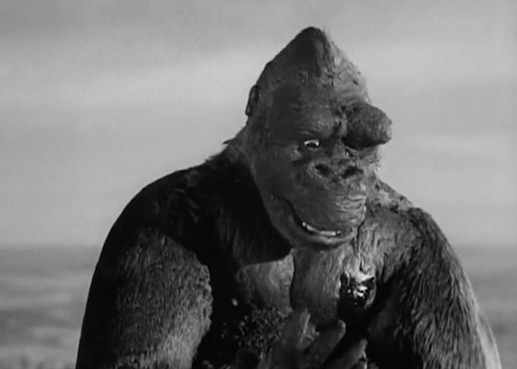
Kicking a very animated Stop-Motion Saturday off: a documentary about the incredible Willis O' Brien (1886-1962), the prehistoric world-creating genius behind The Lost World, King Kong and Mighty Joe Young - and the animation genius who inspired Bob Clampett to make cartoons.


Follow that by delving deeply into a Willis O' Brien playlist and then watching this piece on the great artist O'Brien mentored, Ray Harryhausen.


Can never see too many interviews with Ray Harryhausen.


LOVED seeing The 7th Voyage of Sinbad and Jason & The Argonauts on the big screen!


The new Blu-ray set of Harryhausen classics is a keeper.


Like director and dyed-in-the-wool animation buff Joe Dante, we're big fans of George Pal.


The stop-motion fans at Way Too Damn Lazy To Write A Blog are especially fond of the George Pal Puppetoons.


Love the 1930's Puppetoons produced in Holland (often as advertising films promoting Philips high fidelity audio products), followed by the series made in America for Paramount Pictures in the 1940's.


The George Pal Puppetoons have been restored, thankfully.


The Puppetoon Blu-rays get our highest recommendation.


Of the restored Puppetoons, especially like volume #3.


There's very cool stop-motion animation on YouTube.


In particular, the Dutch Vintage Animation YouTube channel is quite a treasure trove, including a bunch of classic films by the brilliant Joop Geesink.


How can one follow such blazing stop-motion genius? By watching more blazing stop-motion genius by delving deeply into the incredible work of entymologist turned filmmaker Wladislaw Starewicz (1882-1965).


Hope to see such outstanding Wladislaw Starewicz films as The Magical Clock released on Blu-ray in the United States.


The Starewicz family and Doriane Films have made a few of these terrific films available in Europe.


Could the great-grandchildren of Wladislaw and grandchildren of Irina Vladislavovna Starewicz please, pretty please, travel to the U.S. and remind us dumb American classic movie buffs of the stop-motion animator's greatness and present a retrospective on Turner Classic Movies while you're at it?


Wladislaw a.k.a. Ladislaw Starewicz, Ladislas Starevitch, Ladislaw Starevitch and Ladislaw Starewitch created astonishing cinematic works, first in Russia, then for decades in Paris.


Wladislaw and Irina Vladislavovna Starewicz produced exceptional stop-motion films from 1912 through the end of the 1950's.


When someone innocently asks this blogger, Paul F. Etcheverry (A.K.A. Psychotronic Paul), "what's your favorite film?" one response that always gets the conversational ball rolling is, "that love triangle tale in which all the characters are dead insects - LOVE IT, LOVE IT, LOVE IT!"


We dig the 1922 Wladislaw and Irina Vladislavovna Starewicz gem FROGLAND the most!


The Starewicz masterpiece The Mascot packs more startling and surreal imagery into its 33 minute length than can be found in 140+ minute feature films.


How do we finish a stop-motion Saturday? With the ridiculously talented filmmaker, animator, director, special effects innovator and movie comedian Charley Bowers.


Known to the French (very enthusiastic fans of his films) as "Bricolo," Mr. Bowers began his cinematic career in the teens as producer for the Barré-Bowers Studio (Mutt & Jeff cartoons), a decade before he starred in the Bowers Novelty Comedies, a series that blended stop-motion animation with live-action slapstick.


Charley Bowers remains our favorite eccentric inventor in the history of motion pictures! Within that eccentric inventor persona, Bowers merges Buster Keaton's understated style with elements of the equally unconventional and imaginative silent movie comedian Harry Langdon.


After Bowers' starring 2-reeler series for FBO and Educational Pictures (a.k.a. "The Spice Of The Program") ended in 1928, he did make a successful transition into talkies and continued producing highly original (and way-out) stop-motion animation showcases.


The last stop-motion films by Charley Bowers and frequent collaborator Harold Muller were produced in the late 1930's and early 1940's.


One, Wild Oysters, appeared as part of the otherwise undistinguished Animated Antics series released by Paramount Pictures in 1940-1941. Am hard pressed to think of another cartoon that features crustaceans not only as main characters, but as bad guys!


For more on Charley Bowers, read the following pieces by two of the best of the best film historians and authors: filmmaker John Canemaker's superb tribute (posted on his blog) and Imogen Smith's outstanding article in Bright Lights Film Journal.


It's likely that the usual suspects at Way Too Damn Lazy To Write A Blog are finished - at least for the moment - overworking all the superlatives available in the English language when discussing such filmmaking innovators as Willis O'Brien, Ray Harryhausen, George Pal, Joop Geesink, Wladislaw & Irina Vladislavovna Starewicz and Charley Bowers.


Now we'll watch that Charley Bowers Blu-Ray. . .


Sunday, October 16, 2022

Sunday with Charley Bowers


This Sunday, we're jet-lagged yet undaunted - and thinking of many things, especially the bad news about untimely passing of classic film enthusiast, archivist, presenter-curator-showman, historian and teacher Dennis Nyback two weeks ago. Literally just heard about this as I was waiting at the gate in Terminal 5 at JFK and going through my e-mails on the laptop in the hour before boarding.

The intrepid gang at Way Too Damn Lazy To Write A Blog has nothing but respect and admiration for how the even more intrepid Dennis quite literally took inventive, entertaining programs of classic movies in glorious 35mm and 16mm all over the world.


We pay tribute to Dennis, a friend of both this blog and the KFJC Psychotronix Film Festival as well as a super nice guy, with a post full of imaginative and cinematic stop-motion goodness, courtesy of the one, the only Charley Bowers (June 6, 1887 – November 26, 1946).


So, this Sunday, October 16, 2022, we respectfully tip our vintage Max Linder top hats to champion of classic movies Dennis Nyback and champion of animation Charley Bowers.


Charley Bowers is among the most idiosyncratic and relentlessly inventive figures from the history of cinema and animation. Fortunately, stop-motion animation fans lucked out big time when archivist Raymond Bordé found nitrate materials on several Bowers films.


This writer first became aware of Charley Bowers when Louise Beaudet of the Cinémathèque québécoise (and, later, the Cinémathèque Francaise) brought a devastatingly wonderful retrospective to the United States. It was screened at Berkeley's Pacific Film Archive, among other venues, in 1984 - and I was there!


The considerable exploits as an animator, cartoonist, journalist, silent movie comedian, stop-motion innovator and children's book author accomplished by Charley Bowers make many of us classic movie and animation buffs wish we could time-travel and land some interviews with him way back when.


As Mr. Bowers passed in 1946, such historians as Michael Barrier, Milt Gray, Mark Kausler, John Canemaker, Leonard Maltin, Jerry Beck and Will Friedwald did not get to interview him.


It would be an understatement to note that the Charley Bowers Blu-ray is a must for any film buff's collection.


The producer of this set, Serge Bromberg of Lobster Films, has been an enthusiastic champion of Bowers' stop-motion animation.


Leonard Maltin penned a rave review of the Bowers Blu-ray on his website.


Bowers' unique approach combines the silent 2-reeler format and sight gag comedy conventions we associate especially with Buster Keaton with way-out animation. As the wacky Vitagraph comedy shorts starring early 1920's "king of prop comedy," the equally cartoony Larry Semon, found an audience decades after their original theatrical release on Italian television as Ridolini, the films of Charley Bowers enjoyed new fame and acclaim in France, starring the comedian-animator as Bricolo.


In some Bowers Comedies, he plays a tall tale teller who can top all the other tall tale tellers with his outrageous stories.


In other Bowers Comedies, he plays an eccentric inventor to the hilt.


Within that eccentric inventor persona, Bowers merges Buster Keaton's understated style with elements of the equally unconventional silent movie comedian Harry Langdon.


For more on the films of Charley Bowers, check out John Canemaker's superb tribute and Imogen Sara Smith's outstanding article in the entertaining and scholarly Bright Lights Film Journal.


Sunday, May 03, 2020

Home Watching Documentaries About Animation!


Quarantine means binge-watching documentaries - and in week 8 of this, the topic is animation. We'll kick off today's post with a film about Leon Schlesinger, the executive from Pacific Title who ended up as the producer of Warner Brothers cartoons. By pretty much leaving the Termite Terrace bunch alone to create as they saw fit, Leon, perhaps unwittingly, made it possible for the next wave of animation innovation, classic comedy and comic genius to flourish.


Leon hired Frank Tashlin and Tex Avery, two of the greatest comic minds to ever hit animation and filmmaking. They started turning the cartoon world upside down practically the moment they began directing Looney Tunes.


There is a very enjoyable documentary about stop-motion innovator Charley Bowers.


Never tire of watching the incredibly imaginative and frequently way-out Bowers Comedies.


Wondering if the rest of the following documentary, Looking For Charley Bowers, is on the Lobster Films Blu-ray of Charley Bowers films. Here is an excerpt from it.


Seeing Charley Bowers films and reading his story brings to mind another filmmaking innovator who loved devising gadgetry and was clearly pulled by his love of inventing and fascination with machines into making cartoons, Max Fleischer (1883-1972). The topic of Max' brilliant mind and creative inventions is a book in itself - and Fleischer Studio historian Ray Pointer has penned one, The Art and Inventions of Max Fleischer: American Animation Pioneer, which delves into the technological and filmmaking innovations in depth.


The following documentary covers the Fleischer brothers and their studio, which in this writer's opinion does not receive enough credit, even today, as loved as their work remains among animators, cineastes and classic film enthusiasts.


In the 1930's, the Fleischer Studio started utilizing a 3-D effect known as "The Stereoptical Process," with the camera dedicated to it known as The Setback Camera. Backgrounds were built on a revolving tabletop and, in the cartoons, were often integrated surprisingly seamlessly with the painted backgrounds. The 3-D backgrounds are utilized in all the Fleischer studio's series in 1934-1937. The Stereoptical Process was even spotlighted (starting at 3:50) in the following "Popular Science" short subject.


The Max Fleischer Color Classics series was introduced in 1934 to both compete with Disney's Silly Symphonies and spotlight the 3-D background process. The following Color Classic cartoon, Musical Memories, showcases the Stereoptical Process in a storyline that departs from the animated cartoon norm. It is nostalgic, lyrical and evocative, perhaps drawing upon the Fleischer brothers' reminiscences of growing up in the 1890's and turn of the 20th century, and features a quiet but moving ending.


The dream sequence in Play Safe, one of the best of the Color Classics, involves a spectacular multi-colored train station and presents one of the more psychedelic applications of the Fleischer Studio's 3-D tabletop background technique.


In the Popeye series, among the greatest animated cartoons ever made, the 3-D backgrounds enhance the storylines and the characters.


Note: the following dramatic excerpts from the Popeye Color Features do NOT demonstrate the Rotograph, but are prime showcases for the Stereoptical 3-D Process.


The Rotograph, just one among of many creative inventions developed by Max Fleischer in the early 1920's, was an aerial image photographic process where live-action film was rear projected behind animation cels (producing a backlit silhouette) to create an in-camera matte. Then, the film was rewound to the beginning, and the cels photographed again, top lit against a black card. The result: a first generation composite combining the animation with live-action.

Pondering how the Fleischer brothers got their start back in the teens, I thought of Donald Crafton's book Before Mickey: The Animated Film 1898-1928, a scholarly and painstakingly researched study of animation's early days - and was totally unaware that a documentary had been produced based in part on this book. It's a terrific film. Must thank Darren Nemeth for posting it, and also thank Devon Baxter from the Cartoon Research website for many of the other video clips.


Shifting from silent era animation, we love cartoon voice artists and documentaries about them. Do we love Mel Blanc here at Way Too Damn Lazy To Write A Blog? Yes.


Documentaries about cartoon voice artists were welcome extras in the Looney Tunes Golden Collection DVD sets. In the following, it is a pleasure to see such all-time greats as Stan Freberg and June Foray, along with more recent luminaries of the cartoon voice world such as Keith Scott, Billy West, Nancy Cartwright and Tom Kenny.


As we begin watching Noir Alley on TCM (on Robert Osborne's birthday) and set a reminder to check out today's Silent Comedy Watch Party this afternoon, we hope that all of you reading this are well. Also pay tribute to those individuals staffing the hospitals, ambulances, supermarkets, bodegas and pharmacies; these are the heroes who are keeping the country going through a difficult time. It is fantastic that the citizens of NYC are giving our brave first responders the accolades and rousing round of applause they deserve.

Saturday, February 22, 2020

Toons Around The World: Stop-Motion Marvels


Stop-motion animation, from Cohl to Bowers to O'Brien to Starewicz to Pal to Harryhausen to the Quay brothers, has been on this movie buff's mind of late. Charley Bowers remains a favorite!


>


George Pal always pleases.


For stop-motion animation genius, the Dutch Vintage Animation website is quite a treasure trove.


Quite a few terrific stop-motion films of Joop Geesink can be found here and on the stop-motion master's You Tube channel.


Have posted several commercials from Joop Geesink's Dollywood studio on this blog before. They are excellent and in the tradition of George Pal's animated mini-musicals for Philips and experimental animator Oskar Fischinger's Murrati Cigarette ads.


The Dollywood studio's commercial for White Horse Whisky ranks atop the list of most amazing, beautifully designed and imaginative ads. Do not show at an Alcoholics Anonymous meeting - that would be a very bad idea, as even the most prim teetotaler would be amenable to downing a couple of shots after watching it.


Rather amazed that the Kinex studio's stop-motion films entirely escaped me for decades, at least until the release of a couple of Kinex short subjects, starring Chip the Wooden Man, on the now out-of-print 2010 Stop-Motion Marvels DVD collection.


Recently reading Kinex in HD: “The Land of Wiz” and “The Land of the Wooden Soldiers has whetted my appetite to see more of the studio's films starring The Doodlebugs, Chip the Wooden Man and Snap the Gingerbread Man.


Hear there shall be a Stop Motion Marvels 2 later this year from Thunderbean, so hopefully a few more discoveries from Kinex (and stop-motion animator John Burton) will be available then.


Until that Blu-ray release brings further discoveries, here is an indescribable 1933 short subject created by New Zealand filmmaker/painter/animator/sculptor Len Lye and on the first Stop Motion Marvels collection. It features a song well known by the gang at Way Too Damn Lazy To Write A Blog from a 1933 Max Fleischer Screen Song cartoon and melodious renditions by Louis Armstrong and Django Reinhardt. Lye's love of music, paramount in his subsequent GPO experimental films A Colour Box, Rainbow Dance and Trade Tattoo, combines with way-out imagery here.


Acknowledgements and many thanks to the Cartoon Research website and its Thunderbean Thursdays feature for links in this post that didn't come from the Dutch Vintage Animation page. Also extend a respectful tip of the Jimmie Hatlo hat to a YouTube channel which, among hundreds of 1920's, 1930's and 1940's animated films, includes a playlist of Charley Bowers.

Sunday, May 19, 2019

Back in 2019: Silent Movie Innovators Bowers & Blaché


Good news for silent movie aficionados: a new Blu-ray set spotlights stop-motion animation innovator Charley Bowers, while a new documentary now in movie theaters covers the career of filmmaking pioneer Alice Guy-Blaché. There is also a new DVD collecting the few existing films starring World War I era comedians Eddie Lyons & Lee Moran.


The Extraordinary World Of Charley Bowers isn't the first Charley Bowers collection; that was a 2-DVD set issued back in the 1990's.


The Extraordinary World Of Charley Bowers is, however, the first collection on Blu-ray and includes newly found titles not on the previous DVD release.


First heard about this Bowers Blu-ray when the collection was announced in 2014 and am happy to see it officially out!


The animation and sight gag-packed Bowers Comedies get the restoration treatment on Blu-ray from Lobster Films, distributed by Flicker Alley.


The films of Bowers, the indescribable comic, animator and illustrator, who blended live-action silent era comedy with innovative stop-motion techniques akin to what Willis "King Kong" O Brien and Ladislaw Starewicz were doing, are more akin to the way-out visionary ideas of Ernie Kovacs than to any of his 1920's contemporaries.


The Charley Bowers Blu-ray is available for pre-order and will be officially released on June 25.


For more on the films of Charley Bowers, check out author Imogen Sara Smith's outstanding and scholarly article on the animator/comedian in Bright Lights Film Journal.


Courtesy of Be Natural Productions


Another extraordinary visionary, high atop the short list of the most important and groundbreaking figures in the history of movies, who was there blazing new trails with the Lumiere brothers at the very beginning: producer-director-writer-cinematographer and head of Solax Studios, Alice Guy-Blaché.


In Be Natural: The Untold Story of Alice Guy-Blaché, one of the very first filmmakers (arguably, the first narrative filmmaker), the cinema's first mogul gets her due.


The new film by Pamela B. Green tells the Alice Guy-Blaché story via a host of recently discovered photos and historic footage.


The following trailer for Be Natural: The Untold Story of Alice Guy-Blaché reveals that, rather astonishingly, a fair number of movie stars, filmmakers, producers and directors had never heard of Alice Guy Blaché.


Frankly, that causes us at Way Too Damn Lazy To Write A Blog to shake our heads in disbelief.


We were thrilled and delighted to devote a post to the original Kickstarter which raised the initial funds to get the ball rolling on its production.


As Be Natural: The Untold Story of Alice Guy Blaché was in production, a few more of Mademoiselle Blaché's long lost films - it's been estimated that she made over a thousand - turned up. Some are on the Pioneers: First Women Filmmakers Blu-ray and the Early Women Filmmakers: An International Anthology collection from Flicker Alley.


While it's true that very little was said about her in film history courses 40 years ago - her entire cinematic legacy was lost back then - Alice Guy Blaché's legacy as a female moviemaking powerhouse before the rise of Mary Pickford as producer-star, before the word "filmmaker" existed, has received much long overdue acclaim, including several books, theatrical showings of the aforementioned Kino Lorber collection Pioneers: First Women Filmmakers, and a comprehensive Whitney Museum exhibit, over the past decade.


Those who saw her films on Turner Classic Movies in 2013, as well as on the big screen as part of a presentation by the San Francisco Silent Film Festival a few years ago, certainly are well aware of Alice Guy-Blaché.


Be Natural: The Untold Story of Alice Guy-Blaché is the first documentary about Blaché in quite a few years to hit the film festival circuit and receive a theatrical release, but not the first documentary about Alice Guy Blaché.


With the research of historians Anthony Slide and Alison McMahan, who have championed her work for decades, The National Film Board of Canada produced The Lost Garden: The Life and Cinema of Alice Guy-Blaché, which included interview footage of Alice from the 1950's, in 1995.


For more info on Alice Guy-Blaché, see:

Women Film Pioneers Project

Auteur! Auteur!: 'Be Natural: The Untold Story of Alice Guy-Blaché'

Alice Guy-Blaché, Forgotten Film Pioneer

A four book series, The Life and Work of Alice Guy-Blaché by Janelle Dietrick:


Alice & Eiffel: A New History of Early Cinema and the Love Story Kept Secret for a Century

Illuminating Moments: The Films of Alice Guy-Blaché

La Fée Aux Choux: Alice Guy's Garden of Dreams

Mademoiselle Alice: A Novel


Two books by Alison McMahan

Alice Guy Blaché: Lost Visionary of the Cinema

The Solax Films of Alice Guy Blaché


Completing today's post on silent film rarities, a limited edition DVD collects the few surviving films of the prolific comedians Eddie Lyons & Lee Moran.


Lyons & Moran were very talented and funny comic actors, at first part of a troupe directed by Al Christie that made the Nestor Comedies series.


Key in a sophisticated comedy and farce lineage, along with the duo of John Bunny and Flora Finch and the marital comedy stars Mr. and Mrs. Sidney Drew, the witty comic actors were very important in the history of screen humor and among the first to establish the Al Christie studio's situational comedy approach.


Eddie Lyons and Lee Moran co-starred in dozens of sophisticated farces with hints of slapstick and silliness - over 300 films - for Nestor and Universal from 1912-1921.


The Lyons-Moran Comedies' influence continued after the team broke up in 1921. Charley Chase, who, along with future Our Gang diector Robert McGowan, worked as a writer/director on the sophisticated comedies of Mr & Mrs. Carter DeHaven in 1920, began his career making uncredited cameos in Eddie Lyons & Lee Moran Nestor comedies, before joining Mack Sennett's Keystone as a stock company member in 1914. Chase was and eventually would, in collaboration with co-director Leo McCarey at the Hal Roach studio, blend elements of a sophisticated comedy approach with goofy sight gags and judicious moments of outrageous slapstick.


They also wrote and directed a fair number of their own starring vehicles, especially in the last series for Universal, the Lyons-Moran Star Comedies.


Whether the duo were a comedy team in the same sense as Laurel & Hardy remains debatable - this blogger thinks the troupe as a whole, which also featured comediennes Victoria Forde, Edith Roberts, Betty Compson, Billie Rhodes and Charlotte Merriam, constituted the comedy team - at least now it is possible to see a few of the Lyons & Moran films on DVD, thanks to the Library of Congress and the efforts of Rare Silent Films in Portland, OR.


Even more amazing is that the Early Universal Shorts of Lyons & Moran DVD is labeled volume 1; the incredibly low survivability rate on Lyons & Moran films makes one wonder how there could be actually enough existing titles to make a volume 2. Maybe there are. . .