Wishing all a happy new year! This Blogmeister has two takes on the first day of 2026: happy to be here and good riddance, 2025! Rang in the new year this morning by watching musical sketches concocted for Saturday Night Live by John Mulaney and Colin Jost. Do we love Kenan Thompson and Kate McKinnon as singing lobsters? Yes.
Following the Diner Lobster extravaganza: the Subway Churro sketch. Again, the performances by the Saturday Night Live cast, especially Cecily Strong and the aforementioned Kenan Thompson, are stellar. Watching this creates a strong impression that John Mulaney yearned to star in West Side Story.
The last John Mulaney mini-musical was the Airport Sushi at LaGuardia sketch. Is Mulaney an avid fan of musical theater first, comedy writer/actor/comic second? Very likely the answer to that question is an emphatic YES.
Looks like the new year will be kind to incurable animation buffs.
First and foremost, the restoration of Ed Graham's funny, unique, clever and unusual mid-1960's Saturday morning cartoon series Linus The Lionhearted (featuring excellent voice work by Sheldon Leonard, Carl Reiner, Ruth Buzzi, Jonathan Winters, Stiller & Meara and more) is progressing nicely.
Tommy Stathes' latest Cartoon Roots Blu-ray, a tribute to Fleischer Studios and Ko-ko The Clown, is now available.
Time and space-bending adventures in this Out Of The Inkwell compilation include:
THE CLOWN'S PUP (1919)
THE BOXING KANGAROO (1920)
THE CHINAMAN (1920)
THE CLOWN'S LITTLE BROTHER (1920)
PERPETUAL MOTION (1920
THE RESTAURANT (1920)
THE AUTOMOBILE RIDE (1921)
MODELING (1921)
FISHING (1921)
MECHANICAL DOLL (1922)
BUBBLES (1922)
FLIES (1922)
SPARRING PARTNER (1922)
BIRTHDAY (1922)
REUNION (1922)
While it would be quite the understatement to designate 2025 as one seriously lousy year, at least animation fans could cheer up somewhat thanks to the long-awaited release of classic cartoons to Blu-ray on Looney Tunes Collector's Vault volume 1, released last June. Volume 2 of the Looney Tunes Collector's Vault Blu-ray series will be released in March.
Looney Tunes Collector's Vault volume 2 is quite a treasure trove of classic cartoon goodness, as was volume 1.
Been many moons since this blogger has seen the Bill Hanna & Joe Barbera Tom & Jerry cartoons, so it will be fun to revisit them.
The debut of the series, Puss Gets The Boot (1939) reflects the deliberate, Disney-esque Rudy Ising school of cartoonmaking rather than the fastier, brassier and outrageous slapstick-oriented approach that dominates the subsequent Hanna-Barbera and Tex Avery MGM cartoons.
In our view, the series hit its peak in the mid-to-late 1940's.
Here are a bunch of clips from Tom & Jerry cartoons. While tending to be partial to Avery's MGM cartoons over the Tom & Jerry series, must admit to laughing loudly and often during this compilation.
Author, animation historian and restoration expert Thad Komorowski has reviewed volume 1 and volume 2 and volume 3 of the Tom & Jerry: The Golden Era series in detail.
The gang at Way Too Lazy To Write A Blog extend big time thanks, kudos, bravos and huzzahs to everyone involved in these restorations and shall now make an earnest effort to find a modicum of optimism to begin the new year!
We're pleased as pomegranates to see a slew of classic cartoons turn up on websites other than YouTube. First off, there's Internet Archive, which we have relied on recently for posts about our favorite silent movie comedians. Among our favorites remains the comic who was also a stop-motion animation innovator, Charley Bowers.
Of course, these comedy heroes include the one, the only Felix The Cat!
While on the topic of silent era cartoons, must note the growing selection of Fleischer Studio, including entries from the original Out Of The Inkwell series.
There are also a bunch of Fleischer Screen Songs on Internet Archive. This is good, as neither the Fleischer nor Famous Studios Screen Songs have been released on Blu-ray as of yet. Some turn up periodically on Steve Stanchfield's Cartoon Research Thursdays.
As the gang at Way Too Damn Lazy To Write A Blog ponders the San Francisco Giants' hiring of Tony Vitello, longtime head coach of the 341-131 Tennesee Vols juggernaut, as the new manager, we doff our fedoras worn by Tex Avery to Internet Archive, Vimeo, Cartoon Research and Devon Baxter and close today's post with two very funny Looney Tunes directed by Norman McCabe. Both never fail to crack me up - it's this cartoon fan's fervent hope that historians Mike Barrier and Milt Gray interviewed Mr. McCabe at length regarding his 50+ year animation career.
Enjoyed writing last week's post so much that a followup is absolutely necessary. We shall start with my favorite of all the post-Otto versions of Felix. The style of the 1995-1997 Twisted Tales series recalls Fleischer more than Messmer, but who cares - it's still lots of fun and extremely imaginative. Several super-talented people we are acquainted with worked on the series.
Speaking of super-talented, animator and comics artist Milton Knight, among the directors who worked on The Twisted Tales Of Felix, posted the following 1933 Krazy Kat cartoon by the Ben Harrison and Manny Gould crew, Russian Dressing. I'm a big fan of the Your Favorite Cartoon Moments videos on Milton's YouTube channel.
One of the best cartoons from the Harrison & Gould crew at Mintz, in this pre-Code rubber hose animation aficionado's opinion, is The Broadway Malady (1933). I personally prefer it to The Broadway Melody!
The following early talkie Krazy Kat is another favorite and a link between 1920's Disney and early 1930's Harman-Ising WB. Looks like Friz Freleng, Hugh Harman, Rudy Ising, Rollin Hamilton and other soon to be Looney Tunes/Merrie Melodies animators worked on this extremely entertaining cartoon, packed with 1929 style funny animals, way-out sight gags and, of course, Prohibition-flaunting heavy drinking.
On the topic of animators, film producers and alcoholism, here's Felix Woos Whoopee, arguably the very best opus from the last three seasons of the Felix The Cat series. While producer Pat Sullivan by that time had been done in tragically by the bottle, Messmer's prodigious talent kept the series going into those dawn of talkies days. One wonders if Felix would have hung on a bit longer accompanied with sprightly soundtracks by, for example, Carl Stalling, Gene Rodemich or Jimmy Dietrich.
And, speaking of Gene Rodemich's peppy music, here is a cat-dominated Van Beuren cartoon we like a great deal. Don't mess with kittens!
We tip our top hats to UCLA Film & Television Archive for the following restored (and cat-packed) Max Fleischer Color Classic!
Next up: Bob Clampett's memorable and hilarious The Hep Cat (1942), noted in the previous "Feline Follies" post. Love it for the theme song alone - it's tough to top "I love the goyls and the goyls love me, just like the Sheik Of Araby."
After all, we love Bob Clampett - and especially his classic Martian invasion cartoon Kitty Kornered (1946).
The following two Chuck Jones cartoons feature the playful kitten character Pussyfoot and his protector Marc Anthony the bulldog. In both cartoons, the cuteness works quite well.
Closing today's Feline Follies: the extremely funny Friz Freleng cartoon Birds Anonymous (1957), which successfully skewers 12-step groups, insufferable moralists, Sylvester the cat and animated cartoon conventions in one fell swoop.
After almost 19 years writing Way Too Damn Lazy To Write A Blog, this is post #1400.
While, admittedly and embarrassingly, I deleted at least two or three posts due to laughably egregious errors, shall proclaim this Way Too Damn Lazy To Write A Blog entry to officially be the 14 hundredth! Yay!
How does the blogmeister feel about writing post #1400? Feel like Virginia O'Brien, the deadpan diva, in this great song from PANAMA HATTIE, which should begin with her slapping overbearing Red Skelton across his overacting kisser (and, bear in mind, we like him as Red Skeleton in the Tex Avery MGM cartoon WHO KILLED WHO).
So this blog shall celebrate post #1400 without bubbly (thanks T2 diabetes, ya rat bastard). We'll start with some supercharged improvisational proto-metal British rock from Deep Purple, live in Belgium. Yes, indeedy, Ritchie Blackmore, Jon Lord and Ian Paice had chops.
How will we celebrate the silver screen stuff we love, while also kicking ourselves for missing the 80th anniversary of the execution of Benito Mussolini and Clara Petacci on April 28. With a respectful nod to the enduring classic movie genre that broke big time during World War II, film noir.
The Burt Lancaster starring vehicle Brute Force is an inspired cross between Jimmy Cagney style caper thriller and film noir.
Nearly eight decades after noir's heydey, celluloid heroes Humphrey Bogart and Gloria Grahame still bring the heat.
Don't recall any other noirs featuring larger-than-life Charles Laughton (except the harrowing tale of evil he directed, Night Of The Hunter), but the following classic, THE BIG CLOCK, is a chiaroscuro dilly and post 1400 worthy.
Prominent in the "silver screen stuff we love" category is silent era comedy. Here are several all-time favorites from all-time favorite silent movie comedians, starting with Buster Keaton in ONE WEEK.
Next up: vintage musical short subjects from way back when Sammy Davis, Jr. thrilled vaudeville as a ridiculously talented child entertainer and Frank Sinatra was studying the phrasing of Bing Crosby and Russ Colombo. Especially love those pre-Code musical short subjects, especially Vitaphone's Melody Masters series.
Here, in the 1932 Vitaphone musical classic, The Yacht Party, the mindblowingly limber Melissa Mason does her best terpsichorean triple-jointed impersonation of the even more mindblowingly limber and quadruple-jointed comedienne Charlotte Greenwood. All we can say is "go, Melissa, go!"
The following Vitaphone 1-reelers present absolutely amazing and talent-filled mini musicals, the glaring preponderance of 1920's and early 1930's style racial stereotype bits notwithstanding. That's The Spirit stars the comedy team of Flournoy Miller & Mantan Moreland (yes, that guy, Sidney Toler's sidekick in Charlie Chan flicks), The Washboard Serenaders, powerhouse singer/tapdancer/actress Cora La Redd and Noble Sissle's red-hot swing band.
Alas, as there was still a color line, big time, in 1932, Cora La Redd, who would have mopped up the floor with all tapdancers not named Eleanor Powell and given the Sophie Tuckers of the world a run for their money, did not subsequently get to appear, even briefly, in RKO, Paramount and MGM musicals.
Backing actress of stage and screen, vocalist and dancer Nina Mae McKinney, star of King Vidor's Hallelujah, Eubie Blake's band headlined the following 1932 Vitaphone short. The super-talented kids whose exceptional dancing brings this Vitaphone Melody Master to a rousing finish:
The Nicholas Brothers.
Another of Way Too Damn Lazy To Write A Blog's all-time favorite films is Smash Your Baggage (1932), starring Small's Paradise Entertainers. Jazz legend Roy Eldridge is in the band!
Lupe's co-star in this terrific comedy is the fast talking EPITOME of pre-Code. . . the one, the only Lee Tracy.
Also on hand: the familiar croaking voice of Eugene Palette.
Of course, the pre-Code flick we REALLY want to see is Convention City (1933).
The phrase pre-Code and the names of splendid actresses, Aline MacMahon and Ann Dvorak mean the gang here is watching this movie! And it features screen immortal Lyle Talbot, two decades before Plan 9 From Outer Space, as an oily rat bastard!
Of course, we also love pre-Code cartoons, even those Ub Iwerks Studio productions starring Willie Whopper!
Watching Iwerks Studio cartoons, must extend kudos, bravos and huzzahs to animators Grim Natwick, Shamus Culhane, Berny Wolf and music director Carl Stalling.
Also love the very pre-Code version of Tom & Jerry by New York's Van Beuren Studio.
Any Fleischer Talkartoon featuring Betty Boop, Koko and Bimbo is sure to be a winner.
Always liked this 1932 Screen Song featuring Betty Boop as a mermaid and using a certain Bert Kalmar & Harry Ruby ditty from the Marx Brothers opus Horse Feathers.
What's the best way to finish post #1400? Warner Brothers cartoons!
Way Too Damn Lazy To Write A Blog extends multiple hat tips to the directors of these cartoons, Bob Clampett and Frank "Tish Tash" Tashlin. Love those guys!
It's the sincere hope of the gang here that we shall be lucky enough to still be alive, kicking (even slowly) and blogging for post #1500 down the road.
The baseball season is on, so let's celebrate with some classic cartoons, starting with two rarities from Japan.
From the "Fox" series of shorts directed by Satoshi Morino, with animation by Osamu Satomi, KITSUNE NO HOMERUN-O.
Continuing this compendium and traveling from Japan to New York City, here's a Paramount cartoon featuring comedian/monologist Eddie "The Old Philosopher" Lawrence, ABNER THE BASEBALL (1961). Have spotlighted it here on Way Too Damn Lazy To Write A Blog two consecutive years!
Thanks a million, "The Old Philosopher" and Irv Spector, as well all involved in creating and researching the Cartoon Research post including Abner The Baseball (Jerry Beck, assisted by Ken Layton, Mike Kazaleh and Paul Spector).
Two decades earlier, the animators at Paramount, working for Max & Dave Fleischer, made a baseball opus as part of the 1940 Stone Age Cartoon series.
An all-time favorite from Warner Brothers Animation is Gone Batty, directed by Robert McKimson.
Gone Batty was also included as the opener of an excellent episode of Cartoon Network's TOONHEADS (#203), which also includes Batty Baseball (1944 Tex Avery MGM) and Baseball Bugs (1946), the Friz Freleng crew's piece de resistance.
In closing, from Disney's 1946 compilation feature Make Mine Music, Casey At The Bat.
From the history of animation, one of the luminaries who intrigues the dyed-in-the-wool cartoonologists at Way Too Damn Lazy To Write A Blog most of all is gagman, story sketch artist, writer, animator, sometimes director, voice actor, comic books artist and recipient of an Annie Award for Lifetime Achievement in animation Cal Howard (March 24, 1911 – September 10, 1993).
Did anyone else in the history of animation work on a writing team with Allan My Son The Folksinger Sherman and ridiculously prolific TV comedy writer Stan Burns (who, with Mike Marmer, wrote many Get Smart episodes and countless sketches for The Carol Burnett Show)? Did anyone else work on idiosyncratic mid-1940's animated cartoons AND wacky mid-1960's sitcoms (Camp Runamuck) for Screen Gems? Well, none that I can think of, offhand.
From reading about Cal, derive an emphatic impression that he was a fun guy to be around and must have been a blast to interview. IIRC, Mike Barrier and Milt Gray got the opportunity to do just that when researching the comprehensive and epic HOLLYWOOD CARTOONS book.
Arguably best known today for his work as a storyman and co-director of Merrie Melodies at Leon Schlesinger's Studio, Cal was a buddy of Tex Avery's at the Walter Lantz Studio who followed him to Termite Terrace.
Prof. Klein's article adds: "And the Universal animator who most shared Tex’s love of provocation was Cal Howard, who—a bit shorter in stature and more slight-of-frame—might have seemed like an Avery sidekick. These two men were a prankster duo who prowled for victims, offering daily hijinks in the midst of the work at Universal. They were both gag-initiators. They punked their colleagues and they were in equal measure considered among the best gag contributors to the Oswald cartoons.”
Cal collaborated off-hours with Tex (while working days at the Walter Lantz Studio) on the storyboard for GOLD DIGGERS OF ’49, the first Schlesinger Studio cartoon that Avery directed - and a Looney tune on which Tex, Chuck Jones and Bob Clampett receive screen credit.
How many Tex Avery WB cartoons did Cal write gags and sketch storyboards for?
It's a good question, since, IIRC, Tex drew his own boards and hired such storymen as Cal, Rich Hogan, Heck Allen and others as sounding boards to talk sight gags with. Whatever the case is, Cal spent a significant chunk of his career working with Tex at both Lantz and Schlesinger's.
Cal got screen credit for writing Tex Avery's Merrie Melodies cartoons "Little Red Walking Hood" and "The Sneezing Weasel."
A major claim to fame for Cal Howard at Warner Brothers would be the three cartoons he co-directed in 1938 with prolific animator Cal Dalton.
RE: A-Lad-In-Bagdad, there is something about Egghead's Joe Penner voice and goofy sensibility that gets me ROFL, only every time.
Here, from the Archive.org Looney Tunes and Merrie Melodies archive (which quite literally starts with the 1929 pilot for the Looney Tunes series), is ths writer's personal favorite cartoon of these cartoons credited to Cal Howard, the oddly charming collegiate musical KATNIP KOLLEGE, featuring stellar singing by swing band leader Johnny "Scat" Davis and comedienne Mabel Todd.
After leaving Schlesinger's, there was a pit stop at Lantz (1938), followed by a stretch, along with fellow artist/voice actor Tedd Pierce, at the Fleischer Studio in Miami (1938-1942), where he was a storyman and voice actor on GULLIVER'S TRAVELS.
There at Fleischer's, he got to play his second shrill character named Gabby, as Howard was the voice of the equally unmemorable and soon abandoned Looney Tunes co-star Gabby Goat at Warner Brothers.
Then it was on to MGM (1942-1945) and Screen Gems (1945-1946). Several articles and sources, including the MGM cartoon wiki, have named Cal as one of the storymen on Tom & Jerry, a series that did not credit writers.
Would need studio drafts to determine once and for all whether Cal wrote stories and gags for the Bill Hanna & Joe Barbera crew.
And then, inevitably, there's the hated Screen Gems Studio, where Cal Howard wrote a bunch of cartoons in the Phantasies and Color Rhapsodies series and contributed voice work to many of them.
This scribe may be the only person who has ever written pieces about animation who actually likes them! IMO, it has become fashionable to trash the Columbias and make sure everyone knows how much you hate them.
The cartoons Cal wrote stories for Screen Gems include some that this writer finds both enjoyably bent and hilarious, others that don't quite work and others (Lo The Poor Buffal) that really, really don't work but at least have periodic moments that are extremely funny.
While well aware that Leonard Maltin and other historians describe the Screen Gems product as "pale carbons of WB cartoons" (and some titles indeed are, especially those attempting to emulate Friz Freleng's "cat chases bird/mouse" cartoons), for the most part, I don't agree with that assessment. The Phantasies and Color Rhapsodies from the mid-1940's are frequently downright WEIRD and completely unlike Warner Brothers cartoons, especially those directed by Robert McKimson and Friz Freleng.
This writer regards the mid-1940's Screen Gems cartoons less as copycats but more as unconventional, very odd, oddly constructed and even more oddly timed fever dreams which start on a premise of producing something vaguely in the vein of Warner Brothers and MGM cartoons. Granted, while one finds no masterpieces a la the Bob Clampett crew's THE GREAT PIGGY BANK ROBBERY or BOOK REVUE in the group and none of the Phantasies and Color Rhapsodies are in the same league as mid-1940's Avery, Jones, Tash and Friz at their best, this animation aficionado will still take the off-kilter Columbias over the substantially less odd and more sensical contemporaneous cartoons from Terrytoons and Famous Studios.
Even the Screen Gems cartoons that feature Howard and Dave Monahan's truly head-scratching stories and try crazy ideas, but clearly fall short, still make this animation buff laugh. . . and that is even after conceding that offbeat comic timing and characterization (or lack of it) are recurring problems.
Bob Clampett was there at Screen Gems ever so briefly in 1945 and found an alarming absence of esprit d' corps, but also (in a conversation a gazillion years ago with the writer of this blog) praised director Sid Marcus for his originality.
Don't know if Mike Barrier and Milt Gray asked Bob specifically about working with Cal Howard at Screen Gems.
The following Color Rhapsody cartoon bears the mark of director/gagman Sid Marcus and, like UP N' ATOM, features specific gags and extremely wacky ideas seen in Marcus' other Columbia cartoons. This is a partial remake of A HELPING PAW, a particularly aggressively bizarre Color Rhapsody cartoon involving a hallucinating drunken dog. Is it funny? Yes, definitely, provided one is not losing a battle with alcoholism/drug addiction and suffering with delirium tremens!
Such Screen Gems cartoons with stories by Cal Howard as Mother Hubba-Hubba Hubbard definitely made a strong effort to emulate the ultra-zany style of Cal's friend Tex Avery's MGM cartoons, not so much the Warners approach.
Phantasies with stories by Cal Howard include Snap Happy Traps (1946) and The Schooner The Better (1946), the last black & white cartoons produced by a Hollywood or New York cartoon studio. They are atmospheric, Gothic, unusual and, as was the house style for the pre-UPA Columbia cartoons, unapologetically bizarre.
The most disliked of all the last B&W cartoons from Screen Gems remains the Columbia Phantasy (in more ways than one) Kongo Roo, set in the outback with main characters including a pygmy and a kangaroo. It's in very, very bad taste even by 1946 standards. Generally, even the historians and 1940's animation buffs hate, loathe AND detest this cartoon, but, for this writer, there's something about the "what the hell - let's try this and see what happens - it's a freakin' cartoon for cryin' out loud, not WAR & PEACE" modus operandi that appeals to this Monty Python's Flying Circus fan.
Cal Howard was among the very few, along with Bob Clampett, to leave cartoons and go directly to working in television as far back as the 1940's. Warner Brothers Wiki elaborates: "In 1949, Howard moved from California to New York City, to work on NBC's Broadway Open House and Your Show of Shows. When Broadway Open House ended he was hired by Pat Weaver to be an associate producer and writer for the development of NBC's Today show. He left NBC early in 1952 to return to California and work with Ralph Edwards."
Is there anything we can offer in this post not seen in the afirementioned historians? Yes, thanks to film collector/curator/historian Ira Gallen of TV DAYS, a complete episode of Broadway Open House! Co-starring comic Jerry Lester and blonde bombshell comedienne Dagmar, it was THE first late-night show, years before Steve Allen, quite funny and offered a mix of early TV and vaudeville. The spiritual descendents of Broadway Open House are less the 1950's and 1960's late-night gurus Steve Allen, Jack Parr and Johnny Carson, or wannabees Joey Bishop and Jerry Lewis, than the much more freewheeling comedy sensibilities of David Letterman and Conan O' Brien, decades later.
Howard subsequently worked at NBC as a gag writer for "The Johnny Dugan Show" and then became an early associate producer and writer for the "Today Show". At the end of the 1950's, he resumed working on cartoons as a freelancer,beginning with Format Films. Thus, Cal ended up working on the last gasps of both the Warner Brothers and Lantz studios, before returning to Disney in the 1970's. Alas, the budgets and production schedules were tight on these 1960's WB (produced by Bill Hendricks) and last Woody Woodpecker cartoons, but not nearly as tight as a certain unsold pilot for a TV show among numerous films in the Cal Howard Archive. . .
And with that psychotronic moment from the unsold pilot The Adventures Of Superpup, we close and tip our fedora once worn by Tex Avery to Cal Howard and realize we barely scratched the surface of his five decade career in show business. Again, mucho thanks for your stellar research Devon, Tom and Don!
Can't imagine Halloween without Count Floyd - and here, the host of "Monster Chiller Horror Theater" introduces RUSH, the excellent progressive rock ensemble (Alex Lifeson, Geddy Lee, Neal Peart).
Like Count Floyd, Vincent Price is always a key Halloween ingredient!
One of our favorite Roger Corman flicks is THE COMEDY OF TERRORS, co-starring Peter Lorre, Vincent Price and Boris Karloff.
When Vincent Price and Peter Lorre made a bunch of movies for Corman, it is apparent that they were trying to make each other laugh!
Between takes on THE COMEDY OF TERRORS, no doubt Boris Karloff enjoyed a nice hot cuppa joe.
Then there's the Corman adaptation of Edgar Allan Poe's fever dream Masque Of The Red Death, in which I'm shocked, shocked that Vincent Price does not flat-out say "and because I'm so deliciously evil. . . "
And now for something completely different, this blogmeister is a big fan of comedienne Ana Gastayer's dead-on Martha Stewart impersonation and the following Halloween sketch.
On the topic of semi-spooky SNL sketches, it's true - we will NOT feature David S. Pumpkins this Halloween.
From SNL to stop-motion, here's THE OLD MAN & THE GOBLINS, a 1998 film by the stop-motion animators at Screen Novelties - Seamus Walsh, Chris Finnegan and Mark Caballero. It's got the Halloween spirit in a profound way. Love the tie-ins to O'Brien, Starewicz and Svankmajer.
Who made the most vividly Halloween-themed animation? Starewicz, of course!
Favorite Fleischer studio Halloween film? SWING YOU SINNERS!
Almost as cool as SWING YOU SINNERS: the 1933 Screen Song cartoon Boo, Boo, Theme Song.
Another Fleischer classic underscores the reality that if one happens to be an insect, by all means DON'T check into a hotel run by spiders! The Cobweb Hotel is also the diametric opposite of the mid-1930s trend of imitating Disney. Jack Mercer's voices, as always, are a hoot.
How can we properly finish a Happy Halloween post?
With elephants smashing pumpkins (not Billy Corgan & the Smashing Pumpkins but pachyderms) at the Oregon Zoo, that's how!
After one doozy of a week, we at Way Too Damn Lazy To Write A Blog were wondering what the next blog post would cover. Thankfully, the Niles Essanay Silent Film Museum and favorite authors Kliph Nesteroff, Ben Ohmart and Keith Scott have provided said topics for us! Turns out tomorrow is the natal anniversary of comic character actor and all-time great cartoon and radio voice artist Walter Tetley.
Mr. Tetley is best known today as the voice of Mr. Peabody's intrepid boy assistant Sherman.
He's also the voice of Felix The Cat in the Van Beuren Studio's Disney-fied revival in the Rainbow Parade series, the Walter Lantz Studio's Andy Panda, UPA's Dusty of The Circus for The Gerald McBoing-Boing Show and PG&E's energetic singing spokes-electron, the ELECTRIC Reddy Kilowatt, who should have played a solid body electric guitar featuring a bolt-on neck.
It would be a grotesque understatement to state that Walter Tetley was one of the hardest working radio actors not named Mel Blanc. He was a scream appearing with Jack Benny, Bob Hope and Burns & Allen, on satirist Fred Allen's Town Hall Tonight, as a key driver of the comedy in The Great Gildersleeve and as the not-so-secret weapon, a cleanup hitting laugh-getter, on The Phil Harris-Alice Faye Show.
In addition, he has brief but very funny cameos in a gazillion movies, such as this one in the Abbott & Costello vehicle Who Done It.
The aforementioned and formidable Kliph Nesteroff penned, as one of his many excellent articles for WFMU's Beware Of The Blog, Credit Castrated: The Voice of Walter Tetley, a very good overview focusing on Mr. Tetley's numerous hilarious turns as radio's "mean widdle kid" and both varied and prolific work on records. (NOTE: posters on OTRCAT and YouTube have done us comedy and OTR fans a massive favor by compiling devastatingly funny turns in the Walter Tetley Radio Collection, including his memorable appearances on The Phil Harris-Alice Faye Show)
Expert on old time radio and mid-20th century pop culture Ben Ohmart, with OTR archivist Charles Stumpf, penned an outstanding book, Walter Tetley: For Corn's Sake on the voice artist's life and times.
The description of Walter Tetley: For Corn's Sake elaborates: WALTER TETLEY (1915-1975) was the quintessential kid voice of radio. His distinguished voice career began in the early 1930s and lasted until radio s final years in the 1950s. He was also a very private person who never gave interviews, instead choosing to immerse himself in charity and voice work throughout most of his life. For the FIRST time in print finally a complete biography on one of radio s most beloved character actors. Including many RARE PHOTOS and THOUSANDS OF CREDITS, most of which have never been seen or discussed in any article or book. That is because this biography has been written with the aid of Walter s personal scrapbooks! From The Great Gildersleeve to Rocky and Bullwinkle's Peabody and Sherman and beyond. Includes a detailed account of Walter's 1930's public appearances.
It's tough to know where to start or where to end with Walter Tetley's career, given how, in addition to countless radio show roles, his cameos in movies and voice-overs on records are numerous. Among said credits, Walter was a favorite of Stan Freberg's. He's a hoot as the hipster in Yankee Doodle Go Home, from Stan Freberg Presents the United States of America volume 1: The Early Years (1961).
Wikipedia adds: In 1973 Tetley made an appearance on Rod Serling's radio series The Zero Hour. He could be heard in the "Princess Stakes Murder" episodes beginning the week of November 19.
So, a day before his birthday, Way Too Damn Lazy To Write A Blog respectfully tips the battered showbiz top hat to the great Walter Tetley. Along with Mel Blanc, Danny Webb, Kent Rogers, June Foray, Bea Benaderet, Sara Berner, Don Messick, Daws Butler and Bill Scott, to name just a few, he is paramount among the ace voice-over artists we LOVE in classic cartoons!
The unparalleled queen of the animated screen - made of pen and ink, she will win you with a wink, ain't she cute, boop-oop-a-doop, sweet Betty - will be back on the big screen tomorrow afternoon, in new restorations of classic cartoons.
Sunday June 2nd at 3:00p.m. PST, our pals at the Niles Essanay Silent Film Museum present a classic Fleischer cartoon matinee, Betty Boop For President. Purchase tickets here.
Everybody's favorite flapper not named Clara Bow or Colleen Moore shall rock the Edison Theater in a selection of classic Max Fleischer Studio cartoons. Max' granddaughter Jane Fleischer hosts.
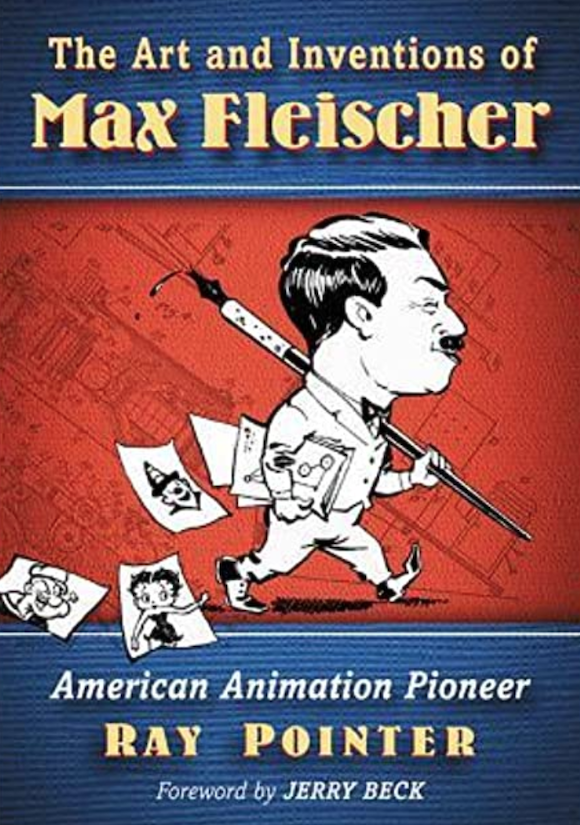
The program includes short presentations about the development of the design of Betty Boop and the inventiveness and creativity of Fleischer Studios by Ray Pointer, animation professional and author of The Art and Inventions of Max Fleischer: American Animation Pioneer, a superlative tome covering the filmmaking career, art and technological innovations of Max.