Last weekend's post about Milt Gross got me thinking about the relationship between comics and cartoons - and how Charles Schulz strips were transferred exactly to animation in the early Peanuts TV specials.
Billy De Beck drew the popular Barney Google and Snuffy Smith strip, which several studios tried to bring to animation. Famous Studios produced one Snuffy Smith cartoon, SPREE FOR ALL, in 1946. Have yet to see a Cinecolor print of it - BFI reportedly has an original 35mm negative - so I am pleased to post this B&W print, found in 2016 by David Gerstein and Jerico Dvorak.
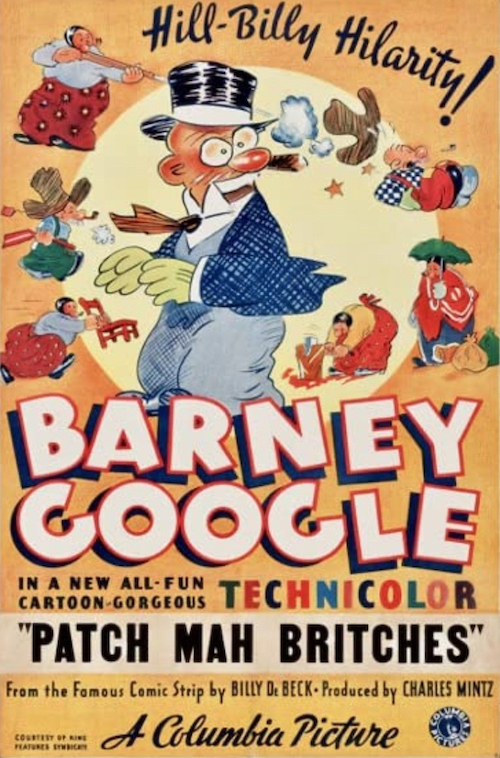
The Charles Mintz Studio crew led by Art Davis and Sid Marcus which had been making the Scrappy series and sharing the Color Rhapsodies with Ben Harrison and Manny Gould produced Barney Google cartoons for Columbia release in 1935-1936.
Black & white prints of the Mintz Studio's Barney Google cartoons (which, in PATCH MAH BRITCHES, include racial stereotypes that may well have prevented a second life on television entirely, or at least required edits in the film prints) got distributed to the home movie market in silent 8mm, 9.5 and 16mm versions. Wonder if any 35mm Technicolor prints exist of the Columbia Barney Googles.
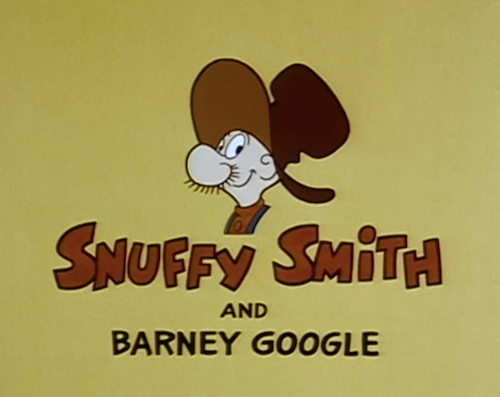
25+ years later, Billy De Beck's comics stars returned to animation. Snuffy Smith was featured in dozens of King Features made-for-TV cartoons.
Many of the KFS Snuffy Smith - Barney Google cartoons, along with the adaptations of Mort Walker's Beetle Bailey and Herriman's Krazy Kat (many produced by Gene Deitch's Prague studio, no less) can be seen on the Comic Kings YouTube channel.
One artist who worked on both SPREE FOR ALL and the Snuffy Smith - Barney Google cartoons by King Features, and always brought a little something extra to the proceedings, even with 1960's style limited animation was the original, unorthodox and very imaginative Jim Tyer.
Some attempts to bring comic strip stars to animation don't quite work. Case in point: the Screen Gems Studio's unmemorable version of Lil' Abner, the popular comic strip by the pugnacious and larger-than-life Al Capp. Characterization, comedy, gags and cohesion, unfortunately, are lacking.
The Fleischer Studio also made a cartoon co-starring Betty with Otto Soglow's Little King.
While one could argue that the Fleischer adaptation of The Little King didn't work, it can also be noted that the 1933-1934 series made by Van Beuren Studio and principally Jim Tyer does capture the whimsical and oddball qualities of both the character and Otto Soglow's comic strip.
The originator of all this: the astounding comics artiste-vaudevillian-animator-illustrator-performer-raconteur Winsor McCay.
Saw a magnificent presentation that the late great film historian, author and animation expert Russell Merritt (note: these many recent losses from the worlds of film history and music are getting this writer and film buff down) gave on Winsor McCay and Gertie the Dinosaur at the Niles Essanay Silent Film Museum.
Winsor McCay, who created comics for the New York Herald such as Little Sammy Sneeze and Dreams of the Rarebit Fiend, started in movies by bringing Little Nemo in Slumberland, the epic comic strip that presented a Technicolor fantasy dreamscape, originated in 1905, to animated form. Without further adieu, here's Little Nemo.
This comics to animated cartoons business all started with publishing magnate William Randolph Hearst. Wikipedia elaborates: towards the end of 1915, William Randolph Hearst decided to create an animation studio to promote the comic strips printed in his newspapers. He called the new company International Film Service, and he hired La Cava to run it (for double what he was making with Barré). La Cava's first employee was his co-worker at the Barré Studio, Frank Moser. Another was his fellow student in Chicago, Grim Natwick (later to achieve fame at Disney). As he developed more and more of Hearst's comics into cartoon series, he came to put semi-independent units in charge of each, leading to the growth of individual styles.
Thus. . .early 20th century comics sensation HAPPY HOOLIGAN penned by Frederick Burr Opper, was one of the many Before Mickey animation stars in silents. Kevin Scott Collier has written an excellent book about the WW1 era animated cartoons adapted from Opper's comic strip.
Among the Happy Hooligan cartoons produced by The International Film Service was "A Trip to the Moon," made in 1917.
And then, produced by The International Film Service, cartoons based loosely on George Herriman's otherworldly Krazy Kat comic strip.
Krazy Kat and brick-throwing Ignatz Mouse were brought to animation as early as the WW1 era.
The Charles Mintz Studio produced numerous Krazy Kat cartoons, not based on the George Herriman characters, for Columbia Pictures in the late 1920s and 1930s. The Mintz Studio crew led by animator and director Manny Gould tried a variant on the George Herriman comics version of Krazy Kat once, in LIL' ANJIL (1936). Too bad - it's one of the best in the series. LIL' ANJIL doesn't delve too deeply into the surreal George Herriman Universe, but at least gives it and the essential characters a shot. The Mintz studio Krazy Kat was more of a generic character and less interesting.
Who's tops in the comics to cartoons transition? Hmmmmmmm. . . Fleischer studio's adaptation of Jeremy Siegel and Joe Shuster's Superman comics are way up there atop the list of superlative translations from comics to animation.
Electric Earthquake (1942) remains a favorite from the series.
The best of the best? Fleischer Popeyes from 1933-1936. In BLOW ME DOWN (1933), the Billy "Red Pepper Sam" Costello version of the spinach-swilling sailor lacks the humor and warmth of Jack Mercer's subsequent Popeye, but the wonderfully brutal cartoon successfully captures the rough-and-ready qualities of E.C. Segar's comic strip.
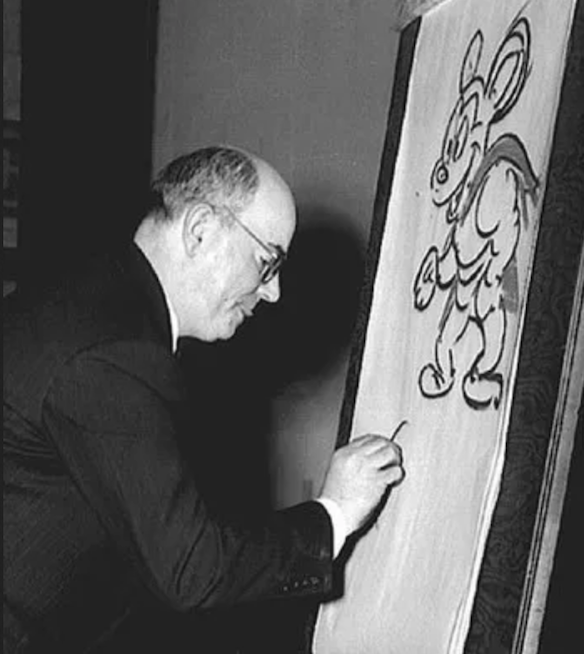
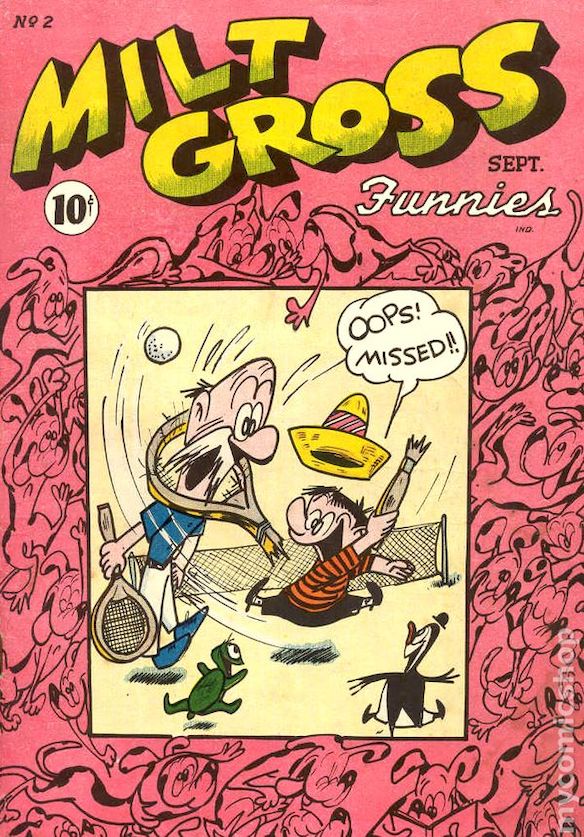
Today is the natal anniversary of the outstanding, brilliant and original comic artist Milt Gross, born in Brooklyn on March 4, 1895.
Among the very first topics of this blog (back when we started doing this in fall 2006), Milt Gross ranks right up there with George Herriman, Winsor McCay and Otto Messmer as truly astonishing auteurs of comics.
The compilations Gross Exaggerations: The Meshuga Comic Strips of Milt Gross and Nize Baby are a great place to start exploring the world of Milt Gross.
Like Messmer and McCay, Gross was the rare comics king to double successfully as an animator. His flagship characters, Count Screwloose and J.R. The Wonder Dog, starred in two MGM cartoons, Jitterbug Follies and Wanted: No Master.
The Milt Gross MGM cartoons express a nose-thumbing sensibility that challenges Warner Bros. in the zany department and unabashedly travel in eccentric, bizarre territory.
They dramatically altered the MGM animation brand three years before Tex Avery was hired by the unsuspecting Fred Quimby, who had found Jitterbug Follies and Wanted: No Master a tad too zany and irreverent for his taste. The fact that Bill Littlejohn and other ace animators, through determination, skill and hard work, managed to - no small feat - animate Gross' unique characters - is still impressive.
High on my list of missing cartoons is the Columbia Color Rhapsody and WW2 classic HE CAN'T MAKE IT STICK, directed by Paul Sommer & John Hubley - with story by Milt Gross! Kudos, bravos and huzzahs to Jerry Beck of Cartoon Research for finding the second half of HE CAN'T MAKE IT STICK; fervently hope that a complete 35mm I.B. Tech print turns up someday.
The excellent Lambiek Comicopledia elaborates: Milton Gross began drawing comics when he was twelve years old, and hardly ever stopped. After doing many odd jobs to support his art, he was hired by the New York American, where his talent was noticed, and he got to work as an assistant to Tad Dorgan. In 1915, his first own comic appeared: 'Phool Phan Phables', a sports page feature, which was soon followed by other brief strips, such as 'Izzy Human', 'Amateur Night', 'Kinney B. Alive', 'And the Fun Began' and 'Sportograms'.
After serving in World War I, Milt Gross went on to produce strips like 'Frenchy', 'Banana Oil' and 'Help Wanted', but his big break came with 'Gross Exaggerations', a weekly column of prose and cartoons. In 1926, 'Nize Baby', a book collection of some of these columns, appeared and was an instant hit. Under the same title, Gross began a Sunday page feature in 1927.
Other books by Gross are: 'Hiawatta Witt No Odder Poems', 'De Night In De Front From Chreesmas', 'Dunt Esk', 'Famous Fimmales Witt Odder Ewents From Heestory' and his Masterpiece, 'He Done Her Wrong'.
In 1933, Gross was hired away from Joseph Pulitzer's New York World by newspaper tycoon William Randolph Hearst, for whom he made strips like 'Count Screwloose of Tooloose', 'Dave's Delicatessen', 'Babbling Brooks', 'Otto and Blotto' and 'That's My Pop!'.
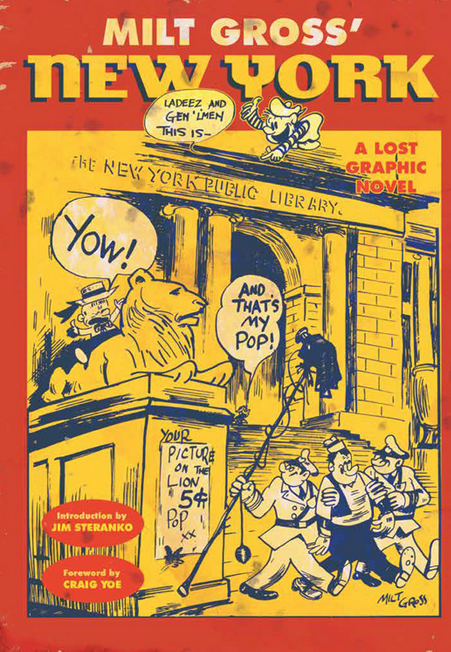
Quite a few terrific Milt Gross compilations, led by Craig Yoe's publications on comics, are highly recommended.
Another excellent source of comics and Milt Gross specifically is Screwball: The Cartoonists Who Made The Funnies Funny by Paul C. Tumey of the Screwball Comics blog and The Comics Journal.
There will be many more articles in an "end of an era" vein (if not a jugular vein) and no doubt Mark Evanier's superb News From Me blog will offer thoughtful and well-researched pieces on the comics and humor institution heading for the last roundup - or maybe merely for a temporary hiatus.
Along with the TV shows of Dick Van Dyke and Ernie Kovacs, the music of The Beatles and movies starring The Marx Brothers and W.C. Fields, the magazine made the awkward young life of many go a lot easier. "Different" and non-conforming kids felt just a little less isolated, just a little bit better about letting our freak flags fly after spending quality time with all of the above - and the satiric sensibility of Mad was right in our wheelhouse.
These early issues stuck to spoofs of the comics, and, as such, are less given to social commentary/satire of current events than the subsequent Mad Magazine, but do feature outstanding, dynamic artwork as do the EC horror and action comics (drawn by Kurtzman, Wood, Johnny Craig, Al Feldstein, Graham Ingles, Harry Harrison, Jack Kamen, and Jack Davis).
These early Mad comic books became, as wonderful as the aforementioned artists are, my favorite issues in the 60+ years of "The Usual Gang of Idiots."
In an era in which current events have gotten so bizarre and ridiculous that it is actually no longer possible to make up ANYTHING that's crazier and more unfathomable than real life, is there a need for Mad Magazine. This comic art fan answers that question with a resounding YES!
The hope is that "The Usual Gang of Idiots" shall regroup and continue as an online magazine or perhaps as an annual, with new material alongside "best of" stories. If any readers of this blog happen to be in San Diego next week, there will no doubt be appearances by Mad magazine stalwarts at the Comic-Con.
The animated antics from this studio, in this correspondent's opinion, are among the very best of the early 1930's. Ace animator Dick Huemer's work on the first two seasons of Scrappy, as well as Manny Gould's animation on Krazy Kat, made for quite a few brilliant and original cartoons.
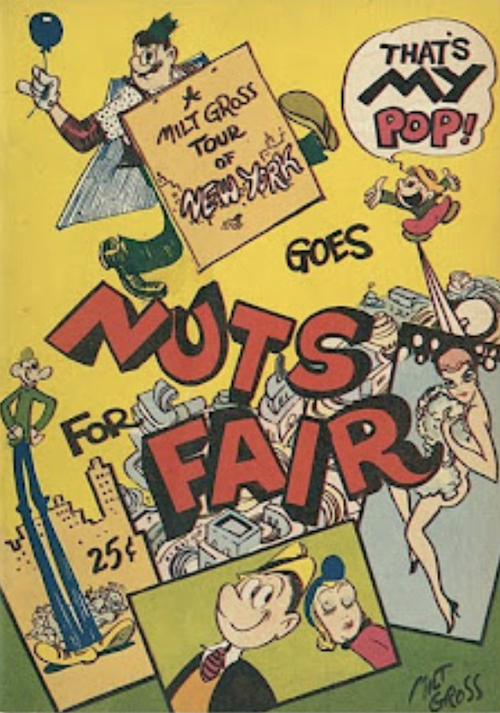
For your viewing pleasure, here's just one bouyant panel from Milt Gross' Cartoon Tour Of New York, courtesy of theASIFA-Hollywood Animation Archive, which is already a veritable Dead Sea Scrolls of comic art. Steven Worth and the crew there are doing exciting things and have already digitized thousands of classic animated films, comics, illustrations and historic memorabilia.
To see the rest of this jewel from Milt's mighty pen:Milt Gross' Cartoon Tour Of New York, Part 1Part 2Part 3The mention of this mega-talented artist dovetails nicely into my last (October 22) posting. After creating two brilliant (not to mention iconoclastic, irreverent and aggressively "non p.c.") MGM cartoons,Jitterbug Folliesand Wanted: No Master, both starring his "Count Screwloose & J.R. The Wonder Dog" characters, Gross was unceremoniously fired by Fred Quimby, the Metro sales executive inexplicably installed as head of their new animation studio.Thus ended what would have undoubtedly been a historic contribution to U.S. animation; Gross would have clearly given Bob Clampett some spirited competition for "king of the black and white cartoon" in the late 30's.I don't know if Quimby quite gets the Eddie Selzer "what does all this laughter have to do with the making of animated cartoons?" booby prize, but he's certainly close. He firedMilt Grossand didn't think Tex Averycartoons were funny.
Milt and Tex got the last laugh. Even now, when it comes to comics, Milt remains the gold standard.Completing a brief Happy Birthday bent here, I celebrate the natal anniversary of just one of the poet laureates of humor, comics, illustration and animation, the fabulous Milt Gross, born on March 4, 1895. No, it isn't lost upon me that the birthdays ofMiltandTex Averyare just a few days apart; I wonder if the two comic geniuses - both of whom created brilliant animated cartoons for MGM - ever met.Here, for a repeat appearance on this blog, is this gorgeous panel fromMilt Gross' Cartoon Tour Of New York, courtesy of the ASIFA-Hollywood Animation Archive.
Thanks to the stalwart efforts of historians and comic art collectors Mark KauslerandMarc Deckter, some amazing Milt Gross pieces are up on the Archive's website.Mr. Kausler, a friend of this blog, comic art scholar and talented animator who has probably forgotten more about the history of comics and screen animation that most of us will ever know, frequently spotlights classic comic strips on hisblog, including the following postings featuring Milt's Nize Baby comix:Happy Holidays Post #1Post-Age DueHitchin' Post