This weekend we celebrate movie comedian Harry Langdon's birthday (June 15), as well as the natal anniversary of fellow silver screen laugh-getter Stan Laurel (June 16).
Shall pay tribute to these iconic comics after noting two excellent classic cartoon and comedy screenings this weekend, including a Saturday matinee at the Metrograph in Manhattan.
The press release elaborates: Down on the Farm is a selection of vintage animated shorts exploring country life among funny barnyard animals. Come enjoy a live action little human girl's adventure among the cows and chickens; a famous cartoon rabbit's follies with a mechanical cow; an unnaturally large and clumsy duckling's unlikely heroism; a beloved wise-cracking sailor visiting his girlfriend's new farm; and more.
Spanning the 1920s through to the ’50s, this assortment showcases classic characters such as Alice in Cartoonland, Oswald the Lucky Rabbit, Popeye, Baby Huey, Farmer Alfalfa, and others. 60 min. film program plus Q&A.
That Slapstick Show: The Animated Marx Brothers
Q.E.D. Astoria; 27-16 23rd Avenue, Queens
Sunday 6/16/24 at 4:30pm
The next entry in this screening series offers a rare glimpse of classic cartoons featuring New York City's favorite sons, Groucho, Chico, Harpo and Zeppo—a.k.a. the Marx Brothers!
We will be joined by ragtime musical artist, Charlie Judkins for mood music throughout the evening and a special halftime performance by Miss Maybell. Approx. 75 minutes of films plus intermission and musical performances. Programmed by Nelson Hughes and co-hosted by Tommy José Stathes.
Space is very limited at QED—it can only accommodate approx. 40 guests. Guarantee entry by purchasing advance tickets:
https://qedastoria.com/products/that-slapstick-show?event=2024-06-16T16:30:00
We're wild about a few Harrys, past (Harry Ruby, Harry Barris, Harry "Sweets" Edison, Harry "The Hipster" Gibson, Harry Caray, Harry Nilsson, Harry Dean Stanton, Harry Chapin) and present (Harry Connick, Jr. and favorite legal eagle podcaster and former U.S. Attorney Harry Litman of Talking Feds). Paramount among those Harrys - and he made movies for Paramount at one point - was the brilliant comedian and character actor Harry Langdon (June 15, 1884 – December 22, 1944).
Mr. Langdon, not even the only silent movie comedian named Harry we go for in a big way - there's also director-writer-comic Harry Sweet (1901-1933) - starred in vaudeville, silent films (1923-1928) and talkies (1929-1944). The comedy-crazed crew here at Way Too Damn Lazy To Write A Blog count him among the funniest, most daring and most original performers to ever make movies. He also remains to this day the most controversial of all the silent and early sound era comedians, right up there with such unabashed grotesques as Larry Semon, Jimmy Aubrey and the Kalem Studio's scuzzy and deliberately excessive "Ham & Bud" (played with truly rancid relish by Lloyd Hamilton and Bud Duncan).
As the words unorthodox & unconventional describe Harry Langdon's modus operandi, and that means his essential characterization, acting and comic timing are unusual, ultra-quirky, idiosyncratic and at times really bizarre, he remains #1 on the list of "love 'em or can't stand 'em" movie comedians. There's no middle ground - classic movie and comedy fans either find Harry irritating and unbearable or fall-down hilarious, unbelievably funny. This silver screen comedy aficionado is emphatically in the latter group.
Rule of thumb #1 for appreciating the Langdon cinematic universe: accept that Harry's mind does not work in anything remotely resembling a conventional way - and just roll with it! Am very much not a fan of the phrases "little elf" and "baby dope fiend" as descriptions of the Langdon character, but do concur with "space cadet."
After starring in vaudeville presenting the famous and very elaborate "Johnny's New Car" sketch, Harry Langdon began his silver screen career, first with Sol Lesser then starring in short subjects for Mack Sennett Productions.
Don't buy the conventional wisdom regarding Harry Langdon's career in both silent and sound films and take the unpopular view that he was both better in talkies than Harold Lloyd and Buster Keaton (thanks a lot, MGM), but also generally very good overall, right up to his last appearances in features for Hal Roach Studios, PRC and Monogram. An exception to this would be many of Harry Langdon's later Columbia short subjects, which reflect Jules White's unending attempts to produce Three Stooges comedies with every performer starring in 2-reelers for The Shorts Department.
To suggest that there is much disagreement among comedy geeks and silent film buffs regarding Langdon's silent features remains quite the understatement! Watching the Harry Langdon silent features, this writer finds Long Pants to be the one that (in his opinion) is an utter misfire and just doesn't work on any level. There's confusion over whether his character is a boy or a man and the scene with him attempting to bump off his girlfriend (and failing miserably, as Harry has difficulty completing any action) elicits stunned silence even from the select few among modern audiences who love Langdon, oddball humor and silent screen comedy at its most surreal.
This scene takes that "just roll with it" viewpoint regarding Harry's utter weirdness - and that same "not of this universe" quality seen seven decades later with Rowan Atkinson's Mr. Bean - a step too far. Thought this might have been a response to a similar plot point in Murnau's SUNRISE, but that film didn't get released theatrically until September 1927. Buster Keaton's take was that this was intended as a sendup of Theodore Drieser's best-selling 1925 novel An American Tragedy. That makes sense but was lost on audiences then and now. Thus, Long Pants was Langdon's first box-office bomb; the "OMG - the little fellow's a psychopath" response sent his box-office appeal plummeting and began his rapid downfall as a feature film star. One imagines this was also the cause of the enduring and acrimonious break between Langdon and director/writer/collaborator Frank Capra.
The feature which was Langdon's directorial debut, Three's A Crowd, offers glimmers of his potential abilities as a unique filmmaker alternating with first-time director mistakes, remains one of those "love 'em or hate 'em" titles.
As is The Chaser, which stars a particularly randy version of Harry.
Most controversial would be the aforementioned series Harry starred in for Hal Roach Studios in 1929-1930.
Here is Harry's first talkie short subject, a promotional piece for the Roach series co-starring Thelma Todd and Eddie Dunn. It attempts to reassure audiences that Harry's on the comeback trail - and also confirms that his characterization is really out there, even more so with sound.
Said Hal Roach Studio series still remains quite the Rorschach Test for classic comedy buffs. Have seen them referred to as "ghastly" and "among the worst two-reelers ever made," but remain among the few who strongly disagree with that assessment. Reviewed the Harry Langdon At Hal Roach: The Talkies 1929-30 at length in a post, New on DVD: Langdon vs. Microphones at The Lot Of Fun, back on April 17, 2020.
The Langdon and Charley Chase talkies produced in 1929 by Hal Roach Studios present an overlooked but essential chapter of silver screen comedy history - and of the transition from silents to talkies. Harry Langdon At Hal Roach: The Talkies 1929-1930 is a followup to previous DVD releases by The Sprocket Vault of Hal Roach studio films featuring director-writer-comedian Charley Chase and the series co-starring Thelma Todd and Zasu Pitts.
In these films, the Harry Langdon seen onstage in vaudeville (and his circular dialogues with himself) are actually featured in a talkie. While Harry can be seen babbling onscreen in many of his silent starring vehicles for Mack Sennett Productions, the Hal Roach series presents the rare instance in which Langdon's stream-of-consciousness patter is seen and heard onscreen.
Said loopy patter, which for many in itself is an absolute deal-breaker, would not be seen in Harry Langdon films after The King (1930), his last short subject for Hal Roach.
The Harry Langdon Hal Roach talkies, invariably, elicit two diametrically opposed responses (even from diehard classic comedy buffs): "this is A SCREAM!" or "this is the worst thing I've ever seen!"
We tip our battered top hats associated with Max Linder to all involved at Sprocket Vault in making the Harry Langdon At Hal Roach: The Talkies 1929-30 DVD release a reality: Kit Parker Films, Richard M. Roberts, VCI Entertainment and the late Ron Hutchinson of The Vitaphone Project.
All eight Harry Langdon Hal Roach 2-reelers, including the heretofore lost films Hotter Than Hot and
Sky Boy, which still only exist as silents - the sound discs have yet to be found - are included in the 2-DVD collection.
Especially enjoyed the hilarious The Big Kick, much of which plays essentially as a silent and includes both way-out concepts and several scenes of astonishing pantomime by Harry.
In the famous/infamous THE HEAD GUY, Harry joins the ranks of such funny but polarizing latter-day comedy performers as Pinky Lee, Pee-Wee Herman, Andy Kaufman, Emo Phillips, Martin Short and Kristen Wiig. The short presents the Harry Langdon stream-of-consciousness dialogue at its most extreme. While the "sandwich and apple" sequence is the line of demarcation for many film buffs, count this blogmeister among those who laugh out loud throughout this scene in THE HEAD GUY, even though it is longer than the long version of Light My Fire by The Doors. Harry's m.o. is to build the tension in a scene by extending it - and this elicits quite the cathartic belly laugh when that tension is finally burst.
Harry worked as a supporting player in a couple of features for Warner Brothers in 1930-1931, with "The Oui Oui Song" from A Soldier’s Plaything being his most memorable scene - at least until his part in the 1933 Al Jolson vehicle Hallelujah I'm A Bum.
Beginning in 1932,
Langdon co-starred with his buddy Vernon Dent in a bunch of excellent comedy short subjects for Educational Pictures and Paramount.
This series, produced in 1932-1934 by Arvid E. Gillstrom, successfully recaptures the spirit and tone of the mid-1920's Mack Sennett comedies. The Educational Pictures comedy shorts are much more relaxed than the Hal Roach films or the subsequent Columbias. In The Hitch Hiker and Knight Duty, this works beautifully.
Harry essentially plays his character silent and lets his perennial onscreen foil and offscreen best friend Vernon Dent do the talking in this series.
Unfortunately, the 1934 Paramount short subjects co-starring Harry Langdon and Vernon Dent produced by the same crew as the Educational series at this juncture are lost films.
The Columbia series is much much more hit-or-miss - prefer both the Hal Roach and Educational 2-reelers - but there are occasional good ones. HIS BRIDAL SWEET (1935) teams Harry with Billy Gilbert, who does a terrific job playing a raving lunatic. That's right, no kidding, BILLY is the crazy one in this scenario.
Harry returned to Hal Roach Studios to work as a gagman/scenarist with Laurel & Hardy and occasionally contribute character roles to Lot Of Fun features. Block-heads (1938) is the L&H feature with the most pronounced blending of the unique Harry Langdon and Stan Laurel comedy sensibilities. The links between Block-heads (1938) and Harry's 1926 Sennett film Soldier Man are numerous.
Due to the Columbia Shorts Department's penchant for casting everyone on the lot in Three Stooges style knockabout, this blogger is not a fan of Langdon's films from the 1940's, after his last work for L&H (Saps At Sea), so we will stop here. Must extend big thanks to the splendid Harry Langdon Archive YouTube channel (which, among many films, features the 1933 Lewis Milestone flick Hallelujah I'm A Bum, in which Harry has a prominent character role) curated by Nicole Arciola, as well as Archive.org.
As far as Mr. Laurel goes, back during those not-fun days of lockdown, posted a Happy Birthday tribute here on the blog, including wacky Larry Semon Vitagraph films Stan appeared in as a supporting player, as well as several of the pre-teaming solo comedies he starred in for Gilbert M. "Broncho Billy" Anderson, Joe Rock Productions and Hal Roach Studios.
In 2024, we'll celebrate Stan's birthday by watching hilarious Laurel & Hardy films!
A good place to start with appreciation of The Boys is by purchasing this Blu-ray of L&H silents from 1927.
This Blu-ray traces their early development as a comedy team and the restorations look fabulous.
To celebrate World Gin Day, here's some W.C. Fields!
Followed by caricatures of Fields from classic cartoons.
And, inevitably, cartoons involving delirium tremens and elephants!
It just wouldn't be World Gin Day without cartoons starring drunken dogs!
The official World Gin Day website adds: Gin Day was established by England’s own connoisseur of the juniper-based drink, the Gin Monkey. Emma, the titular Gin Monkey, has been a huge fan of cocktails of all kinds and has worked throughout the Newcastle, London, and Leeds area in multiple cocktail bars. Taking this experience to the streets she created her Gin Monkey site, put together with the intent of saving intrepid bar-hoppers from finding the worst of the alcohol joints at their destination.
What is the best way to top off a selection of inebriated film clips curated specifically for World Gin Day? By an entire film about inebriation starring Charlie Chaplin!
After one doozy of a week, we at Way Too Damn Lazy To Write A Blog were wondering what the next blog post would cover. Thankfully, the Niles Essanay Silent Film Museum and favorite authors Kliph Nesteroff, Ben Ohmart and Keith Scott have provided said topics for us! Turns out tomorrow is the natal anniversary of comic character actor and all-time great cartoon and radio voice artist Walter Tetley.
Mr. Tetley is best known today as the voice of Mr. Peabody's intrepid boy assistant Sherman.
He's also the voice of Felix The Cat in the Van Beuren Studio's Disney-fied revival in the Rainbow Parade series, the Walter Lantz Studio's Andy Panda, UPA's Dusty of The Circus for The Gerald McBoing-Boing Show and PG&E's energetic singing spokes-electron, the ELECTRIC Reddy Kilowatt, who should have played a solid body electric guitar featuring a bolt-on neck.
It would be a grotesque understatement to state that Walter Tetley was one of the hardest working radio actors not named Mel Blanc. He was a scream appearing with Jack Benny, Bob Hope and Burns & Allen, on satirist Fred Allen's Town Hall Tonight, as a key driver of the comedy in The Great Gildersleeve and as the not-so-secret weapon, a cleanup hitting laugh-getter, on The Phil Harris-Alice Faye Show.
In addition, he has brief but very funny cameos in a gazillion movies, such as this one in the Abbott & Costello vehicle Who Done It.
The aforementioned and formidable Kliph Nesteroff penned, as one of his many excellent articles for WFMU's Beware Of The Blog, Credit Castrated: The Voice of Walter Tetley, a very good overview focusing on Mr. Tetley's numerous hilarious turns as radio's "mean widdle kid" and both varied and prolific work on records. (NOTE: posters on OTRCAT and YouTube have done us comedy and OTR fans a massive favor by compiling devastatingly funny turns in the Walter Tetley Radio Collection, including his memorable appearances on The Phil Harris-Alice Faye Show)
Expert on old time radio and mid-20th century pop culture Ben Ohmart, with OTR archivist Charles Stumpf, penned an outstanding book, Walter Tetley: For Corn's Sake on the voice artist's life and times.
The description of Walter Tetley: For Corn's Sake elaborates: WALTER TETLEY (1915-1975) was the quintessential kid voice of radio. His distinguished voice career began in the early 1930s and lasted until radio s final years in the 1950s. He was also a very private person who never gave interviews, instead choosing to immerse himself in charity and voice work throughout most of his life. For the FIRST time in print finally a complete biography on one of radio s most beloved character actors. Including many RARE PHOTOS and THOUSANDS OF CREDITS, most of which have never been seen or discussed in any article or book. That is because this biography has been written with the aid of Walter s personal scrapbooks! From The Great Gildersleeve to Rocky and Bullwinkle's Peabody and Sherman and beyond. Includes a detailed account of Walter's 1930's public appearances.
It's tough to know where to start or where to end with Walter Tetley's career, given how, in addition to countless radio show roles, his cameos in movies and voice-overs on records are numerous. Among said credits, Walter was a favorite of Stan Freberg's. He's a hoot as the hipster in Yankee Doodle Go Home, from Stan Freberg Presents the United States of America volume 1: The Early Years (1961).
Wikipedia adds: In 1973 Tetley made an appearance on Rod Serling's radio series The Zero Hour. He could be heard in the "Princess Stakes Murder" episodes beginning the week of November 19.
So, a day before his birthday, Way Too Damn Lazy To Write A Blog respectfully tips the battered showbiz top hat to the great Walter Tetley. Along with Mel Blanc, Danny Webb, Kent Rogers, June Foray, Bea Benaderet, Sara Berner, Don Messick, Daws Butler and Bill Scott, to name just a few, he is paramount among the ace voice-over artists we LOVE in classic cartoons!
The unparalleled queen of the animated screen - made of pen and ink, she will win you with a wink, ain't she cute, boop-oop-a-doop, sweet Betty - will be back on the big screen tomorrow afternoon, in new restorations of classic cartoons.
Sunday June 2nd at 3:00p.m. PST, our pals at the Niles Essanay Silent Film Museum present a classic Fleischer cartoon matinee, Betty Boop For President. Purchase tickets here.
Everybody's favorite flapper not named Clara Bow or Colleen Moore shall rock the Edison Theater in a selection of classic Max Fleischer Studio cartoons. Max' granddaughter Jane Fleischer hosts.
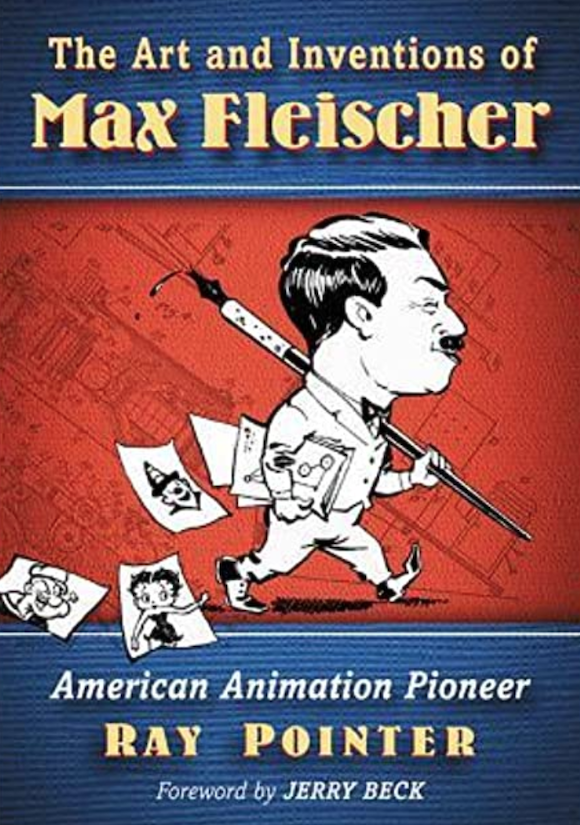
The program includes short presentations about the development of the design of Betty Boop and the inventiveness and creativity of Fleischer Studios by Ray Pointer, animation professional and author of The Art and Inventions of Max Fleischer: American Animation Pioneer, a superlative tome covering the filmmaking career, art and technological innovations of Max.
Today, we remember those who served - and those we miss - on Memorial Day weekend, with heaping helpings of fun and laughs. Many of us of a certain age had dads and moms who served with distinction in the Army, Navy, Air Force, Marines and WACS.
Of all the classic film comedies about the military, this writer thinks it is good bet that their favorite - indeed, one of the very best comedies from the 1940's - would have been Howard Hawks' 1947 film I Was A Male War Bride. As great a light comedian as Cary Grant is, and he's terrific as usual in this, the stellar performance of Ann Sheridan puts this post WW2 comedy over the top.
No doubt a close runner-up for the greatest generation - and easily this blogger's WW2 vet father's fave - was Mister Roberts. Always enjoy watching it just because all-time greats Jack Lemmon, Henry Fonda, Jimmy Cagney and William Powell - we love 'em all - are in the same movie.
Can't have Memorial Day entertainment without a little slapstick, so next up is The Three Stooges in HALF SHOT SHOOTERS (1936). This Moe-Larry-Curly opus, directed by Jack "Preston Black" White, remains a momentous occasion in silver screen comedy, as it features the first appearance with the Stooges of all-star supporting player and perennial sultan of scorn Vernon Dent!
Universal's comedy team of Bud Abbott & Lou Costello practically specialized in service comedies.
All of them - Buck Privates, In The Navy, Keep 'Em Flying, Buck Privates Come Home - play very well on Memorial Day.
The A&C flick this classic movie fan has a soft spot for is The Time Of Their Lives. It isn't a service comedy per se but does feature an unusual storyline featuring Lou as a goofball ghost from, not World War I or World War II, but the Revolutionary War.
The gang at Way Too Damn Lazy To Write A Blog considers The Time Of Their Lives among Bud & Lou's best feature films and a good pick for Memorial Day weekend comedy.
To top off today's post, here's a very early Laurel & Hardy 2-reeler from 1927.
While pondering the slapstick of L&H and whether to follow the boys with Chaplin and Keaton, we wish all a happy Memorial Day weekend.
Capra worked for comedy-meisters Hal Roach and Mack Sennett and wrote gags for both the Our Gang series and the highly original, unorthodox comedian Harry Langdon.
Was thrilled and delighted to stay up way past my bedtime to see Capra, along with fellow directors Mel Brooks, Peter Bogdanovich and Robert Altman, on The Dick Cavett Show.
Later, after finding myself the only person in my high school class who did not think It's A Wonderful Life was an unbearably corny, hokey and interminable piece of crap, delved deeply into Capra's cinematic catalog. Fortunately, his best known flicks - Mr. Deeds Goes To Town, Mr. Smith Goes To Washington, You Can't Take It With You, Meet John Doe - were shown frequently on TV way back when.
NOTE: for a fascinating bill, watch It's A Wonderful Life with Hitchcock's Rope or one of the Anthony Mann westerns starring Jimmy Stewart (more akin to the Jimmy from Vertigo than to the Jimmy who starred in Mr. Smith Goes To Washington) - then top it off with Frank Capra's WW2 documentaries from the Why We Fight series.
The Oscar-winning IT HAPPENED ONE NIGHT, which would now be described as a "rom-com," remains an all-time favorite film of the gang at Way Too Damn Lazy To Write A Blog. It is both consistently funny start-to-finish and chock full of hilarious character actors.
By the time the 1980's rolled around, had seen numerous Frank Capra films, including the lesser-known Broadway Bill, thanks to repertory cinema retrospectives.
Also saw Mr. Capra on the NBC version of Late Night With David Letterman, the best show on the cathode ray tube not named Blackadder or SCTV at that time. Could Dave have been a crazed diehard classic movie buff? To paraphrase Gary Cooper in two aforementioned movies, yep.
In the 1990's, David Packard's Stanford Theatre in Palo Alto, CA did this film buff a tremendous favor by presenting extended and absolutely epic Frank Capra retrospectives. Got to see a bunch of the Capra films which weren't seen often on TV - including Lady For A Day, The Bitter Tea Of General Yen, Lost Horizon and others - in vivid big screen glory.
The Bitter Tea Of General Yen is beautifully photographed, features the always intrepid Stanwyck (who made five feature films with Capra) and remains a fascinating and largely successful attempt to deliver cinematic high style a la Josef von Sternberg on a Columbia Pictures budget.
Bear in mind, as gorgeous a classic film as The Bitter Tea Of General Yen is, it definitely strays at times into the WTF category, even while its visual style successfully plunges into terrain only explored by F.W. Murnau and Josef von Sternberg.
The late Robert Osborne elaborates:
Favorite all the lesser known Frank Capra flicks? The Great Depression epic American Madness (1932), which explores themes seen later in Mr. Smith Goes To Washington, Meet John Doe and It's A Wonderful Life.
No, at least in this case, the term animal magnetism does not refer to the minor-key song by headbanging German hard rockers The Scorpions - or does it?
Your somewhat intrepid correspondent, back from a great time in Northern California co-presenting the KFJC Psychotronix Film Festival at Foothill College with Robert Emmett, Mr. Lobo, Sci Fi Bob Ekman and Scott Moon, is now enjoying nice hot coffee in beautiful New York City and thinking about very odd silent movies.
Since this blogger is indeed wearing an official Silent Comedy Watch Party T-shirt (thank you, Marlene Weisman), it's time to watch an excellent presentation titled ANIMAL MAGNETISM: THE SILENT COMEDY MENAGERIE that author, SCWP co-curator and silent comedy expert Steve Massa created for the Silent Laughter festival held in November 2023 at The Cinema Museum, London.
Topic du jour: furry friends who starred in silent movies, with cool film clips accompanied by excellent music by Ethan Uslan and Meg Morley. This highly entertaining presentation features generous excerpts from terrific silent comedies, notably NIP & TUCK (a 1923 Mack Sennett opus featuring Billy Bevan, Harry Gribbon and scene-stealing Cameo the Dog). Steve outlines the various trends, besides not paying human actors, that brought dogs, cats, mules, spider monkeys, chimpanzees, orangutans, lions, bears and even freakin' elephants to the silver screen.
One of our all-time favorite furry friends in movies is Pepper The Cat, here co-starring with the great comedienne "Madcap Mabel" Normand. A cat who took direction? WTF? Watch and see - our mackerel tabby mascot Raymond, whose response is "cats rock and can do everything, while always looking fabulous" heartily approves! Alas, a bunch of dogs, cute but a lot less interesting than Pepper, end up as "the cavalry," rescuing a soon-to-be-lunch bird from the feline antagonist in this 1913 opus from Mack Sennett's Keystone.
And, speaking of Mack Sennett's Keystone Comedies, the mention of Luke recalls Roscoe Arbuckle in Fatty's Plucky Pup (1915).
And then there's the one, the only Pete The Pup, star first of the Buster Brown series (as Tige) and then a mainstay of Hal Roach Studio's Our Gang.
Here, the first Pete co-stars with the very funny acrobatic comedian (and future grizzled sidekick in westerns) Al St. John in Dynamite Doggie, directed by Roscoe Arbuckle and co-starring the second Mrs. Arbuckle, Doris Deane.
Producer Hal Roach, no fool, recruited Pete for Our Gang after seeing him in such films as Dynamite Doggie and the Stern Brothers' Buster Brown series. The following, Dog Heaven (1927) is one of the strangest and darkest Our Gang comedies and more akin to the comic sensibility of Michael "Mr. Mike" O' Donaghue than to any of the Hal Roach Studio gagmeisters.
The second Pete would enliven the talkie Our Gang comedies in such Depression-era favorites as The Pooch and For Pete's Sake.
Having enjoyed viewing a lightweight but funny William Powell flick on the SFO-JFK flight (yes, TCM was available) all this correspondent can think of is the best canine comic not named Cameo, the extraordinary Asta!
Asta was trained by the frequently hilarious comedienne and sometimes writer/producer of silents and early talkies (and frequent co-star of director-writer-comic Charley Chase at the Hal Roach studio) Gale Henry and her husband Henry East.
While the diehard classic movie mavens here at Way Too Damn Lazy To Write A Blog have not yet located any film footage - well, not yet - showing Gale appearing onscreen with one of the exceptionally talented canines she and Henry East trained, that said, it's as good an excuse as any to show more clips of the immortal Asta!
How funny was Gale Henry? Check out her dance in HIS WOODEN WEDDING (1925), which is just one of many memorable supporting roles she contributed to the classic Hal Roach comedies, both in silents and talkies, of comic genius Charley Chase. It's clear why Charley hired and re-hired Gale for comedy heavy lifting in his films; she was a scream!
Gale, the prolific comedienne and character actress who must have been among the key prototypes for the character of Olive Oyl in E.C. Segar's Thimble Theatre comic strip, remains one of the most unique talents in the history of movies.
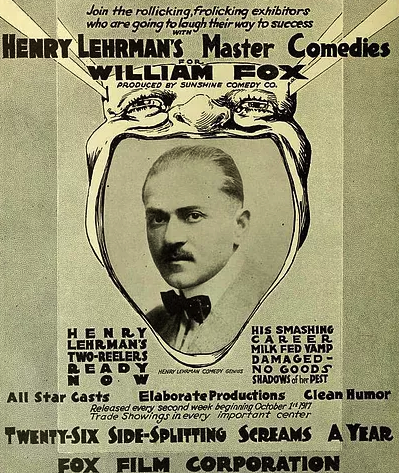
We must respectfully tip our top hat (no doubt worn by some unfortunate mustached comic who got chased around by a lion in a Fox Sunshine comedy produced and directed by Henry "Suicide" Lehrman) to the super-talented Gale Henry, as well as all the many four-legged fur-bearing stars of the silver screen.
Today, we're substantially less than bright-eyed and bushy tailed after mucho big screen fun last night at the KFJC Psychotronix Film Festival. It was a blast!
And yes, it's true - yours truly slipped a Scrappy cartoon into the extravaganza. What can we say? Love that crew featuring the brilliant Dick Huemer, Sid Marcus and Art Davis!
Do we love seeing the DC5 followed by Mickey Rooney Jr. singing Beatles hits, those guys with the high voices and skinny neckties (The Newbeats) and 1960's heartthrob Adam Faith, doing the bunny hop dance while singing a tune this music fan associates with John Lee Hooker, on SHINDIG? Yes!
A favorite in the program that yours truly didn't bring was the amazing Howdy Doody Presents A Trip To Funland, a 1953 Castle Films opus, which featured, along with Howdy Doody, Buffalo Bob and Clarabelle, scenes from the imaginative science fiction stop-motion animated film Kermesse fantastique, directed by József Misik for Joop Geesink's Dollywood studio.
Showed unintentionally hilarious Marlboro and L&M TV commercials in the extravaganza. Do we like cigarette ads too much? Yes.
Here are some additional nicotine-stained goodies filled with fine tobaccos, courtesy of Prelinger Archives.
The classic comedy fans who write this blog want to call attention to a Go Fund Me on behalf of one of our film historian pals, Nelson Hughes. $2000 more and the fundraiser will meet its goal.
Nelson has forgotten more than most of us know about classic comedy films and silent era knockabout and curated numerous wonderful programs for his That Slapstick Show! series in NYC. We especially like his programs of rare American silent comedies from the Library Of Congress (such as The Celebrity Roast Of Charley Chase) at Brooklyn's City Reliquary and Astoria's Q.E.D.
We enthusiastically support Go Fund Me on behalf of a splendid curator and showman who is among the key figures in the 21st century revival of WW1 era and 1920's Universal Pictures comedies.
In programs he curated, Nelson has brought attention to the slapstick comedy pioneer and producer-director-writer for Keystone, L-KO, Fox "Sunshine" and First National comedies Henry Lehrman (1881-1946).
Along with the ultra-wacky cartoonist turned comic Larry Semon (1889-1928), Lehrman (a.k.a. Pathé Lehrman and Suicide Lehrman) proved to be one highly enthusiastic exponent of a bigger, wilder, spectacular and mayhem-filled more-more-more approach to comedy - great for sight gags and visual humor but dangerous for extras. The fast-fast-fast and then faster Lehrman short subjects reflect that he was a comedy genius - and out of his freakin' mind!
Lehrman and Charlie Chaplin could not stand each other, but they did collaborate on Charlie's earliest films, such as his debut, Making A Living.
There's Charlie, in his tramp costume, thumbing his nose at the universe for the first time in Kid Auto Races At Venice.
Not many of Lehrman's Universal, L-KO, Fox and First National productions exist, but one that does is Almost A Scandal (1915), an L-KO (Lehrman Knock Out) comedy starring the up-to-no-good evil doppelganger of Chaplin, fellow Fred Karno troupe star Billie Ritchie. Both comedians wear that outfit but couldn't be more different; Billie's character is a scoundrel who makes Charlie look genteel by comparison!
Another is His Musical Sneeze (1919), produced by Lehrman and directed by Jack White (a.k.a. Preston Black, the future director of hilarious Three Stooges 2-reelers). There's a very goofy Lloyd Hamilton, supported by Virginia Rappe (the girlfriend of Henry Lehrman, seamstress and occasional actress now known as the unfortunate hard luck gal who shouldn't have attended that Labor Day 1921 party hosted by Roscoe Arbuckle at San Francisco's St. Francis Hotel) - and a storyline that looks like a prototype for Bugs Bunny cartoons. Did Tex Avery, Friz Freleng, Bob Clampett or Chuck Jones see this?
In closing, we encourage our readers to support this Go Fund Me for Nelson Hughes, an excellent curator and one of our colleagues and comrades in classic movies and silent cinema.