Today, music lovers around the world celebrate the natal anniversary of guitarist Django Reinhardt.
Django, the Belgian-born Romani jazz musician was born to swing that guitar on January 23, 1910.
Django was inspired by the music of Louis Armstrong.
With violinist Stephane Grappelli, Django co-led Western Europe's supreme source of scintillating swing, the Quintette Of The Hot Club Of France.
We'll kick this off with a few film clips of the guitar genius in action.
Numerous Django concerts, airchecks and radio broadcasts have been posted on YouTube. Thanks to music historisn Heinz Becker, here are superlative playlists featuring The Quintette Of The Hot Club Of France:
Pre-eminent among Chess Records' many ambassadors to the world: bandleader-bassist-songwriter-vocalist Willie Dixon.
One of this writer's all-time favorite albums was recorded at Chicago's North Park Hotel. Chicago music titan Gene Ammons, tenor saxophonist and son of boogie-woogie piano king Albert Ammons, is in top form!
Speaking of Gene Ammons, he is arguably our favorite among the numerous greats who waxed albums and singles for Chess Records. Ammons had the first of two records released by Leonard Chess on the newly-formed Chess Records label in 1950, titled "My Foolish Heart" (Chess 1425); the second release was "Rolling Stone" by Muddy Waters (Chess 1426). Gene recorded the excellent Soulful Saxophone album for Chess. His epic Live! In Chicago album, recorded at The DJ Lounge in Chicago for the Argo label, is a must for any music fan.
Other musical masterpieces from Chess Records include
Chuck Berry - The Great Twenty-Eight
Etta James - At Last!
The London Howlin' Wolf Sessions
Soundtrack to Rock, Rock, Rock
Go Bo Diddley (1958)
The Best of Little Walter
The Real Folk Blues - Howlin' Wolf, Muddy Waters, and John Lee Hooker
Albums, many outstanding, by Muddy Waters, Sarah Vaughn, Anita O' Day, Mort Sahl, Richard Pryor, The Smothers Brothers, Barbra Streisand, Cass Elliot, Dale Hawkins, Bill Cosby, Freddie Prinze and Ella Fitzgerald were recorded there.
On this October day in appalling 2025 at Way Too Damn Lazy To Write A Blog, we tip our borrowed Chicago Cubs caps, hopefully previously owned by Mike Krukow, to Mister Kelly's and the city of Chicago, where Chess Records and Curtis Mayfield's Curtom Records waxed incredible music and a portion of East 36th Street near Cottage Grove Avenue is Sam Cooke Way. Kudos, bravos, huzzahs, good luck and countless inflatable animal costumes (along with documentary filmmakers) to the Windy City!
As Steve Allen was a pianist/composer/bandleader who doubled as a comedian, music was a key ingredient in The Tonight Show from the beginning. Calypso group Tiger Boy performs in the following 1956 Tonight Show, beginning at 21:03.
Don't find many complete shows from Steve Allen's Tonight Show tenure or those hosted by Ernie Kovacs on Archive.org, YouTube, Vimeo, Daily Motion. There MUST be musical interludes in the Kovacs episodes! Skitch Henderson led the NBC orchestra at that time and into the Jack Parr and Johnny Carson eras. Doc Severinson and Tommy Newsom followed. The big band was patterned on the ensembles led by Count Basie, Quincy Jones, and (later) Thad Jones & Mel Lewis.
Dizzy Gillespie had an excellent time playing his compositions with the Tonight Show band.
All that said, as much as the Tonight Show band exemplified the Atomic Mr. Basie approach, periodically Johnny had a musical guest on who was not from the big band tradition.
Numerous rock, soul, pop and jazz greats performed on David Letterman's NBC and CBS shows. This included the recently departed metal man Ozzy Osbourne & Black Sabbath.
Did the music represented on Letterman run the freakin' gamut? Yes.
Could this band back Keith Emerson and McCoy Tyner? Yes - watch this!
It is not particularly surprising that with The World's Most Dangerous Band took to jazz in a big way. Bassist Will Lee toured with one of our favorites from the jazz universe, Horace Silver.
No doubt, several of musical director Paul Shaffer's heroes got to be on the show.
A memorable spinoff from the NBC incarnation of Late Night With David Letterman involved frequent Letterman guest, session man supreme and Gil Evans Orchestra stalwart David Sanborn, along with Letterman Show bandmates, and would represent something approximating a gold standard in presenting music on late-night television. That was Sunday Night A.K.A. Michelob Presents Night Music. We'll never see its like again.
Can't post the entire series here in this post, so check out this playlist. Would buy a Blu-ray of the complete series, pretty much the last gasp of jazz music on American television (even in late night), if possible.
Am a bit disappointed not to find more clips from The Arsenio Hall Show, which brought quite a variety of music to TV during its late 1980's - early 1990's heydey.
Tend to associate Dick Cavett's late-night program more with rock music than jazz, but, what do you know, here's Buddy Rich, frequent guest of The Tonight Show Starring Johnny Carson, bringing that big band sound to The Dick Cavett Show.
In closing, am not quite sure this fits into the late night theme, as Dick Cavett had moved out of the 11:30 p.m. Tonight Show time slot fairly early in his TV career. In any case, this must be one of the earliest instances of David Bowie on American television and precedes his 1979 appearance on Saturday Night Live.
Mr. Cavett did a good job interviewing Miles Davis here. If the guests on his late night and subsequent PBS shows were any indication, Dick Cavett was an enthusiastic aficionado of jazz and rock music.
As expected, could barely scratch the surface of this topic, the mighty music of late night TV, in this post!
Happy to offer a little taste of the goodness that was available on the ol' boob tube way back when. While the comedians were big time heroes of late night TV, so were the incredible musicians who created these beautiful sounds!
There are lots of natal anniversaries at this time of year for luminaries this blog and blogger are crazy about. Kicking off the Happy Birthday list: British stage, screen and radio actress Madeleine Carroll, star of British and American movies, including The 39 Steps, Secret Agent, The Prisoner Of Zenda and My Favorite Blonde, who chucked a lucrative and successful showbiz career for the callings of humanitarianism and international activism, born on February 26, 1906. The life story of Madeleine Carroll is covered in detail by John Pascoe's book Madeleine Carroll: Actress and Humanitarian, from The 39 Steps to the Red Cross.
The comedy kings born on February 26 include Tex Avery.
That's right, Tex Avery, a.k.a. The King Of Cartoons, the ringleader of Termite Terrace who brought Bugs Bunny from bucktoothed chortling grotesque to the suave Oscar-winning rabbit.
Turns out this blog somehow overlooked TWO February 26 birthdays. First and foremost, forgot all about the great New Orleans pianist, vocalist, songwriter and entertainer Fats Domino (1928-2017), who brought the boogie woogie riffology of pianists Albert Ammons and Meade Lux Lewis into 1950's rock n' roll and led countless music lovers to his fellow New Orleans entertainers Professor Longhair, Allen Toussaint, Dr. John, James Booker and The Meters. Here's an excerpt from the American Masters documentary Fats Domino & The Birth Of Rock & Roll.
My favorite TV program in the early 1970's, hands down, was Johnny's.
Love the Pops & Johnny rendition of the 1930 Louis Armstrong & Jimmie Rodgers recording of Blue Yodel #9!
As Fats Domino did, Johnny Cash had an extended career, stretching into the 21st century. For more on the man in black's music, check out the Johnny Cash Archive on YouTube.
All of the above stalwarts born on February 26 (and several more who, unfortunately, slipped our minds - Godfrey Cambridge, Erykah Badu, Marilyn Michaels, Alan Bridge, Bob Hite and Mitch Ryder) merit mucho thanks and appreciation for making the world a better place.
Both yours truly and Madame Blogmeister did our civic duty and voted by mail last month.
Then we kicked back and relaxed with the following favorite election-themed tune, courtesy of intrepid Swing Ticket candidate Louis Jordan.
It's true - every presidential election, this way too well-informed for his own good political junkie and diehard classic comedy aficionado MUST watch the hilarious Moe, Larry and Shemp in Three Dark Horses!
No matter how many times I see this Three Stooges opus in which our knucklehead heroes unwittingly work for super-corrupt griftin' grabbin' graftin' slimeball politicos, the result, invariably, is me ROFL and LMFAO.
The 1952 Columbia 2-reeler opens with the line, "what we need are delegates who are too dumb to think and will do what we tell them." Could we get exponentially more stupid and politics even sleazier in the 72 years since slap happy Jules White and the Columbia Shorts Department produced this? YES!
To decompress after a ghastly and interminable election cycle, it is now time to watch a few classic animated cartoons, starting with the 1950's Famous Studios version of Popeye the Sailor.
In Popeye For President (1956), as usual, the voice acting by Jack Mercer (credited for story on this cartoon), Jackson Beck and Mae Questel is stellar.
Ever since I first saw it on TV way back in the 1960's enjoyed the musical cartoon Olive Oyl For President (1948). Voice actress and comedienne par excellence Mae Questel delivers the song with considerable gusto.
Little did I know, Olive Oyl For President was a very creative cheater, some it re-using ideas from the Fleischer Studios cartoon (which, incidentally, we post for EVERY election), the imaginative, clever and funny Betty Boop For President (1932).
What classic cartoon can we finish an Election Day post with? This one: Bugs Bunny and Yosemite Sam in BALLOT BOX BUNNY, directed by Friz Freleng.
Here, having voted via absentee ballot, the guy responsible for 1,368 posts (!!!) at Way Too Damn Lazy To Write A Blog sits quietly in front of NYC's Russ & Daughters, anticipates the absolutely amazing food within, and remembers the blazing greatness and mindblowing musical talent of the recently passed bandleader/composer/arranger/producer/brass virtuoso Quincy Jones.
Among a list of accomplishments way too lengthy to recount here, Quincy Jones led an astounding big band (especially astonishing on the two Live In Paris albums) in the early 1960's.
Not surprisingly, brilliant, inventive and memorable arrangements by Quincy Jones, as well as rip-roaring musicianship, are the order of the day.
Quincy leads a star-studded killer big band - and the existing footage of it in concert rivals The Atomic Count Basie for hard swingin' goodness.
Quincy's superlative arrangements would be heard a few years later when Mr. Jones conducted the Count Basie Orchestra for the epic Sinatra At The Sands concert album.
Any and all interviews with Mr. Jones are worth checking out.
Ranking high on the short list of great moments in television: Quincy's appearances on Late Night With David Letterman.
Quincy Jones also appeared on Conan O'Brien's show, our favorite of the more recent (post-Johnny Carson, post-NBC David Letterman) late night TV programs.
At Way Too Damn Lazy To Write A Blog, we extended a hat tip to the maestro of maestros in the following March 2021 post, which noted
that perennial favorites Albert Einstein, Steph Curry, Michael Caine and Quincy share a March 14 birthday.
We wish readers of Way Too Damn Lazy To Write A Blog a Happy (and safe) Thanksgiving!
As the distressingly knowledgeable 20th century history-savvy gang here inhabits what appears to be a permanent state of worry, tension and fear these days, we note that autumn shall soon end and winter will be upon us soon. The month of September is ending shortly, so today, we pay tribute to "Fall."
We'll start celebrating the season change with a Warner Bros. cartoon, the first but not the last on the topic of gambling; the 1951 Merrie Melodie Early To Bet, directed by Robert McKimson, cleverly and literally visualizes the gambling bug. Don't know if Frank "Tish Tash" Tashlin was into gambling, but we do know that at the very least three of our all-time favorite comedians, Phil Silvers, Ernie Kovacs and Norm MacDonald, were.
NOW THAT SUMMER IS GONE would be a fantastic companion to the Twilight Zone episode THE FEVER featuring the great Everett Sloane as a super-strict and super insufferable Calvinist moralist who goes to Vegas on vacation and gets utterly obsessed with slot machines and casino gambling.
Next, we'll answer the question of how many versions of the minor-key tune Autumn Leaves we can post. We'll start with mighty guitar geniuses Jimmy Bruno and Frank Vignola!
Vocalists want equal time!
As do tenor saxophonists. . . I saw this guy, Johnny Griffin, play a slightly less uptempo version of this song as the opener of his first rip-roaring set at San Francisco's Keystone Korner (750 Vallejo Street) on Thanksgiving night, 1978.
As a scandal involving our idiot Empire State mayor ensues, it's as good an excuse as any to go through a slew of good renditions of the song Autumn In New York, composed by the formidabke Vernon Duke in 1934. The dynamic duo of Ella Fitzgerald and Louis Armstrong kick off the explorations of Autumn in New York with their customary brilliance.
Bud Powell could play both classical and jazz music with ridiculous technical facility and a haunting soulfulness.
Chet Baker gives us cool school Autumn On New York.
Invariably, tenor saxophonists will have the last word. Looks like John "Blue Train" Coltrane and "Stan The Man" Getz are accompanied by the A-1 rhythm section of Wynton Kelly (piano), Paul Chambers (acoustic bass) and Jimmy Cobb (drums). Everybody sounds great.
We're kicking back this Labor Day weekend and enjoying some great music. Last week it was the varied sounds of the incomparable Declan McManus a.k.a. Elvis Costello. This week it's the equally incomparable Raymond Scott.
Much Raymond Scott material I had never heard before has been released in recent years. The albums are available on YouTube and all the streaming services, albeit apparently not on DVD or vinyl.
There is a rather amazing YouTube channel featuring tremendous music by Scott, including playlists for the Quintettes and his Orchestra.
The latest on these releases from Raymond Scott.net: "A new series of five 20-track digital compilations presents remastered recordings — many never previously released — of Raymond Scott's Works for Orchestra. Spanning 1935 to 1957, these 100 tracks highlight Scott's adventurous and eclectic approaches to composing and scoring for large ensembles.
Most tracks were transferred from discs in the Scott collection at the Marr Sound Archives, with digital restorations produced by Scott historian/curator Irwin Chusid.
The five sets include dozens of Scott originals — including some early Quintette titles arranged for orchestra — and a handful of cover versions. These collections are available on Spotify, Apple Music, and all digital retail and streaming platforms."
"Raymond Scott: Quintettes or Less presents two 20-track digital (only) collections of mostly previously unreleased Scott recordings featuring the composer working with bands of less than seven players. Scott's original 1937–1939 "Quintette" actually had six members, so we're going with Raymond's math in curating these sets.
"Lots of surprises, including RSQ alternates and early versions, crisp radio performances, and previously unheard 1940s quintets and sextets. Curated and restored by Irwin Chusid. Both sets are available on Spotify, Apple Music, and all digital retail and streaming platforms."
Do we at Way Too Damn Lazy To Write A Blog have a single favorite musical composition to ever appear in a cartoon? Well, there may be a 45-way tie, but, without a doubt, atop the list would be Raymond Scott's "The Toy Trumpet."
We've missed Jeff and the group a great deal since leaving California for upstate New York in 2016. Happy to see a new release from them. Happy Labor Day Weekend!
Today, we transition from our obsession with animated cartoons to our equally strong and enduring obsession with 20th century music. One of our favorites, bar none, is Elvis Costello, born on August 25, 1954.
One reason that he, along with the late (and much missed) Alex Chilton, remains a favorite recording artist is an absolutely uncanny ability to cover an extremely diverse range of songs, genres and styles/eras of music with flair and panache.
Here's Elvis with another of our favorites at this blog, Stephen Colbert.
The first time I recall seeing Elvis Costello was on an excellent episode of Saturday Night Live way back in the 1970's.
Costello, the smartest and meanest singer/songwriter in the first wave of 1970s British punk rockers, first arrived as a sneering spitfire (with just a touch of nudge nudge wink wink), backed by The Attractions, an outstanding band which could match his ferocity and up the ante with high-level musicianship.
The lengthy entry on Elvis Costello at All Music.com, indubitably A LOT less enthusiastic and open-minded about his music than the (occasionally) humble scribe who writes this blog is, writes "Elvis Costello soon galloped away from the loud, fast rules of punk rock, demonstrating his musical and verbal facility with Armed Forces, a 1979 album that contained "Oliver's Army," "Accidents Will Happen," and his cover of Nick Lowe's "(What's So Funny About) Peace, Love and Understanding."
All Music.com adds, "rapid musical evolution and switches in style became the rule in Costello's career, as he amassed a catalog that seemed to touch upon every conceivable genre of popular music.
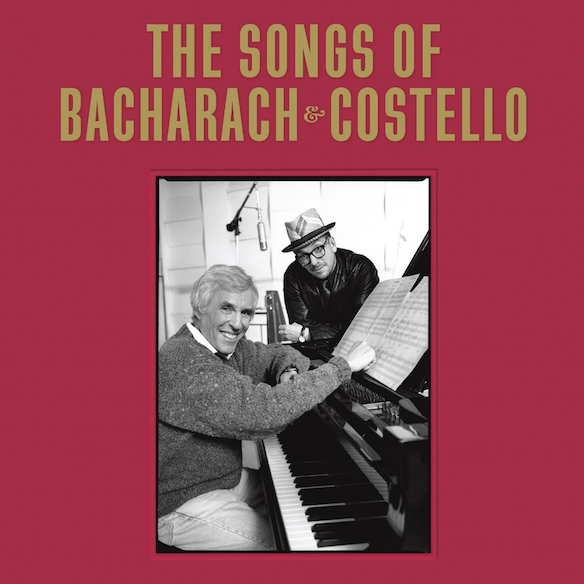
Starting with 1989's Spike, Costello seized the freewheeling opportunities of a solo act, bouncing from dense pop to classical compositions to collaborations with 1960's icons Paul McCartney and Burt Bacharach."
"This sense of adventure increased in the 2000s as he toured with the Imposters, cut Americana albums with his old cohort T-Bone Burnett, and collaborated with both New Orleans R&B legend Allen Toussaint
and the venerated hip-hop group the Roots."
The son of British bandleader Ross McManus, Costello (born Declan McManus) worked as a computer programmer during the early '70s, performing under the name D.P. Costello in various folk clubs. In 1976, he became the leader of country-rock group Flip City. During this time, he recorded several demo tapes of his original material with the intention of landing a record contract. A copy of these tapes made its way to Jake Riviera, one of the heads of the fledgling independent record label Stiff.
Riviera signed Costello to Stiff as a solo artist in 1977; the singer/songwriter adopted the name Elvis Costello at this time, taking his first name from Elvis Presley and his last name from his mother's maiden name.
With former Brinsley Schwarz bassist Nick Lowe producing, Costello began recording his debut album with the American band Clover (later known as Huey Lewis & The News) providing support. "Less Than Zero," the first single released from these sessions, appeared in April of 1977.
By the summer of 1977, Costello's permanent backing band had been assembled. Featuring bassist Bruce Thomas, keyboardist Steve Nieve, and drummer Pete Thomas, the group was named The Attractions; they made their live debut in July of 1977.
Costello's debut album, My Aim Is True, was released in the summer of 1977 to positive reviews.
Along with Nick Lowe, Ian Dury, and Wreckless Eric, Costello participated in the Stiff label's Live package tour in the fall. At the end of the year, Jake Riviera split from Stiff to form Radar Records, taking Costello and Lowe with him. Costello's last single for Stiff, the reggae-inflected "Watching the Detectives," became his first hit.
This Year's Model, Costello's first album recorded with The Attractions, was released in the spring of 1978. A rawer, harder-rocking record than My Aim Is True, This Year's Model was also a bigger hit, reaching number four in Britain and number 30 in America.
Released the following year, Armed Forces was a more ambitious and musically diverse album than either of his previous records. It was another hit, reaching number two in the U.K. and cracking the Top Ten in the U.S.
In the summer of 1979, he produced the self-titled debut album by The Specials, the leaders of the ska revival movement. In February of 1980, the soul-influenced Get Happy!! was released; it was the first record on Riviera's new label, F-Beat Records.
Later that year, a collection of B-sides, singles, and outtakes called Taking Liberties was released in America; in Britain, a similar album called Ten Bloody Marys & Ten How's Your Fathers appeared as a cassette-only release, complete with different tracks than the American version.
Costello and The Attractions released Trust in early 1981; it was Costello's fifth album in a row produced by Nick Lowe.
Costello's next album, Imperial Bedroom (1982), was an ambitious set of lushly arranged pop produced by Geoff Emerick, who engineered several of The Beatles' most acclaimed albums.
Costello tried to replicate the success of Punch the Clock with his next record, 1984's Goodbye Cruel World.
After the release of Goodbye Cruel World, Costello embarked on his first solo tour in the summer of 1984. He was relatively inactive in 1985, releasing only one new single ("The People's Limousine," a collaboration with singer/songwriter T-Bone Burnett issued under the name the Coward Brothers) and producing Rum Sodomy and the Lash, the second album by the punk-folk band The Pogues. Both projects were indications that he was moving toward a stripped-down, folky approach, and 1986's King of America confirmed that suspicion. Recorded without The Attractions and released under the name The Costello Show,
King of America was essentially a country-folk record, and it received the best reviews of any album he had recorded since Imperial Bedroom.
During 1987, Costello negotiated a new worldwide record contract with Warner Bros. and began a songwriting collaboration with Paul McCartney.
Two years later, he released Spike, the most musically diverse collection he had ever recorded.
Spike featured the first appearance of songs written by Costello and McCartney, including the single "Veronica."
Two years later, he released Mighty Like a Rose, which echoed Spike in its diversity, yet it was a darker, more challenging record.
In 1993, Costello collaborated with the Brodsky Quartet on The Juliet Letters, a song cycle that was the songwriter's first attempt at classical music.
That same year, Costello licensed the rights to his pre-1987 catalog (My Aim Is True to Blood and Chocolate) to Rykodisc in America. Costello reunited with The Attractions to record the majority of 1994's Brutal Youth, the most straightforward and pop-oriented album he had recorded since Goodbye Cruel World. The Attractions backed Costello on a worldwide tour in 1994 and played concerts with him throughout 1995. In 1995, he released his long-shelved collection of covers, Kojak Variety.
In the spring of 1996, Costello released All This Useless Beauty, which featured a number of original songs he had given to other artists but never recorded himself.
A jazz version of the record made with Bill Frisell was put on hold when Costello's label began to freeze up due to political maneuvering.
Undaunted, Costello and Bacharach hit the road and performed in the States and Europe. Then, after Bacharach left, Costello added Steve Nieve to the tour and traveled around the world on what they dubbed the Lonely World Tour. This took them into 1999, when both Notting Hill and Austin Powers: The Spy Who Shagged Me featured significant contributions from Costello. In fact, he appeared with Bacharach in the latter as one of a pair of Carnaby Street musicians, albeit street musicians with a gorgeous grand piano at their disposal.
In 2003, he returned with North, a collection of classically styled pop songs pitched halfway between Gershwin and Sondheim.
That fall, Costello released two albums of his own original material: a classical work entitled Il Sogno and the rock music concept album The Delivery Man, featuring The Imposters.
Issued in 2006, My Flame Burns Blue was a live album with Costello fronting the 52-piece jazz orchestra the Metropole Orkest; the release featured classic Costello songs (with new orchestral arrangements) alongside new compositions and a performance of Il Sogno in its entirety.
The next year or so was relatively quiet, but at the end of 2012 he released a new compilation called In Motion Pictures, which rounded up songs he contributed to films. Costello devoted himself to working with hip-hop band The Roots in 2013. Originally planned as a reinterpretation of songs from his vast catalog, the album
Wise Up Ghost turned into a full-fledged collaboration and was greeted by positive reviews upon its September 2013 release on Blue Note.
In 2015, Costello announced that he was completing work on his memoirs, and that the book, titled Unfaithful Music & Disappearing Ink, was scheduled for publication in October 2015. Costello also compiled a companion album, Unfaithful Music & Soundtrack Album, which featured a career-spanning selection of songs from his catalog, as well as two previously unreleased selections.
In July 2018, Costello revealed that he was recovering from a "small but very aggressive cancer." By the time he delivered the news, he was not only on the mend but had a new album with The Imposters in the can. Look Now, the group's first record together in a decade, appeared in October 2018.
Look Now was followed quickly in 2020 with Hey Clockface, the first album credited to Elvis Costello as a solo act in ten years. Inspired by revisiting the master tapes for "This Year's Model" for a soundtrack contribution to David Simon's The Deuce, Costello decided to rework the album of the same name by preserving the original
Attractions backing tapes and adding new Spanish-language vocals by contemporary Latino musicians such as Juanes.
The resulting Spanish Model appeared in September 2021.
At the same time Costello was working on a new set of songs using the skills of Attractions' drummerPete Thomas and keyboardist Steve Nieve, along with longtime Imposters' bassist Davey Faragher. Recorded remotely, The Boy Named If eschews any hint of introspection in favor of the vitriolic sonic kick of early Costello records and big, tangled emotion. Released in early 2022, the album also features a duet with Nicole Atkins.
For more, check out the Elvis Costello discography - and listen to as many of his recordings as possible.
We extend big time fedora tips to Wikipedia and YouTube, which provided lots and lots and lots of material for this post. Also must credit All Music.com in the acknowledgments, as much as we, diehard music lovers all, loathe their correspondent's mindless fixation on chart success, whether albums and singles made the Top 40 - and frequent use of such cringe-worthy lines as "the album was a commercial and critical failure." Dozens of records we absolutely love and can't get enough of at Way Too Damn Lazy To Write A Blog after numerous listenings were described by knucklehead writers as "commercial and critical failures."