Today, music lovers around the world celebrate the natal anniversary of guitarist Django Reinhardt.
Django, the Belgian-born Romani jazz musician was born to swing that guitar on January 23, 1910.
Django was inspired by the music of Louis Armstrong.
With violinist Stephane Grappelli, Django co-led Western Europe's supreme source of scintillating swing, the Quintette Of The Hot Club Of France.
We'll kick this off with a few film clips of the guitar genius in action.
Numerous Django concerts, airchecks and radio broadcasts have been posted on YouTube. Thanks to music historisn Heinz Becker, here are superlative playlists featuring The Quintette Of The Hot Club Of France:
Pre-eminent among Chess Records' many ambassadors to the world: bandleader-bassist-songwriter-vocalist Willie Dixon.
One of this writer's all-time favorite albums was recorded at Chicago's North Park Hotel. Chicago music titan Gene Ammons, tenor saxophonist and son of boogie-woogie piano king Albert Ammons, is in top form!
Speaking of Gene Ammons, he is arguably our favorite among the numerous greats who waxed albums and singles for Chess Records. Ammons had the first of two records released by Leonard Chess on the newly-formed Chess Records label in 1950, titled "My Foolish Heart" (Chess 1425); the second release was "Rolling Stone" by Muddy Waters (Chess 1426). Gene recorded the excellent Soulful Saxophone album for Chess. His epic Live! In Chicago album, recorded at The DJ Lounge in Chicago for the Argo label, is a must for any music fan.
Other musical masterpieces from Chess Records include
Chuck Berry - The Great Twenty-Eight
Etta James - At Last!
The London Howlin' Wolf Sessions
Soundtrack to Rock, Rock, Rock
Go Bo Diddley (1958)
The Best of Little Walter
The Real Folk Blues - Howlin' Wolf, Muddy Waters, and John Lee Hooker
Albums, many outstanding, by Muddy Waters, Sarah Vaughn, Anita O' Day, Mort Sahl, Richard Pryor, The Smothers Brothers, Barbra Streisand, Cass Elliot, Dale Hawkins, Bill Cosby, Freddie Prinze and Ella Fitzgerald were recorded there.
On this October day in appalling 2025 at Way Too Damn Lazy To Write A Blog, we tip our borrowed Chicago Cubs caps, hopefully previously owned by Mike Krukow, to Mister Kelly's and the city of Chicago, where Chess Records and Curtis Mayfield's Curtom Records waxed incredible music and a portion of East 36th Street near Cottage Grove Avenue is Sam Cooke Way. Kudos, bravos, huzzahs, good luck and countless inflatable animal costumes (along with documentary filmmakers) to the Windy City!
Both yours truly and Madame Blogmeister did our civic duty and voted by mail last month.
Then we kicked back and relaxed with the following favorite election-themed tune, courtesy of intrepid Swing Ticket candidate Louis Jordan.
It's true - every presidential election, this way too well-informed for his own good political junkie and diehard classic comedy aficionado MUST watch the hilarious Moe, Larry and Shemp in Three Dark Horses!
No matter how many times I see this Three Stooges opus in which our knucklehead heroes unwittingly work for super-corrupt griftin' grabbin' graftin' slimeball politicos, the result, invariably, is me ROFL and LMFAO.
The 1952 Columbia 2-reeler opens with the line, "what we need are delegates who are too dumb to think and will do what we tell them." Could we get exponentially more stupid and politics even sleazier in the 72 years since slap happy Jules White and the Columbia Shorts Department produced this? YES!
To decompress after a ghastly and interminable election cycle, it is now time to watch a few classic animated cartoons, starting with the 1950's Famous Studios version of Popeye the Sailor.
In Popeye For President (1956), as usual, the voice acting by Jack Mercer (credited for story on this cartoon), Jackson Beck and Mae Questel is stellar.
Ever since I first saw it on TV way back in the 1960's enjoyed the musical cartoon Olive Oyl For President (1948). Voice actress and comedienne par excellence Mae Questel delivers the song with considerable gusto.
Little did I know, Olive Oyl For President was a very creative cheater, some it re-using ideas from the Fleischer Studios cartoon (which, incidentally, we post for EVERY election), the imaginative, clever and funny Betty Boop For President (1932).
What classic cartoon can we finish an Election Day post with? This one: Bugs Bunny and Yosemite Sam in BALLOT BOX BUNNY, directed by Friz Freleng.
Here, having voted via absentee ballot, the guy responsible for 1,368 posts (!!!) at Way Too Damn Lazy To Write A Blog sits quietly in front of NYC's Russ & Daughters, anticipates the absolutely amazing food within, and remembers the blazing greatness and mindblowing musical talent of the recently passed bandleader/composer/arranger/producer/brass virtuoso Quincy Jones.
Among a list of accomplishments way too lengthy to recount here, Quincy Jones led an astounding big band (especially astonishing on the two Live In Paris albums) in the early 1960's.
Not surprisingly, brilliant, inventive and memorable arrangements by Quincy Jones, as well as rip-roaring musicianship, are the order of the day.
Quincy leads a star-studded killer big band - and the existing footage of it in concert rivals The Atomic Count Basie for hard swingin' goodness.
Quincy's superlative arrangements would be heard a few years later when Mr. Jones conducted the Count Basie Orchestra for the epic Sinatra At The Sands concert album.
Any and all interviews with Mr. Jones are worth checking out.
Ranking high on the short list of great moments in television: Quincy's appearances on Late Night With David Letterman.
Quincy Jones also appeared on Conan O'Brien's show, our favorite of the more recent (post-Johnny Carson, post-NBC David Letterman) late night TV programs.
At Way Too Damn Lazy To Write A Blog, we extended a hat tip to the maestro of maestros in the following March 2021 post, which noted
that perennial favorites Albert Einstein, Steph Curry, Michael Caine and Quincy share a March 14 birthday.
We wish readers of Way Too Damn Lazy To Write A Blog a Happy (and safe) Thanksgiving!
The first music post for 2024 spotlights Great Britain's finest crooner and a New Orleans trumpet great, both born on the 7th of January. The former, the king of British dance bands, was arguably the biggest star of English popular music through the 1930's and into the 1940's. The latter: the essence of New Orleans jazz and blues.
Who was Al Bowlly, prominently featured vocalist in the Fred Elizalde, Ray Noble, Roy Fox and Lew Stone orchestras? Take a listen.
And another. . .
Indeed, he's very, very good and also a heckuva rhythm guitarist. Admittedly, as a devotee of the later 1950's male vocalist style exemplified by Chet Baker, Mel Torme, Nat King Cole, and, of course, the Capitol Records Sinatra, I did not know that much about Al Bowlly or, for that matter, the astonishing early records of Bing Crosby. Both Bowlly and Bing were already quite advanced in their concept and approach to singing when they began recording in the late 1920's.
Good places to start amassing knowledge about the British big band luminary are his Wikipedia entry, the Al Bowlly biography page, all writings about him by Ray Pallett - and the following BBC Four documentary. Then start delving into the 1200+ songs he recorded!
The fabulous Learn the Legends: Musical Performers of the Early 20th Century by the University of Wisconsin at Madison elaborates. . .
Al Bowlly, one of the most popular singers in Britain in the 1930’s, had quite the diverse background. His father was Greek, his mother was Lebanese, he was born in Mozambique, and he was raised in South Africa. His career started with dance bands in the 1920’s that toured Africa and Asia. He made his first recording in Berlin in 1927, singing Irving Berlin’s “Blue Skies.” Bowlly then relocated to London and sang with Fred Elizalde’s orchestra. Bowlly’s song “If I Had You” became one of the first recordings by an English jazz band to find popularity with American audiences.
He found some success performing in New York and again in London, but he died during the bombing of London in World War II. His last recording, “When That Man is Dead and Gone,” an anti-Hitler song, was made two weeks before his death.
It could be said that the guys who developed the art of crooning and set the stage for Sinatra were not "Crosby, Columbo & Vallee" but "Crosby, Columbo and Bowlly!"
Born on January 7, 1908 in the Algiers neighborhood of New Orleans was the great trumpeter and vocalist Henry "Red" Allen.
Have thought of this master musician recently, as my favorite post of 2023, along with the Johnny Mercer tribute, was the one on singing brass players. Very few musicians not named Louis Armstrong could both solo on the trumpet and sing with the brilliance of Henry Red Allen.
One snapshot of his illustrious and prolific career as bandleader and sideman is the following Henry "Red" Allen discography.
One favorite recording is Ride Red Ride a.k.a. Man On A String.
In closing, just in case the excerpts from The Sound of Jazz CBS 1957 were insufficient to whet the musical appetite, here is the CBS special in its entirety. Not a bad way to celebrate musical birthdays.
In decades of curating film shows, found myself and audiences fascinated with the 1920's short subjects made by the ingenious artist, filmmaker, photographer, illustrator and American in Paris Man Ray (August 27, 1890 - November 18, 1976).
Can't explain exactly why Man Ray's films are fascinating, why the visuals are so compelling, why after watching Emak Bakia or Le Retour A La Raison, one immediately wants to watch it again.
Whenever, in presenting DIY 16mm film shows, this blogger screened Man Ray's films, whether in 1990 or 2020, the audience was enthralled. Man Ray's photos and paintings enthrall this writer as well.
Tranisitioning less than deftly from the world of Dada and Surrealism to the sonic milieu of saxophones, big bands and swing, the man known as the President and among the greatest innovators in jazz and 20th century music history was saxophonist and clarinetist Lester Willis Young, cornerstone of the mighty Count Basie Orchestra, born on August 27, 1909.
Along with fellow jazz greats Marlowe Morris, Jo Jones, Barney Kessel, Illinois Jacquet and Red Callendar, he's part of the all-star group that starred in Gjon Mili's outstanding 1944 musical short subject Jammin' The Blues.
There are not many film clips of Pres, who passed in 1959, but here are a few in which he is featured with several excellent ensembles jam-packed with virtuosos. He sounds great, as usual.
Here's an enjoyable yin/yang from the Art Ford's Jazz Party TV program featuring Lester Young with fellow tenor saxophonist, King Of Swing and stylistic opposite Coleman "Body & Soul" Hawkins.
Author, jazz historian, bandleader and saxophonist Loren Schoenberg penned one of the very best pieces this music fan has read about Lester Young and has posted Pres clips on his You Tube channel. The following Lester Young albums - studio recordings on Verve volume 1, volume 2 and volume 3 - are musts for the swing and music fan's collection.
Tough to pick just one Pres performance of the many. This 1956 Birdland All-Stars concert of Miles Davis, backed by The René Urtreger Trio and featuring special guests Lester Young and (piano virtuoso) Bud Powell, is particularly amazing listening.
Now, to paraphase an old friend of mine, shifting gears from music to comedy, it is indeed August 27, so that means the gang at Way Too Damn Lazy To Write A Blog pays tribute to comedian Al Ritz, born Albert "Al" Joachim on August 27, 1901 and part of a zany trifecta with brothers Harry and Jimmy.
Any mention of Al or his brothers Harry and Jimmy brings to mind the question of just how does a comedy fan or classic movie buff explain The Ritz Brothers.
None other than the great Mel Brooks gives that very explanation a try in this interview with Conan O' Brien.
Gifted physical comedian Soupy Sales agrees.
Here, animated Ritz Brothers tangle with none other than Donald Duck in The Autograph Hound. Excellent work as usual, Disney artists!
Who influenced Sid Caesar and the gang from Your Show Of Shows and Caesar's Hour? The one, the only, the legendary rubber-faced alpha goofball Harry Ritz (in the act, albeit not in the following photo, "the guy in the middle").
While the Ritzes, compared even to the Marx Brothers and The Three Stooges, remain emphatically a characterization-free zone, their genius is in their ultra-wacky dancing, patter and singing.
As is the case with musical comedy stars Ray Bolger and Donald O'Connor, the humor is in how they move.
This production number from the Alice Faye musical On The Avenue presents one answer to the question, "just what did people find funny about The Ritz Brothers?" There's Harry's bravura vocal and indescribably funny dance moves by the trio. LOVE the bit where they mimic penguins!
Besides the He Ain't Got Rhythm number, the best example of Harry, Jimmy and Al Ritz remains the episode of The All Star Revue they hosted on May 17, 1952. The key to the Ritzes is that, as was the case with Dean Martin & Jerry Lewis, they shined as a live act and were emphatically toned down for feature films. Harry is THE ad-lib king and his improvisations are seldom in the team's feature film appearances for Fox and Universal.
This All Star Revue show presents a valuable record of their act, as The Colgate Comedy Hour shows did for many comics (Martin & Lewis and Abbott & Costello as well as the Ritz Brothers, whose Feb. 22, 1953 episode of the series does not exist) - and is also the reason this blogger has been known to utter the phrase "DON'T HOLLA - PLEASE DON'T HOLLA" for no apparent reason. The Ritzes' anarchic spirit and musical comedy mojo reigns supreme throughout.
The gang at Way Too Damn Lazy To Write A Blog sincerely hopes that kinescopes of the Ritz Brothers' second episode of All-Star Revue, which aired on November 22, 1952 as part of the Four Star Revue series, and the aforementioned 2-22-1953 Colgate Comedy Hour show turn up.
It's time again for a post devoted to the world of music at Way Too Damn Lazy To Write A Blog! Today's topics: trumpet and trombone aces who sing sing sing! Kicking this off, Louis Armstrong and Dizzy Gillespie (and, at the end, Jackie Gleason, who doesn't sing but lends yet more larger-than-life stage presence to the proceedings) . . . In other words, GREATNESS.
I don't know which musicians dubbed in the parts for Sidney Poitier and Paul Newman in PARIS BLUES, but it is an incredible sequence. Pops, as always, is the man of the hour.
From one of this music aficionado's all-time favorite documentaries, Jazz On A Summer's Day (1958), here are Pops & his frequent bandmate Jack Teagarden singing Ol' Rockin' Chair.
Jack, in between stints with The Jack Teagarden Quintet and Louis Armstrong's All-Stars, appeared in Snader Telescriptions (the made for television Soundies which are now much sought after by film collectors).
Another blazing genius among the riverboat rockers, steeped in the culture and music of New Orleans, disciples of Armstrong and Kid Ory, was the great Henry "Red" Allen (1908-1967).
From big band swing, there was no better trumpeter-singer than the Duke Ellington Orchestra's ace in the hole Ray Nance (1913-1976), an entertainer who also could play the violin and cut a rug expertly.
Another gifted swing trumpeter who doubled as an outstanding vocalist: Roy "Little Jazz" Eldridge (1911-1989).
While Roy was a key link between the trumpet styles of Louis Armstrong and Dizzy Gillespie, it's his terrific vocal on Ain't That A Shame that absolutely floors this jazz, blues and r&b fan.
Never to be outdone, Dizzy Gillespie sings On The Sunny Side Of The Street and even induces saxophonist Sonny Stitt to join in the fun.
Among the kings of swing, bluesmen, boppers and crooners in those days, the one who could both sing a ballad like Sinatra and follow it with an absolutely gorgeous trumpet solo was Chet Baker (1929-1988).
Some of Chet's most amazing performances were from his last concerts in the mid and latter 1980's. The soulfulness of his singing is something to behold.
A brass virtuoso who can croon and give Chet a run for his money is Ray Anderson, who can be found these days rocking the house at The Loft in Stony Brook, NY.
A musician as both gifted and tragic as Baker (and Charlie Parker and Fats Navarro and Sonny Berman and Serge Chaloff and Elmo Hope and Emily Remler, etc.) but also quite brilliant was Frank Rosolino (1926-1978).
A trombonist who mastered the modern sound and played compelling music in international genres was the one, the only Roswell Rudd (1936-2017), here singing and blending his highly original trombone approach with the hard rock of Sonic Youth.
Is there anyone currently who plays brass instruments a la the New Orleans masters and sings? Yes. That would be Trombone Shorty, whose Orleans Avenue band plays a rousing blend of rock, jazz, funk, r&b and ska.
Trombone Shorty and his ensembles remind me of the talented group of San Francisco Bay Area musicians known as the Jazz Mafia, led by trombonist-electric bassist-songwriter-arranger Adam Theis, who recorded "Brass, Bows & Beats" and other excellent albums. Both are steeped in funk and soul.
Pondering all this devastatingly great music over these eight decades, and extending into the 21st century, the jazz aficionados at Way Too Damn Lazy To Write A Blog say C'EST SI BON! Big thanks and big love to all the singing brass players!
That means an all-music post specifically paying tribute to the recording artist and Count Basie Orchestra star known as The President, Lester Young.
Fellow saxophonist Sonny Rollins elaborates:
As the accomplishments of JFK, FDR and Honest Abe a.k.a. Hot Rod Lincoln are all targeted by obnoxious "this channel has no content" YouTube trolls in 2023, might as well spend Presidents' Day listening to the innovative tenor saxophonist and clarinetist.
Lester Young a.k.a. Pres or Prez was a virtuoso among virtuosos at a time when the likes of Mary Lou Williams, Art Tatum, Benny Goodman, Duke Ellington, Django Reinhardt, Chick Webb and Charlie Christian were all still living and at the top of their game.
Here's Pres and an all-star swing ensemble in one of the greatest films about music ever filmed, Life magazine photographer Gjon Mili's Jammin' The Blues (1944).
While few films of Lester Young exist, here's footage shot in October 1950 of what appears to be a Jazz At The Philharmonic (JATP) ensemble: Lester Young (tenor saxophone), Bill Harris (trombone), Hank Jones (piano), Ray Brown (bass), Buddy Rich (drums).
In a longer excerpt from this JATP film, the group is joined by Coleman Hawkins and Charlie Parker. As was often the case, Granz assembled quite a powerhouse lineup.
Raising that, from the superlative YouTube channel of music historian, teacher and saxophonist Loren Schoenberg, here's one of the rare interviews with Lester Young.
After an upbringing playing in the Young family band and other ensembles, Pres became a prominent player on the music scene in the 1930's as part of the dynamic Count Basie Orchestra.
Gotta love Basie, a bandleader with an eye for talent, seen in this shot from the Library Of Congress collection, snapped at NYC's Aquarium Club by gifted photographer William P. Gottlieb.
The power, expressiveness, creativity and eloquence of Lester Young's playing deepened as his career progressed from the early swing era through the 1950's.
Pres' last records, on the Verve label, remain some of his very best.
In closing, the gang at Way Too Damn Lazy To Write A Blog, realizing that a mere month for Black History during any year is way insufficient, extends a tip of the porkpie hat to the Lester Willis Young.
Pres was a one of a kind artist who could express love, pain, sorrow, wonder and the expansiveness of the universe with one note.
While enjoying the above Franz Kline painting and attempting, with difficulty, to digest the news that numerous Northern California places where I, my family and friends have lived and enjoyed visiting over many decades have been absolutely clobbered (and continue to be clobbered) by violent winter storms as the new year begins, shall direct focus to the world of 20th century music. Jazz fans in our readership: come on down!
From January 2023, we time travel back to 1973 and a rather amazing TV appearance by jazz trumpet genius Freddie Hubbard (1938-2008).
Although at that point, Mr. Hubbard had left Blue Note Records and began waxing more overtly commercial and pop-influenced albums for Creed Taylor's CTI label, this set reflects that in concert, the ace of trumpet exemplified the fire-breathing sensibility of hard bop. Junior Cook (tenor saxophone), George Cables (piano), Kent Brinkley (upright bass) and Michael Carvin (drums) assist skillfully.
Way back in those halcyon days, attended a concert featuring Klaus Doldinger's Passport and Herbie Hancock's Headhunters, two groups that blended rock, funk and jazz creatively and seamlessly. Fortunately, both Herbie and Klaus have enjoyed lengthy careers. Here they are, Klaus Doldinger's Passport, live at the 1974 Frankfurt jazz festival.
In the Klaus Doldinger ensemble as special guest: the great tenor saxophonist Johnny Griffin.
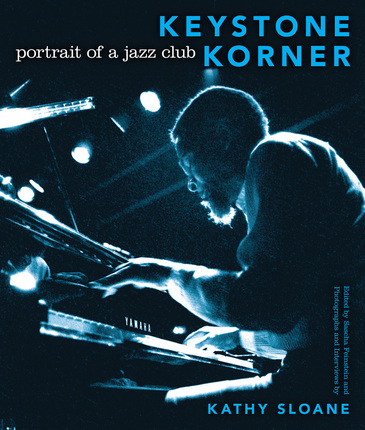
Saw Mr. Griffin tear it up with his quartet on several occasions at San Francisco's mecca of music, Keystone Korner in North Beach, way back when.
Key to several Miles Davis ensembles was drummer Tony Williams, the cornerstone of 1960's Miles quintets who subsequently led incendiary rock-jazz fusion bands. One of the best Tony Williams Lifetime groups is seen here at the 1971 Montreux Jazz Festival.
Nobody exemplified the merging of musical genres and questioning of sonic conventions more than pianist/composer/bandleader Herbie Hancock.
On the topic of Herbie Hancock and his mighty funk-jazz-rock band, here they are on a 1976 Danish TV special. It is one of the few and far between video appearances by mighty studio ace guitarist Wah Wah Watson a.k.a. Melvin M. Radin who, as expected, is brilliant and original. As The Wrecking Crew and The Nashville A-Team (led by guitarists Hank "Sugarfoot" Garland, Grady Martin and Chet Atkins) did in the 1950's and 1960's, the ever-inventive Wah Wah Watson played on everyone's records in the 1970's and 1980's.
For another spin on fusion + modern jazz, here's Ornette Coleman and his epic Prime Time Band, rocking the house hard at Palalido in 1980. Ornette created his own unique musical universe starting in the 1950's, then added multiple electric guitars and Fender basses to his ensembles in the 1970's, resulting in an enjoyably surreal supersonic mix.
And, while on the topic of genre-bending, genre-redefining, genre-exploding and genre-extending recording artists, there's the prolific visual artist and unconventional bandleader Don Van Vliet a.k.a. Captain Beefheart.
The Cap'n, a.k.a. Don Van Vliet, in between frequent drawing and painting, led an ensemble way out on the far frontiers of what was considered rock music from 1965 to 1982.
Now, in all honesty, Captain Beefheart & The Magic Band, was closer to Ornette and Albert Ayler than to Connie Francis or ABBA.
What could outdo or at least equal Captain Beefheart & The Magic Band live from Paris? Captain Beefheart on Late Night With David Letterman!
Author and music expert Frank John Hadley described Don Van Vliet best: Unconventional to the nth power, Captain Beefheart (Don Van Vliet) constructed a gnostic blues world where Howlin' Wolf curls Salvador Dali's moustache and Little Walter espouses dadaism.
Of the two early-1970s albums juxtaposed here, The Spotlight Kid most interestingly turns twelve-bar music on its head with Beefheart's multi-octave son-of-Wolf voice, his pixilated lyrics, his marvelous Chicago-style harp, and his specially instructed Magic Band's asymmetrical rhythms.